































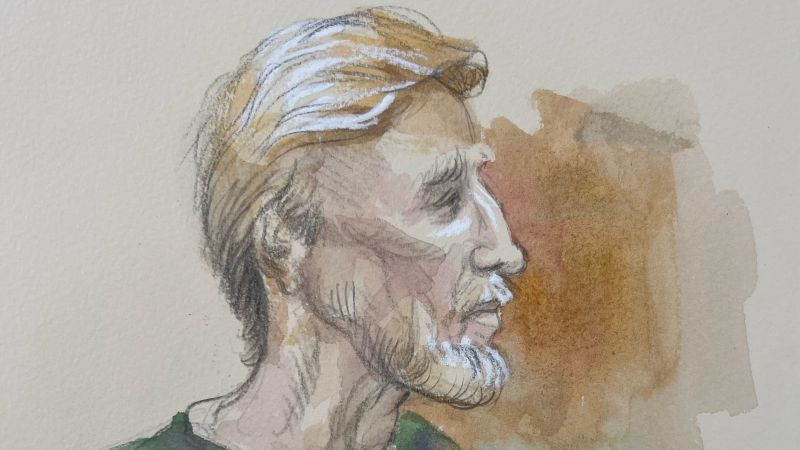
Nearly a year has passed since a 59-year-old man reportedly set up a makeshift sniper’s nest at a golf course in West Palm Beach, Florida, where former President Donald Trump was playing. The individual, identified as Ryan Routh, is now preparing to stand trial for charges related to this alarming incident. Routh has chosen to represent himself in court, a decision that has raised eyebrows given the serious nature of the allegations against him.
The events leading to this trial unfolded on a day in September last year when Routh allegedly took a rifle and aimed it through a chain-link fence at the Trump National Golf Club. Reports suggest that he was positioned only a hole away from where Trump was engaged in a round of golf. This situation prompted immediate concern for the safety of Trump and those around him, leading to a swift reaction from law enforcement.
Law enforcement officials were alerted to the situation after a witness reported seeing Routh with the firearm. Upon their arrival, police discovered Routh in possession of the weapon, which he had reportedly intended to use against the former president. The authorities acted quickly to detain him, averting what could have potentially been a tragic event.
Routh faces multiple charges, including attempted murder and possession of a firearm with the intent to use it unlawfully. Given the high-profile nature of the case, there has been significant media attention surrounding the trial. The decision for Routh to represent himself adds an unusual twist to the proceedings, as it is generally advisable for defendants in such serious cases to seek the assistance of legal counsel.
The trial is set to unfold with significant scrutiny, as Routh’s actions have raised questions about security protocols surrounding high-profile individuals, particularly former presidents. The implications of his alleged actions have sparked debates on the adequacy of protective measures in place at public events attended by prominent figures.
Routh’s defence strategy remains unclear, but he has indicated a desire to present his own case to the court. This is a risky move, especially considering the complexity of the legal system and the serious nature of the charges against him. The prosecution is expected to present a strong case, highlighting the potential danger Routh posed not only to Trump but also to the public attending the golf course that day.
As the trial commences, the courtroom will likely be filled with spectators, including members of the media, who are keen to witness the proceedings. The case has drawn attention not only for its dramatic elements but also for the broader implications it holds for national security and the protection of public figures in the United States.
Routh’s actions have raised alarm bells regarding the lengths to which individuals may go to express their grievances or ideologies. The trial will explore not only the specifics of the incident but also the motivations behind Routh’s alleged attempt to harm Trump. Understanding these motivations could provide insights into the increasing tensions and divisions within American society.
As the legal process unfolds, it will be crucial to observe how Routh’s self-representation impacts the trial’s dynamics. The jury will be tasked with weighing the evidence presented and determining Routh’s guilt or innocence based on the facts of the case. The outcome may set precedents for how similar cases are handled in the future, especially in terms of self-representation in high-stakes legal situations.
With the trial now underway, all eyes will be on the courtroom as the prosecution and defence lay out their respective arguments. The ramifications of this case extend beyond the courtroom, touching upon issues of safety, security, and the responsibilities of individuals in a democratic society.