





























































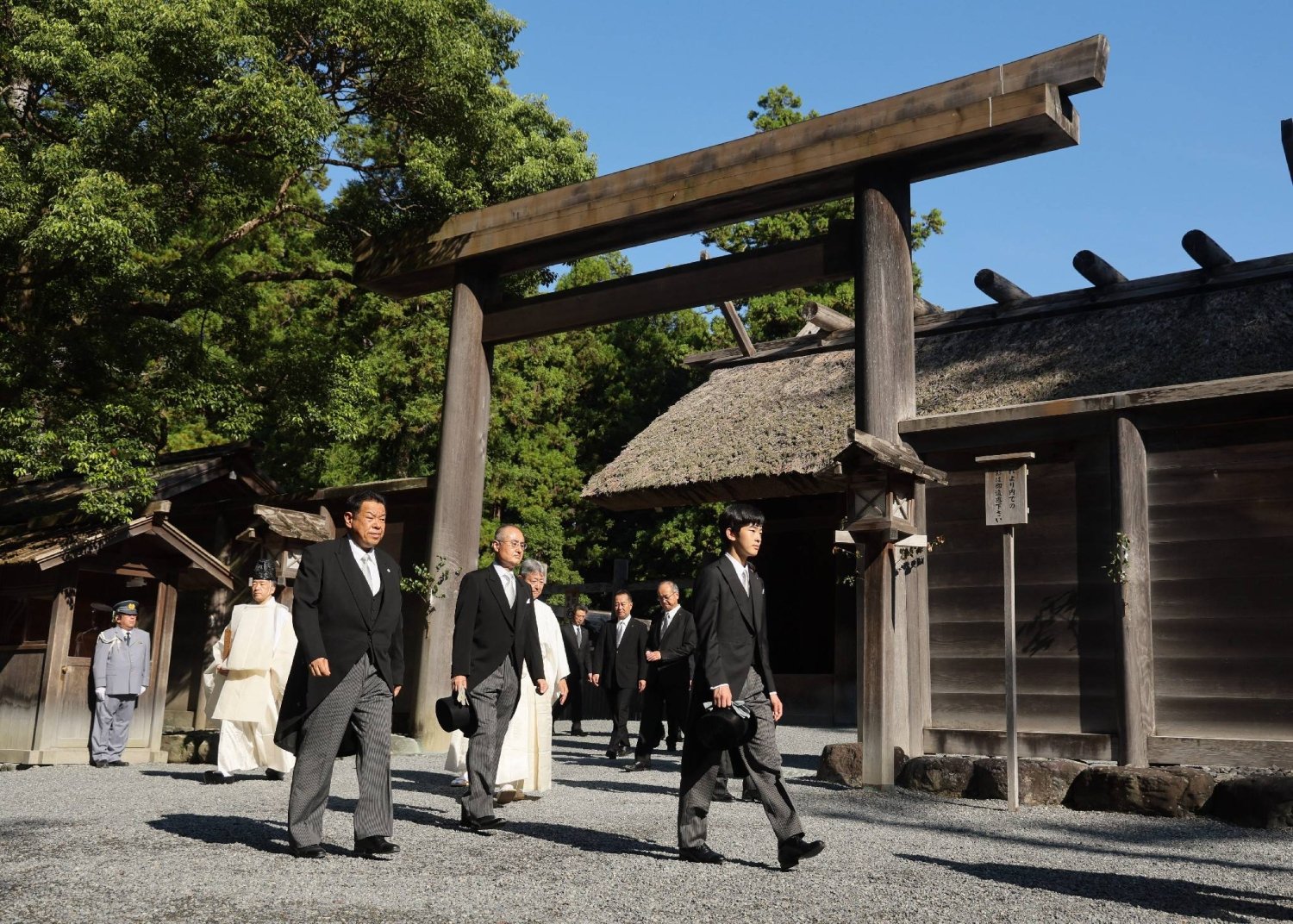
Prince Hisahito, the second in line to the Japanese throne, recently marked a significant milestone in his life by participating in a traditional coming-of-age ceremony held on Saturday. This event is a notable cultural rite in Japan, often celebrated by young individuals as they transition into adulthood, and is particularly important for members of the imperial family. Following the ceremony, which is steeped in centuries of tradition, the young prince made a visit to the Ise Shrine, one of the most revered Shinto shrines in Japan.
The Ise Shrine, located in Mie Prefecture, is dedicated to the sun goddess Amaterasu, who is considered one of the most important deities in the Shinto religion. The shrine is not only a spiritual site but also a significant cultural landmark, attracting millions of visitors each year. Prince Hisahito’s visit to this sacred site after his coming-of-age ceremony underscores the importance of Shinto traditions and the connection between the imperial family and Japan’s cultural heritage.
During the coming-of-age ceremony, which took place at the Imperial Palace, Prince Hisahito was officially recognised as an adult within the context of the imperial family. This event is typically marked by various rituals and celebrations, allowing the prince to embrace his responsibilities and role within the royal lineage. The ceremony is a moment of pride not just for the prince, but also for the entire nation, as it signifies a new chapter in his life.
Hisahito, born on September 6, 2006, is the son of Prince Akishino and Princess Kiko. As a member of the imperial family, he carries the weight of history and expectation, being the first male heir born into the family in over four decades. His presence at such ceremonies and events is closely watched by the public, reflecting the ongoing interest in the Japanese monarchy and its future.
The visit to Ise Shrine is particularly symbolic, as it reflects the deep-rooted connections between the imperial family and Japan’s spiritual traditions. The shrine itself has been a site of pilgrimage for centuries, and its significance is magnified by the fact that it is believed to house the sacred mirror, one of the three Imperial Regalia of Japan, which are said to embody the legitimacy of the emperor’s rule.
As part of the rituals at the shrine, Prince Hisahito engaged in various practices that are customary for visitors, such as purification rites and prayers, which are intended to garner blessings for the future. This act not only serves to honour the traditions of Shinto but also reinforces the prince’s role as a future leader who respects and upholds the cultural values of Japan.
The coming-of-age ceremony and subsequent visit to Ise Shrine have drawn attention to the ongoing evolution of the Japanese imperial family. As the younger generation steps into their roles, there is a palpable sense of anticipation regarding how they will navigate the challenges of modern society while maintaining the traditions that have defined the monarchy for centuries. The public’s interest in Prince Hisahito’s journey is indicative of a broader curiosity about the future of the imperial family, especially as Japan continues to grapple with contemporary issues and the role of its monarchy in the 21st century.
In the wake of the ceremony and shrine visit, many are reflecting on the significance of these rites of passage and what they mean for the future of the imperial lineage. As Prince Hisahito embarks on this new phase of his life, he carries with him not only the hopes of his family but also those of a nation that looks to its royal family for continuity and inspiration.