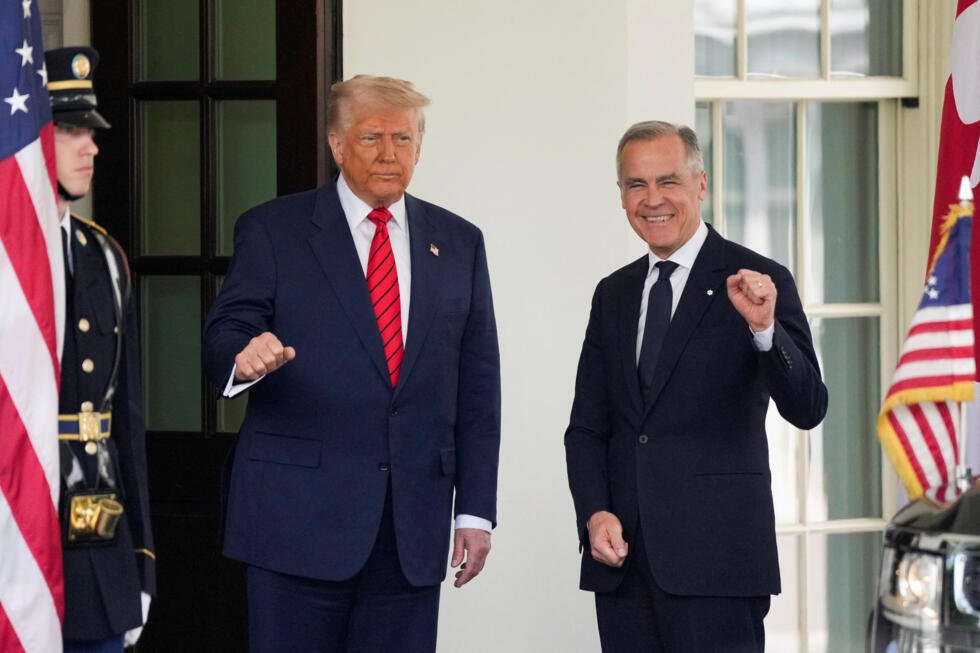




























































The prospect of tariff-free trade between the United States and Canada appears increasingly uncertain as President Donald Trump’s administration signals that tariffs on Canadian goods may persist—despite the framework of the United States-Mexico-Canada Agreement (USMCA), known as CUSMA in Canada.
U.S. Commerce Secretary Howard Lutnick recently dismissed concerns that free trade between the two neighbors is effectively dead, calling such speculation “silly.” Speaking during an appearance on CBS’s Face the Nation, Lutnick emphasized that roughly 75% of goods imported from Canada and Mexico currently enter the U.S. duty-free under USMCA.
However, Lutnick also made it clear that the current administration views Canada’s trade practices as protectionist and that tariffs will remain in place unless significant concessions are made. “Canada is not open to us,” Lutnick said. “Unless they’re willing to open their market, they’re going to pay a tariff.”
His comments follow recent remarks from Canadian Prime Minister Mark Carney, who acknowledged the difficulty in securing a fully tariff-free agreement with the U.S., suggesting “not a lot of evidence” supports the possibility of such a deal at this stage. Still, Carney maintained that Canada currently enjoys “almost free trade” with the U.S. under CUSMA provisions.
A recent RBC analysis showed that as of April 2025, nearly 89% of U.S. imports from Canada were explicitly duty-free, up from 79% in January. Despite this, the Trump administration insists that Canada’s market remains closed in key sectors, including agriculture and automotive manufacturing.
Lutnick defended the administration’s hardline stance as part of a long-overdue correction to what he called “an 80-year wrong,” arguing that American workers should not be disadvantaged by outsourcing jobs to Canada and Mexico. “President Trump is trying to fix that, and our businesses are going to really, really enjoy it,” he added.
Although USMCA is not officially up for renegotiation until 2026, Trump has indicated he plans to reopen talks sooner. “It makes perfect sense for the president to renegotiate it,” Lutnick said. “He wants to protect American jobs. He doesn’t want cars built in Canada or Mexico when they could be built in Michigan or Ohio.”
The uncertain trade environment has fueled speculation that the U.S. may consider bilateral agreements in place of a renewed trilateral deal. Last year, Ontario Premier Doug Ford floated the idea of Canada pursuing a separate deal with the United States, excluding Mexico. While controversial, the idea gained some support from Alberta Premier Danielle Smith before cooling off following high-level meetings between Carney and Mexican President Claudia Sheinbaum.
Negotiations between Canada and the U.S. continue in the shadow of President Trump’s recent threat to impose a sweeping 35% tariff on all Canadian goods starting August 1. The threat, issued in a letter posted on Trump’s Truth Social platform, cited the flow of fentanyl and Canada’s protectionist dairy policies as primary concerns.
While data indicates that the majority of fentanyl entering the U.S. originates from Mexico or China—not Canada—the administration continues to link border security issues to trade negotiations. Trump’s criticism of Canada’s supply management system has also resurfaced, with claims that it results in tariffs as high as 400% on U.S. dairy products. In reality, such high tariffs are only applied if American exporters exceed agreed import quotas under CUSMA, something they have not done, according to the International Dairy Association.
Canadian officials, including Prime Minister Carney, have reaffirmed their commitment to maintaining supply management, calling it vital to the country’s agricultural stability. The Liberal government continues to resist U.S. pressure to dismantle the system, despite repeated challenges from Washington.
As the August deadline looms, both countries are racing to reach an understanding that would prevent an escalation in trade tensions. However, with President Trump positioning himself as a defender of American industry and Canadian officials hesitant to offer major concessions, the likelihood of a swift resolution remains low.
With USMCA renegotiations potentially on the horizon, Canadian business leaders and lawmakers are calling for proactive diplomacy to avoid a destabilizing trade war. Whether this results in an updated agreement—or a more fractured North American trade environment—remains to be seen.