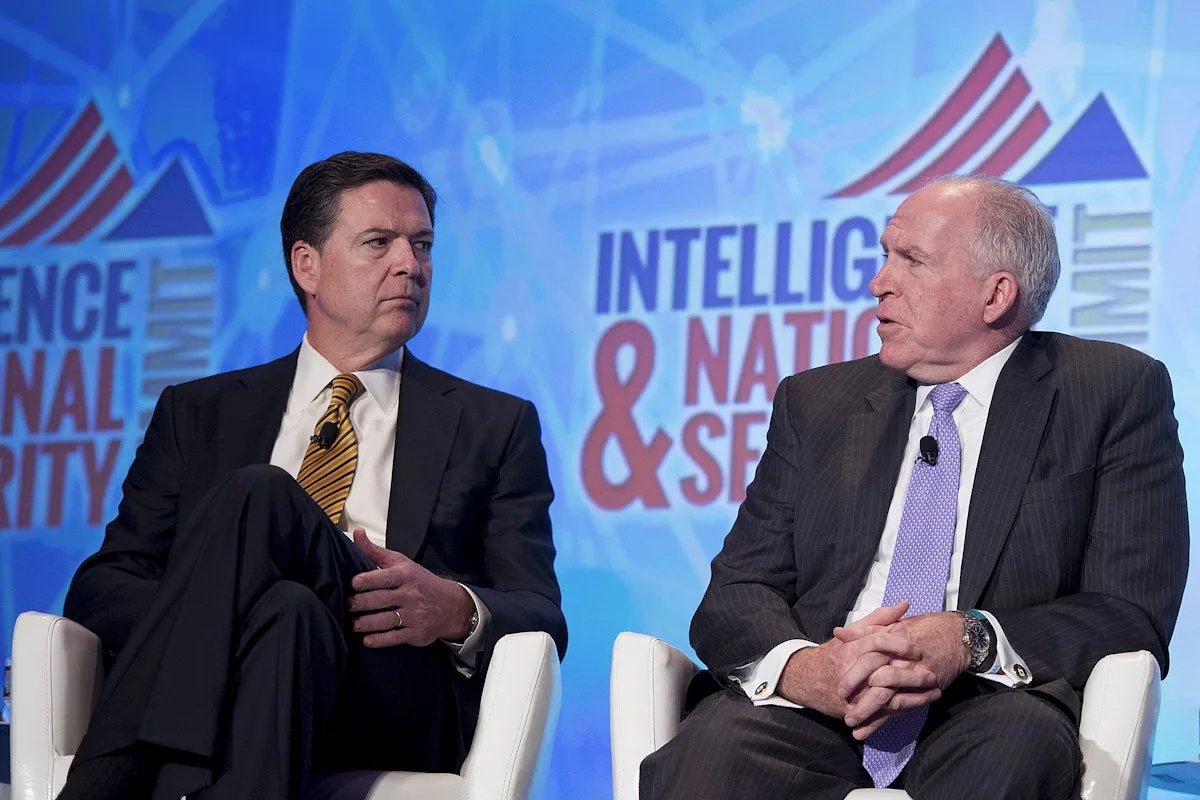
































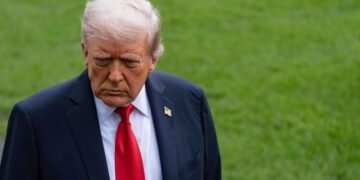














Former FBI Director James Comey and former CIA Director John Brennan are now the subjects of criminal investigations initiated by the Department of Justice under President Donald Trump’s administration. The news, initially reported by Fox News and The Washington Times, adds another layer of tension to the already strained relationship between Trump and former top intelligence officials who have frequently clashed with him in public and political arenas.
While the White House has not officially confirmed the details of the investigations, press secretary Karoline Leavitt acknowledged the reports during a recent appearance on Fox News. Describing Brennan and Comey as “disgraceful individuals” who she said “lied to Congress,” Leavitt expressed support for the investigations and echoed the president’s stated belief in transparency and accountability.
According to NBC News, the Department of Justice has launched criminal probes into the two former officials, although the agency has not disclosed what specific allegations are being examined or how far along the investigations have progressed. Neither Brennan nor Comey has publicly responded to the reports, and the FBI has declined to comment.
It remains unclear whether these investigations will lead to formal charges. However, the news highlights the continuation of a pattern in which several high-profile figures perceived to be at odds with the president have come under scrutiny by federal authorities.
Brennan and Comey have long been viewed by Trump and his allies as political adversaries. Both were previously named on a list of so-called “government gangsters” compiled by current FBI Director Kash Patel, which included individuals the administration views as having acted improperly during Trump’s first term.
They are far from alone. In recent months, several former officials who publicly disagreed with Trump have also become targets of federal review. In April, the president signed executive orders directing investigations into Christopher Krebs, the former head of the Cybersecurity and Infrastructure Security Agency, and Miles Taylor, a former senior Department of Homeland Security official. Both had been critical of the Trump administration, and the orders appeared to single them out with little substantiated cause.
Soon afterward, Trump instructed Attorney General Pam Bondi to open a broader investigation into President Joe Biden and members of his administration. The probe, based largely on right-wing claims about Biden’s cognitive health, marked an unprecedented moment in American politics: a sitting president publicly calling for a criminal investigation into his immediate predecessor.
The Trump administration has also voiced support for legal action against political figures and institutions that have been critical of the president. These include California Governor Gavin Newsom, whom Trump has suggested should be arrested, and CNN, which he has accused of disseminating false information.
In recent weeks, the administration has brought criminal charges or detained a range of individuals affiliated with the Democratic Party, including a mayor, a member of Congress, a staffer for another representative, a judge, and a labor leader. Ongoing investigations also target organizations like Media Matters and ActBlue, as well as high-profile Democrats such as former New York Governor Andrew Cuomo, New York Attorney General Letitia James, and New Jersey Governor Phil Murphy.
According to a report by Axios, a list of perceived “enemies from within” was compiled near the end of the 2024 presidential campaign, reflecting the administration’s intentions to take action against those viewed as political threats. Since then, that list has seemingly translated into a series of legal efforts aimed at sidelining critics and adversaries.
Four months later, the pattern has not only continued—it appears to be accelerating. With little indication that the administration intends to pull back, observers remain concerned about the growing use of federal investigative power against political opponents, a trend that many view as deeply troubling for democratic norms and institutions.