
























































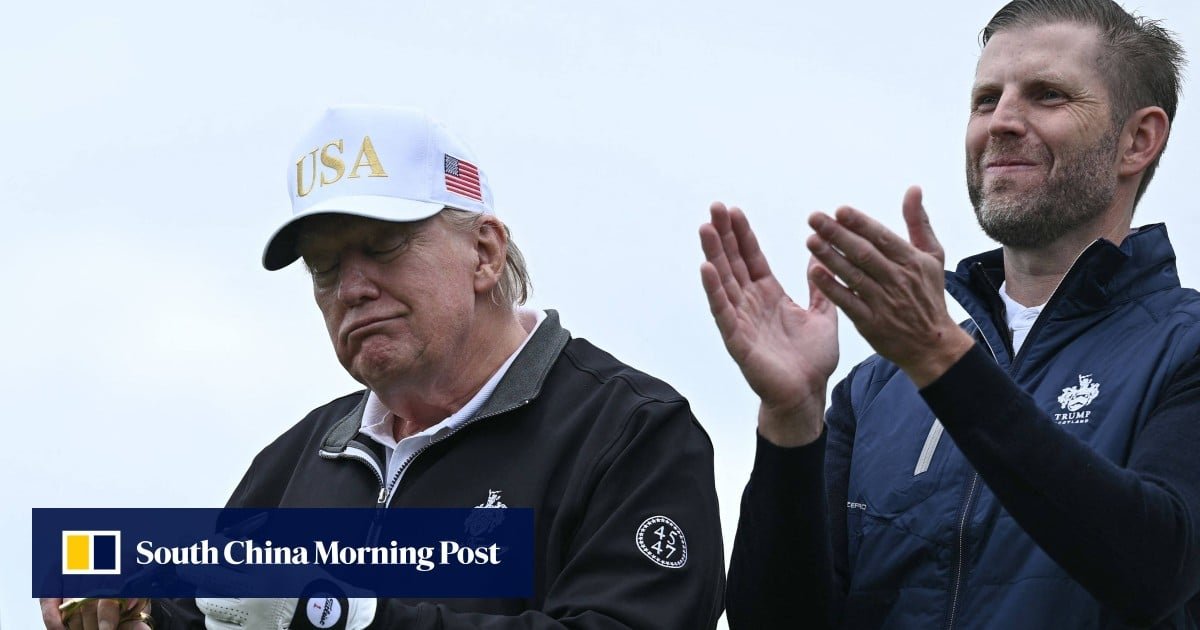
A senior official from Hong Kong and a local lawmaker have withdrawn from participating in the Bitcoin Asia 2025 conference, an event set to feature Eric Trump, son of former United States President Donald Trump. This decision follows an instruction reportedly issued to avoid any impression of aligning with or endorsing the Trump family.
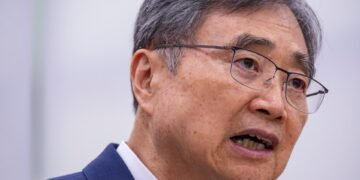
Eric Yip Chee-hang, the executive director of Hong Kong’s Securities and Futures Commission (SFC), and Johnny Ng Kit-chong, a legislator known for his work in the technology sector, were initially scheduled to speak at the conference, which is planned for 28-29 August. However, a recent check of the conference’s website confirmed their removal from the list of keynote speakers.
The directive advising against attending the forum was reportedly issued to lawmakers, although the source of the instruction remains undisclosed. “There is an instruction to lawmakers, asking them not to attend the forum that also features Trump’s son,” shared a source familiar with the situation. “And I think we all understood the reason.” This sentiment was echoed by a second source, further corroborating the instruction’s existence.
The Bitcoin Asia 2025 conference, organised by BTC Inc, aims to explore the long-term potential of bitcoin and its influence on global finance. The event is also set to discuss how Asia is shaping the future of bitcoin adoption, a topic of significant interest given the region’s increasing involvement in the cryptocurrency market.
Cryptocurrencies, particularly bitcoin, have gained considerable traction in Asia over recent years. Countries like China, Japan, and South Korea have been at the forefront of cryptocurrency adoption and innovation. Despite China’s recent crackdown on cryptocurrency mining and trading, the broader Asian market remains a pivotal player in the global cryptocurrency landscape.
Hong Kong, in particular, has been a significant hub for cryptocurrency and blockchain technology. The city has established itself as a financial centre, and its regulatory framework has generally been favourable towards digital currencies. The Securities and Futures Commission (SFC), under the leadership of figures like Eric Yip Chee-hang, has been instrumental in shaping policies that balance innovation with investor protection.
The decision for Hong Kong officials to distance themselves from the conference featuring Eric Trump could be seen as a strategic move amid the complex geopolitical landscape. The relationship between China and the United States has been marked by tensions over trade, technology, and political influence. In this context, Hong Kong’s decision to avoid any perceived affiliation with the Trump family could be interpreted as an effort to maintain neutrality and avoid unnecessary diplomatic friction.
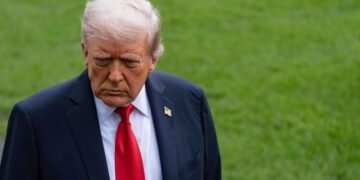
Eric Trump’s involvement in the conference highlights the intersection of politics and cryptocurrency. As the son of a former US president, his participation brings a level of political attention to the event. Trump’s scheduled discussion on bitcoin’s potential and Asia’s role in its adoption underscores the growing recognition of cryptocurrencies as a significant component of the global financial system.
The evolution of bitcoin and other cryptocurrencies has been a topic of intense debate among policymakers, economists, and financial experts worldwide. Proponents argue that digital currencies offer a decentralised alternative to traditional financial systems, providing greater financial inclusion and reducing transaction costs. Critics, however, raise concerns about their volatility, potential use in illicit activities, and the environmental impact of mining operations.
In recent years, governments and regulatory bodies have grappled with how to effectively regulate cryptocurrencies. Some countries have embraced digital currencies, implementing regulatory frameworks to support their growth, while others have imposed strict regulations or outright bans. The approach taken by each country often reflects its broader economic and political priorities.
As the Bitcoin Asia 2025 conference approaches, the absence of Hong Kong officials highlights the delicate balance that nations must strike in navigating the rapidly evolving landscape of digital currencies. The event, which will proceed without their participation, remains a significant platform for discussions on the future of bitcoin and its implications for global finance.
The decision by Hong Kong’s officials to withdraw from the conference also reflects the broader challenges faced by leaders in balancing domestic interests with international relations. In an era where technology and finance are increasingly interconnected, the actions of individuals and governments can have far-reaching implications.
As the cryptocurrency market continues to evolve, events like Bitcoin Asia 2025 serve as important forums for stakeholders to exchange ideas, share insights, and collaborate on shaping the future of digital finance. The discussions held at such conferences can influence policy decisions, investment strategies, and the overall trajectory of the cryptocurrency industry.
While the withdrawal of Hong Kong’s officials may alter the dynamics of the conference, the event still promises to be a significant gathering of industry leaders, experts, and enthusiasts. As participants explore the potential of bitcoin and its impact on global finance, the discussions are likely to contribute to the ongoing dialogue surrounding the role of digital currencies in the modern economy.