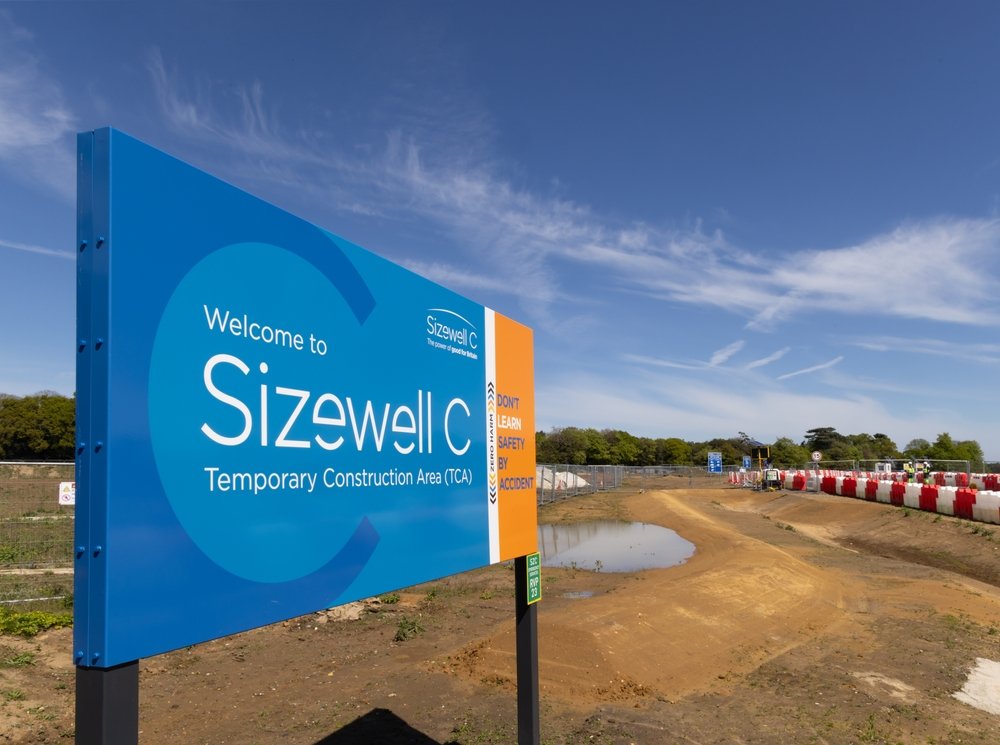




























































The estimated cost of constructing the Sizewell C nuclear power station in Suffolk has surged to a staggering £38 billion, nearly doubling earlier projections. The dramatic price increase is expected to translate into an additional £1 per month on household energy bills over at least the next ten years, according to government officials and project stakeholders.
Originally pegged at around £20 billion, the revised estimate now incorporates inflationary pressures, increased construction risks, and expanded design adaptations. Julia Pyke, joint managing director of Sizewell C, acknowledged that earlier figures failed to fully capture these variables, resulting in a significant cost reassessment.
Despite the financial increase, the UK government confirmed on Tuesday that it will take a 44.9% equity stake in the project, signaling strong political support for nuclear as part of the nation’s long-term energy strategy. A diverse group of institutional and private investors has also joined the funding effort, including British Gas parent company Centrica, Canadian pension fund La Caisse, Amber Infrastructure, and French energy giant EDF.
Sizewell C is expected to be operational between the mid and late 2030s. Once online, officials estimate the plant could reduce overall household energy costs by up to £2 billion annually. The reactor is designed to power up to six million homes and provide stable, low-carbon energy for decades, contributing significantly to the UK’s clean energy goals.
Julia Pyke emphasized that during the construction phase, the cost to consumers will remain relatively modest—around £1 a month added to their energy bills. “It’s a small price to pay now for future savings,” she stated. “We estimate consumers will save considerably in the long term through energy price stability.”
However, critics argue that the financial burden and project risks are being unfairly shouldered by the public. Alison Downes, director of the campaign group Stop Sizewell C, expressed deep concern over the spiraling costs. “This project has only progressed because the government has guaranteed that taxpayers, not private investors, will absorb the cost overruns,” she said. “It’s shocking that the true cost has nearly doubled, and we’re only learning this now as contracts are being finalized.”
Downes warned that the £38 billion figure could rise even further as construction progresses. She pointed to the troubled Hinkley Point C project in Somerset as a cautionary tale. That plant, which uses a similar reactor design and was initially budgeted at £18 billion, has seen its costs balloon to £46 billion due to delays and pandemic-related disruptions. It is now running six years behind schedule.
Despite these challenges, the nuclear industry remains confident in Sizewell C’s long-term value. Tom Greatrex, chief executive of the Nuclear Industry Association, described the investment as “money well spent” and highlighted the potential for job creation. The project is expected to generate 10,000 direct jobs and support thousands more across the supply chain.
One factor driving optimism is the standardized design of Sizewell C, which is said to be “85% replicated” from Hinkley Point C. This so-called “copy-and-paste” approach is intended to streamline construction, reduce engineering complexity, and keep future projects on time and within budget.
“This is the first true replica nuclear station,” said Greatrex. “We have an opportunity here to develop a repeatable model for nuclear infrastructure, which is the best way to build faster and more affordably.”
Energy Secretary Ed Miliband echoed those sentiments, declaring that “it is time to do big things again in this country.” He hailed the announcement as a transformative moment for UK energy, calling it “an investment that will provide clean, homegrown power to millions of homes for generations.”
The project also marks a significant milestone for the UK’s newly created National Wealth Fund, which is making its first foray into nuclear energy. Chancellor Rachel Reeves praised the involvement of international investors like La Caisse and Centrica as “a powerful endorsement of the UK’s role as a global hub for nuclear energy.”
Ownership of the Sizewell C project is now divided among:
- UK Government: 44.9%
- La Caisse: 20%
- Centrica: 15%
- EDF: 12.5%
- Amber Infrastructure: 7.6%
Despite the UK’s pioneering history in nuclear energy—it opened the world’s first commercial nuclear plant in the 1950s—progress in recent decades has stalled. No new nuclear facility has come online since 1995, and most of the current fleet is expected to be decommissioned by the early 2030s. Sizewell B is likely to be the only existing reactor still in operation when Sizewell C comes online.
Sizewell C was first identified as a potential nuclear site back in 2009, during Ed Miliband’s tenure as Energy Secretary under the Labour government. However, funding challenges and shifting political priorities under successive governments delayed its development for more than a decade.
With the UK now racing to meet its net-zero targets and energy independence goals, the revival of the Sizewell C project underscores a renewed commitment to large-scale, long-term energy infrastructure—despite the high upfront costs and public scrutiny.