










































Tanzania’s leading opposition party, CHADEMA, has been officially disqualified from participating in the country’s upcoming general elections, according to a senior election official. The decision, announced on Saturday, comes amid rising political tensions and accusations of government suppression of dissent.
Ramadhani Kailima, director of elections at the Independent National Electoral Commission, confirmed that CHADEMA had failed to meet a critical requirement — signing a mandatory electoral code of conduct by the stipulated deadline. As a result, the party is barred not only from participating in the October presidential and parliamentary elections but also from contesting in any by-elections until 2030.
“Any party that did not sign the code of conduct will not participate in the general election,” Kailima stated.
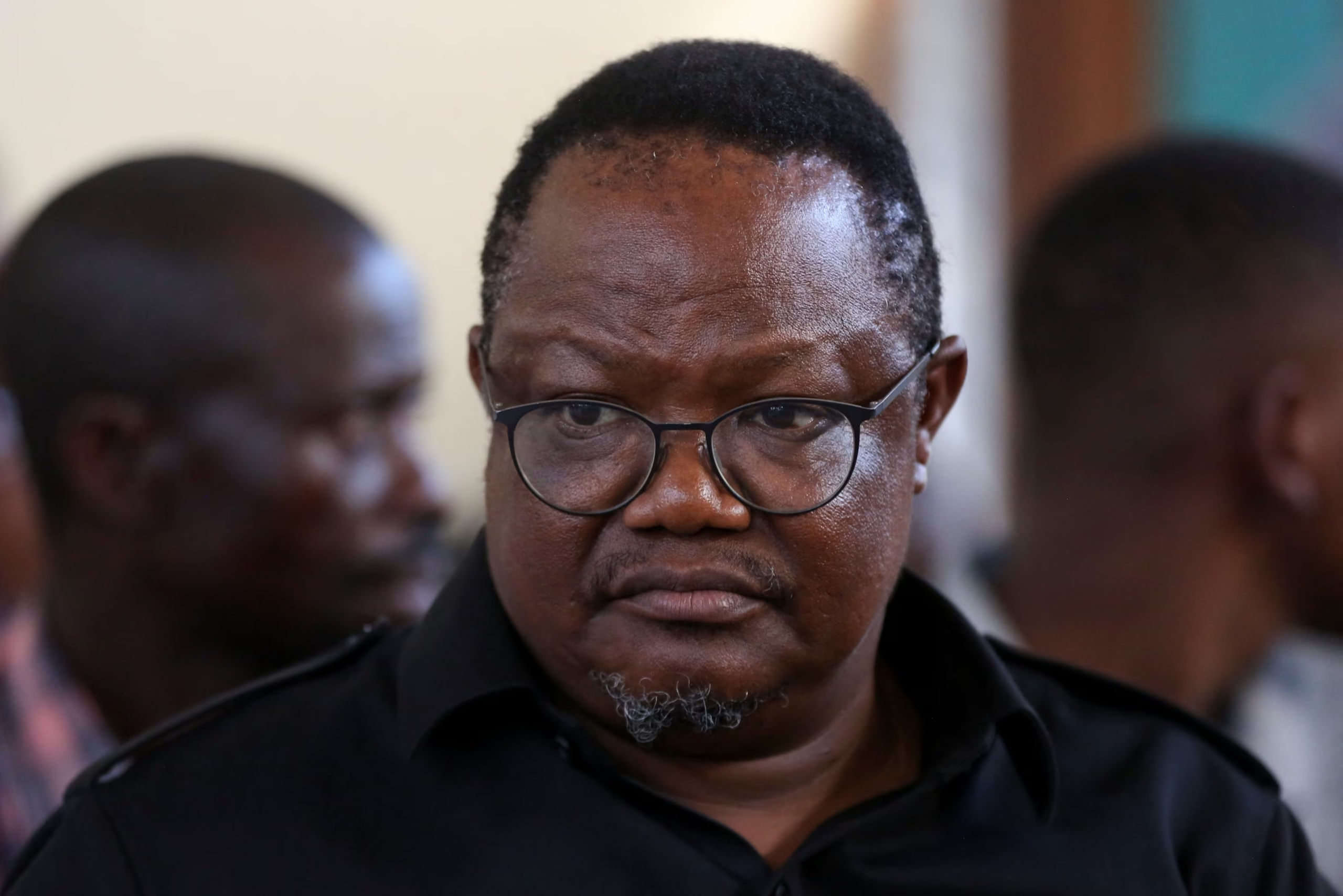
The development follows a series of escalating confrontations between the opposition and the government, including recent treason charges filed against CHADEMA’s leader, Tundu Lissu. Authorities accuse Lissu of attempting to disrupt the electoral process by allegedly inciting rebellion — charges that could carry the death penalty. Lissu, who was arrested after addressing a public rally in the Mbinga region, was later brought to court in Dar es Salaam under tight security. He has yet to be allowed to enter a plea.
Prior to the disqualification, CHADEMA had publicly declared its intention to boycott the code of conduct signing ceremony, citing deep concerns over what it describes as a biased electoral system designed to benefit the ruling party, Chama cha Mapinduzi (CCM). The party has consistently pushed for electoral reforms and greater transparency, including calls for an independent electoral commission.
In a public statement following the arrest, Lissu challenged the actions of the police, asserting that his gathering was peaceful and lawful. His detention was met with tear gas and a heavy-handed police presence, further inflaming supporters and rights advocates.
This isn’t the first time Lissu has faced persecution. In 2017, he narrowly survived an assassination attempt after being shot 16 times. Despite the trauma, he has remained a vocal critic of government policies and a key figure in the opposition movement.
Human rights organizations have criticized the Tanzanian government, led by President Samia Suluhu Hassan, for what they describe as an increasingly repressive approach to political opposition. Activists argue that the disqualification of CHADEMA is just the latest example of efforts to stifle dissent and ensure continued dominance by the ruling party, which has held power since the country gained independence in 1961.
The October elections are expected to be a critical test for Tanzania’s democratic institutions. However, with CHADEMA out of the race and its leader facing serious charges, questions are mounting about the credibility and fairness of the upcoming vote.
The ruling CCM has maintained that it supports human rights and that the legal actions taken are in accordance with national laws. The government has yet to respond to international criticism surrounding the developments.
As tensions rise, observers say Tanzania’s political landscape is at a crossroads — with growing concerns about whether the upcoming elections will mark a genuine democratic exercise or further entrench a one-party dominance under the guise of legality.