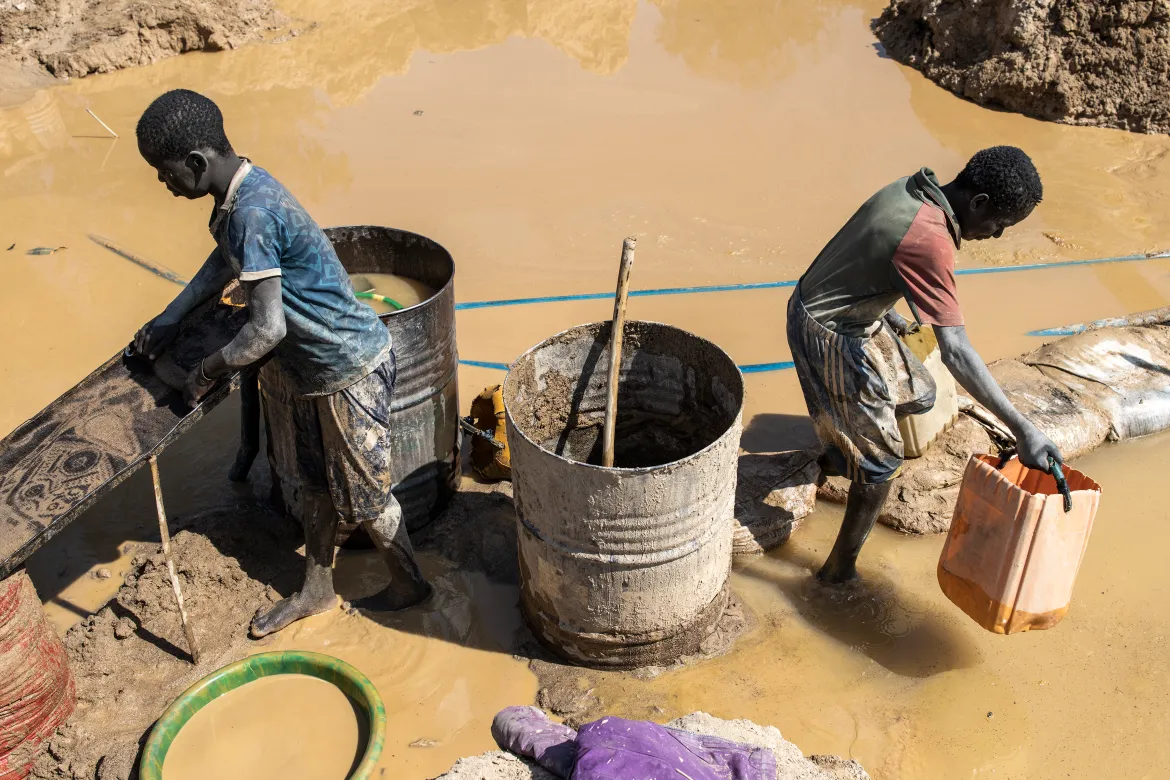



















































In the remote southeastern village of Bantako, Senegal, thousands of small-scale gold miners continue to pursue their hopes of striking it rich. Over the past two decades, Bantako has become a bustling hub for artisanal gold prospectors, many of whom work under hazardous conditions with little to show for their efforts.
The global price of gold has surged in recent years due to geopolitical instability and trade tensions involving the United States, including controversial policies from former President Donald Trump. While the price of gold has hit record highs, the miners in Bantako see very little of those profits. Middlemen and gold traders often pay them a fraction of the market value, leaving many of them struggling to survive.
Amadou Diallo, a miner in the region, summed up the harsh reality. He explained that even though the work is dangerous and offers no guarantees, it is a chance they are willing to take. “It’s not that deep, you know. About 10 or 15 meters. Wherever we are, we have to work anyway. You have to seize your opportunities,” he said, standing at the edge of a shallow pit.
The mining process in Bantako involves a deeply troubling method that is dangerous not only for the miners but for the surrounding environment and communities. Mercury is widely used by artisanal miners to extract small flakes of gold from ore. After mixing the mercury with crushed rock, the gold binds to it, forming a dense amalgam. This amalgam is then heated with a blowtorch, burning off the mercury and leaving behind a small piece of gold.
The practice is cheap and effective but highly toxic. The vaporized mercury contaminates the air and is inhaled by miners and nearby residents. Residues seep into the soil and water systems, resulting in long-term environmental degradation. The land becomes poisoned, and the consequences ripple through ecosystems and agriculture.
Local farmer and environmental activist Doudou Drama has witnessed the transformation firsthand. He recalled how fertile farmland has become unusable and how trees that once provided shade and fruit are now dead. “It’s really a great sadness for me to see the trees die. Mercury is a very dangerous product. It poisons the soil. It poisons the air. And it can cause lung diseases and deformities in babies,” he warned.
Mercury exposure is a well-documented public health threat. Chronic exposure can lead to neurological damage, respiratory issues, developmental delays in children, and birth defects. Pregnant women and children are especially vulnerable to mercury toxicity, and in some communities, these effects have already been observed.
Despite the risks, miners say they have few alternatives. There is currently no widely accessible or affordable method that rivals mercury in efficiency for small-scale gold extraction. While there are safer methods—such as gravity concentration or the use of borax—these techniques have not gained widespread adoption due to limited resources, lack of training, and weak regulatory enforcement.
The Senegalese government has been attempting for years to outlaw the use of mercury in gold mining. However, enforcement has proven difficult. The artisanal mining sector is largely informal, with thousands of unregistered miners scattered across remote and often inaccessible regions. Attempts to regulate the trade in mercury and provide education on its dangers have so far had limited impact.
Senegal is also a signatory to the Minamata Convention on Mercury, a global treaty designed to reduce mercury pollution and its health risks. Still, enforcement of the treaty’s provisions remains a significant challenge, especially in rural areas like Bantako where economic desperation outweighs long-term environmental concerns.
Experts argue that lasting change will require a multifaceted approach: educating miners, investing in alternative technologies, enforcing regulations more effectively, and offering alternative livelihoods for those dependent on artisanal mining.
Until then, villagers in Bantako continue to breathe in toxic fumes as they chase the glimmer of gold—sacrificing health, land, and future generations for a fleeting chance at economic survival.