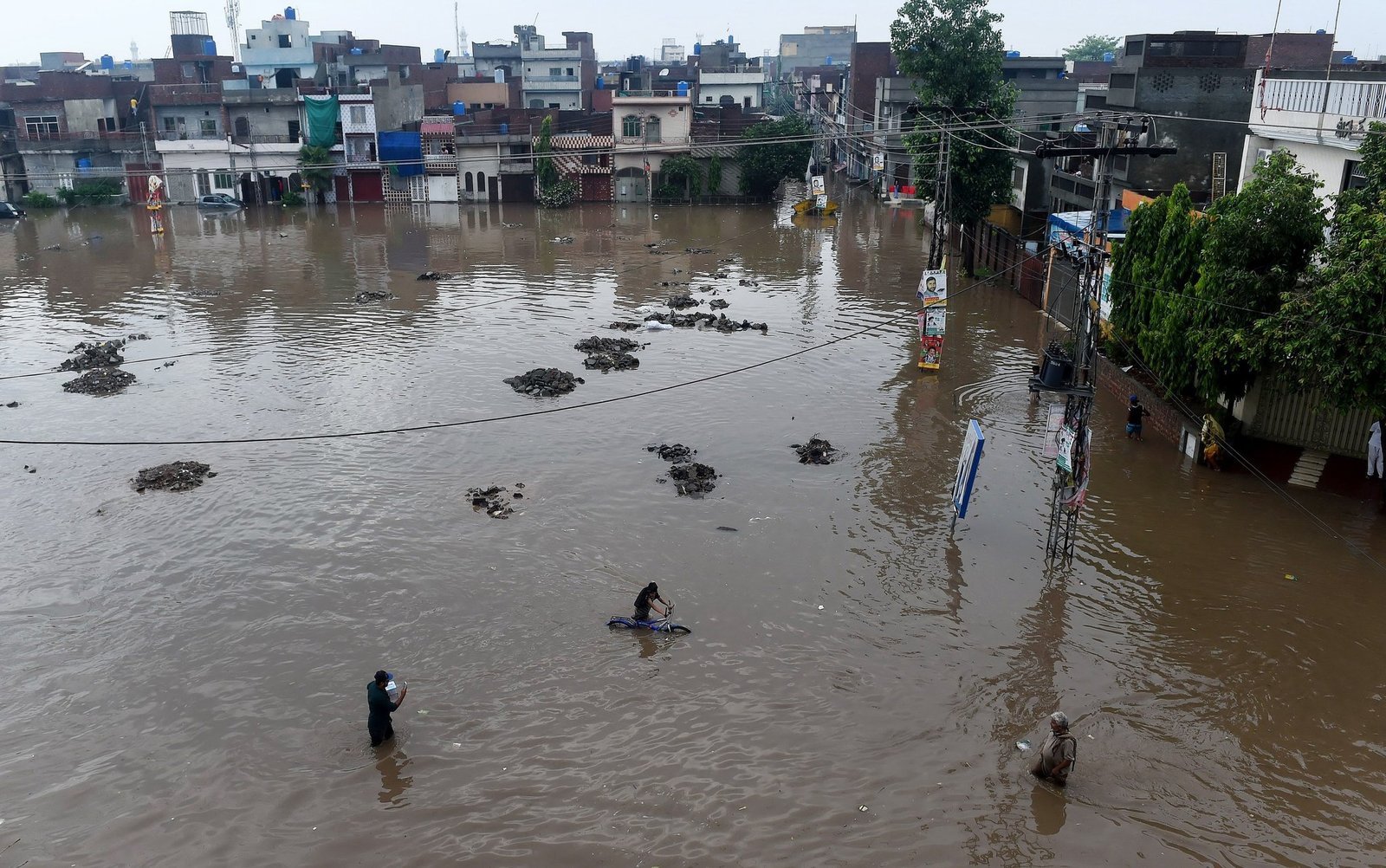




























































Lahore has recorded significantly higher rainfall this monsoon season, with more than 207mm above the average typically received between late June and mid-July, according to data released by the Water and Sanitation Agency (Wasa). Between June 25 and July 15, the city experienced an average rainfall of 478.2mm—up from 270.7mm during the same period last year.
This sharp increase highlights both the intensifying monsoon pattern and the growing challenge faced by urban infrastructure to manage heavy rainfalls and prevent urban flooding.
Several key areas of the city witnessed exceptionally heavy rainfall. For instance, Nishtar Town recorded 628mm, Lakshami Chowk 606.5mm, and Mughalpura 520mm of rain. These figures starkly contrast with last year’s totals—Nishtar Town had 284mm, Lakshami Chowk 290mm, and Mughalpura 277.5mm during the same period in 2023.
Wasa Managing Director Ghufran Ahmad, speaking to Dawn, acknowledged the substantial increase in precipitation but emphasized that the agency is working diligently to mitigate urban flooding and water accumulation. He noted that the city’s drainage infrastructure has been put under pressure, but response mechanisms have improved compared to previous years.
One of Wasa’s key strategies has been the utilization of rainwater harvesting systems. “We now have 13 rainwater storage ponds across Lahore, with 10 of them constructed under the current provincial government,” Ahmad said. These ponds are designed to capture excess rainwater, which is later used for irrigation and horticultural purposes, reducing the strain on groundwater reserves and offering an environmentally sustainable water management solution.
In areas previously notorious for prolonged waterlogging—such as Lakshami Chowk—the situation has shown marked improvement. According to Ahmad, water that used to take up to 24 hours to drain is now cleared in as little as three hours, demonstrating greater efficiency in rainwater management.
He also pointed out that rainfall patterns in Pakistan and the broader South Asian region are distinct from those in Europe. “Rainfall in Pakistan, India, Bangladesh, and Sri Lanka tends to be of higher intensity and volume compared to the light drizzles experienced in many European nations. This difference makes managing urban rainwater accumulation much more challenging here.”
Beyond Wasa’s efforts, other civic bodies are also stepping up. The Lahore Parks and Horticulture Authority (PHA) has introduced modern technology to improve operational efficiency. For the first time, biometric attendance systems have been installed at all PHA offices, and mobile applications are being used to track attendance of field staff in real-time. Each zone now has designated supervisors responsible for maintaining records and ensuring discipline among the workforce.
PHA Director General Mansoor Ahmad stated that this tech-driven approach aims to improve transparency, accountability, and overall service delivery across the organization. “By adopting a modern, app-based attendance system, we are moving towards a more transparent and performance-based work culture,” he said.
The monsoon challenges underscore a broader need for climate-resilient infrastructure in Pakistan’s urban centers. Lahore, a city of over 11 million people, is particularly vulnerable due to rapid urbanization and limited drainage capacity. Experts have been calling for more investment in sustainable drainage systems, green infrastructure, and flood-resilient urban planning to prevent large-scale disruptions during extreme weather events.
With more rain forecasted in the coming weeks, city officials remain on high alert. Residents have been urged to avoid unnecessary travel during heavy downpours and report any blocked drains or water accumulation to the relevant authorities through emergency hotlines and mobile apps provided by Wasa and the city administration.