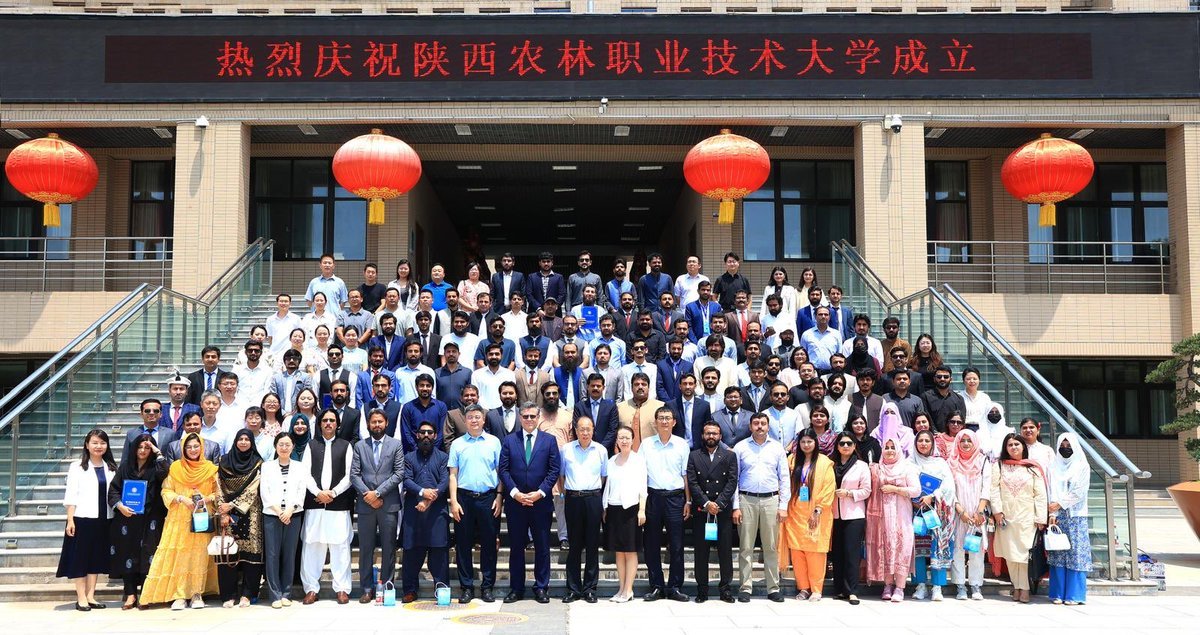
























































Pakistan’s efforts to modernize its underperforming agriculture sector took a significant leap forward as the first batch of 300 Pakistani graduates successfully completed intensive vocational training in China’s Shaanxi province, Prime Minister Shehbaz Sharif announced on Friday.
The training is part of a broader initiative between Islamabad and Beijing to overhaul Pakistan’s agricultural systems by transferring advanced Chinese agricultural expertise to Pakistani youth. The program is intended to address critical gaps in areas such as water conservation, high-yield seed production, animal husbandry, mechanized farming, and reducing post-harvest losses—fields where China has made remarkable progress in recent decades.
The agriculture training initiative, launched in 2023, aims to send 1,000 Pakistani students to China in phases. The current group is the first to have completed its hands-on training under the program, which is being fully funded by the Pakistani government. The next batch of students is scheduled to begin their studies after completing introductory Chinese language courses in Pakistan, a requirement to ease integration into China’s technical universities and research institutions.
In a post shared on X (formerly Twitter), Prime Minister Shehbaz Sharif expressed his gratitude to Chinese authorities for their role in executing the program. “It is very heartening to know that the first batch of around 300 Pakistani agriculture graduates have successfully completed their hands-on practical training in Shaanxi Province,” the prime minister wrote. He extended special thanks to the Chinese leadership, the Shaanxi government, and the two leading academic institutions involved—North West Agriculture and Forestry University and Yangling Vocational and Technical College.
PM Shehbaz also praised the efforts of Pakistan’s Ministry of National Food Security, the Higher Education Commission (HEC), and the Pakistani Embassy in Beijing for their collaborative work in ensuring the program’s success.
The Chinese Embassy in Islamabad echoed these sentiments, congratulating the students and expressing hope that their skills would play a pivotal role in enhancing Pakistan’s agricultural productivity and fostering deeper agricultural cooperation between the two nations.
The initiative comes at a crucial time for Pakistan’s agriculture sector, which, despite being the backbone of the national economy, has consistently underperformed in recent years. According to the Pakistan Economic Survey released in June, agriculture contributes nearly 24% to the country’s GDP, yet posted a meager growth of only 0.6% in the 2024–25 fiscal year—falling far short of the government’s 2% target. Alarmingly, key crops like wheat, cotton, and maize recorded a sharp collective decline of 13.5%, much worse than the anticipated 4.5% contraction.
Agricultural experts argue that such disappointing figures reflect long-standing structural challenges, including outdated irrigation systems, poor-quality seeds, lack of farmer training, inadequate mechanization, and post-harvest waste. The newly trained graduates are now expected to help address these issues by applying the knowledge and technologies acquired in China to Pakistan’s agricultural landscape.
The PM has repeatedly emphasized the need to bring Pakistan’s farming sector in line with international standards, both to ensure food security and to make agriculture a stronger contributor to national exports. With climate change, water scarcity, and rural unemployment becoming more acute, the transformation of agriculture is now seen not just as a development issue but as a strategic national priority.
As the graduates return home, they are expected to work with government bodies, local farmers, agribusiness firms, and research institutions to disseminate the advanced farming methods and tools learned abroad. It is also hoped that they will serve as agricultural ambassadors in their communities, helping to catalyze a long-overdue modernization effort.
The success of this initial batch will likely serve as a benchmark for future cohorts and may lead to further collaborative training programs between Pakistan and China across other sectors critical to the country’s development.