





























































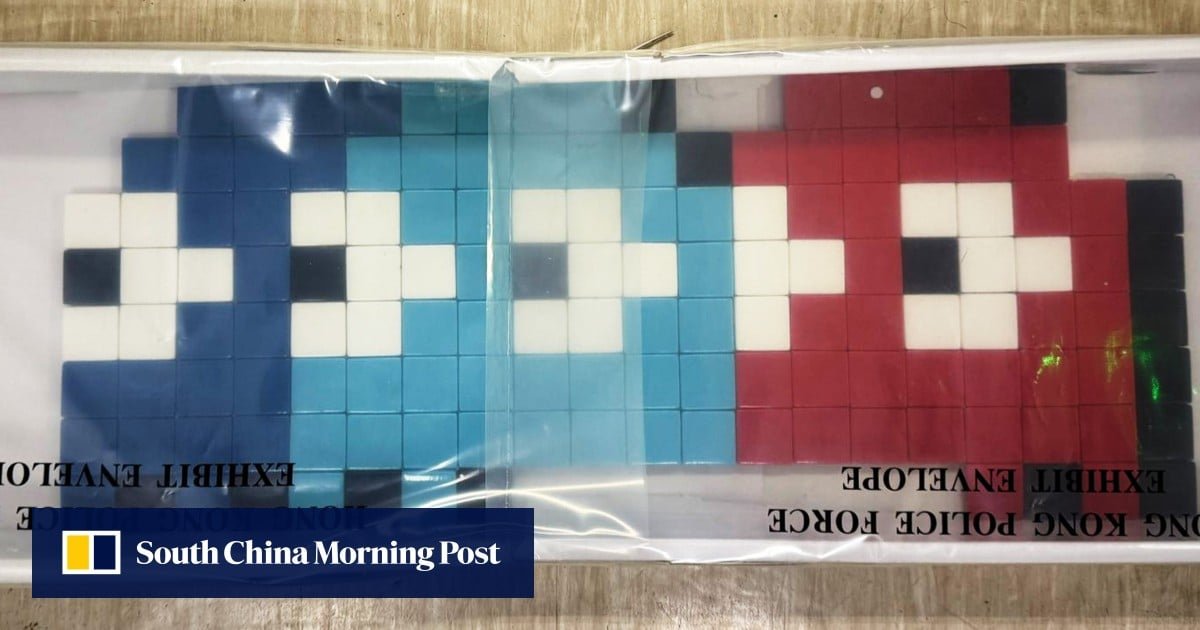
Hong Kong authorities have apprehended two individuals in connection with the alleged theft of an artwork valued at HK$50,000 (approximately £5,200), believed to be created by the renowned French street artist known as Invader. The incident unfolded at the Harbour City shopping centre in Tsim Sha Tsui, a bustling commercial district in Hong Kong.
The Hong Kong Police Force disclosed on Wednesday that a report had been filed the previous day by a manager at Harbour City regarding the missing artwork. The police swiftly initiated an investigation, scrutinising CCTV footage from the shopping centre. Their efforts led to the identification and subsequent arrest of a 40-year-old Irish man and a 32-year-old Filipino woman on Tuesday afternoon, both suspected of being involved in the theft.
The stolen artwork, along with clothing believed to have been worn by the suspects during the alleged crime, was recovered by the police. The suspects are currently being held in custody as the investigation continues.
The artwork in question is crafted from mosaic tiles and features characters reminiscent of the iconic video game Pac-Man. It is attributed to Invader, a street artist celebrated for his distinctive style that draws inspiration from the pixelated aesthetics of 8-bit video games from the 1970s and 1980s. Invader’s works are characterised by their playful yet subversive nature, often installed in public spaces without prior permission, challenging conventional notions of art and public space.
Invader, whose real identity remains a closely guarded secret, has gained international acclaim for his ‘invasions’—installations of mosaic artworks in cities around the world. His pieces are often strategically placed in urban environments, blending seamlessly with their surroundings while simultaneously standing out due to their unique style. The artist’s work is not only celebrated for its nostalgic appeal but also for its commentary on the digital age and the intersection of technology and art.
The mosaic piece in Harbour City is believed to be part of a series of 18 artworks installed in the shopping centre in 2017. These installations were part of a broader initiative to integrate art into public spaces, enhancing the cultural landscape of the city and providing residents and visitors with an opportunity to engage with contemporary art in everyday settings.
Harbour City, one of Hong Kong’s largest shopping complexes, is a prominent location for both locals and tourists. It houses a variety of retail outlets, restaurants, and entertainment facilities, making it a vibrant hub of activity. The presence of Invader’s artwork in such a high-profile location underscores the artist’s appeal and the widespread recognition of his work.
The theft of the artwork highlights the ongoing challenges faced by artists and curators in safeguarding public art installations. While public art is intended to be accessible and enjoyed by all, it is also vulnerable to vandalism and theft. This incident raises questions about the security measures in place to protect such works and the responsibilities of both the venues that host them and the broader community.
The case of the stolen mosaic is not an isolated incident in the world of street art. Over the years, numerous works by street artists have been targeted by thieves, often due to their increasing value in the art market. The allure of owning a piece by a renowned artist like Invader can drive individuals to commit acts of theft, despite the legal and ethical implications.
In recent years, street art has gained significant traction in the art world, with works by artists such as Banksy and Shepard Fairey fetching high prices at auctions. This trend has led to a growing appreciation for street art, but it has also made these works more susceptible to theft. As street art continues to gain legitimacy and value, the need for effective strategies to protect these works becomes increasingly important.
The investigation into the theft at Harbour City is ongoing, with police continuing to gather evidence and interview witnesses. The outcome of the case will likely have implications for how public art is managed and protected in the future, both in Hong Kong and beyond.
As the art world grapples with these challenges, the role of street artists like Invader remains pivotal. Their work not only enriches the urban landscape but also provokes thought and dialogue about the nature of art, ownership, and public space. The theft of Invader’s artwork serves as a reminder of the delicate balance between making art accessible to the public and ensuring its preservation for future generations.
In the meantime, the art community in Hong Kong and around the world will be watching closely as the case develops, hopeful for a resolution that respects the integrity of the artwork and the artist’s vision. The incident at Harbour City is a testament to the enduring impact of street art and its ability to captivate and challenge audiences, even in the face of adversity.