























































A remote community in the Far North is sounding the alarm over what they say is a long-standing case of illegal animal carcass dumping, which is now endangering their water supply.
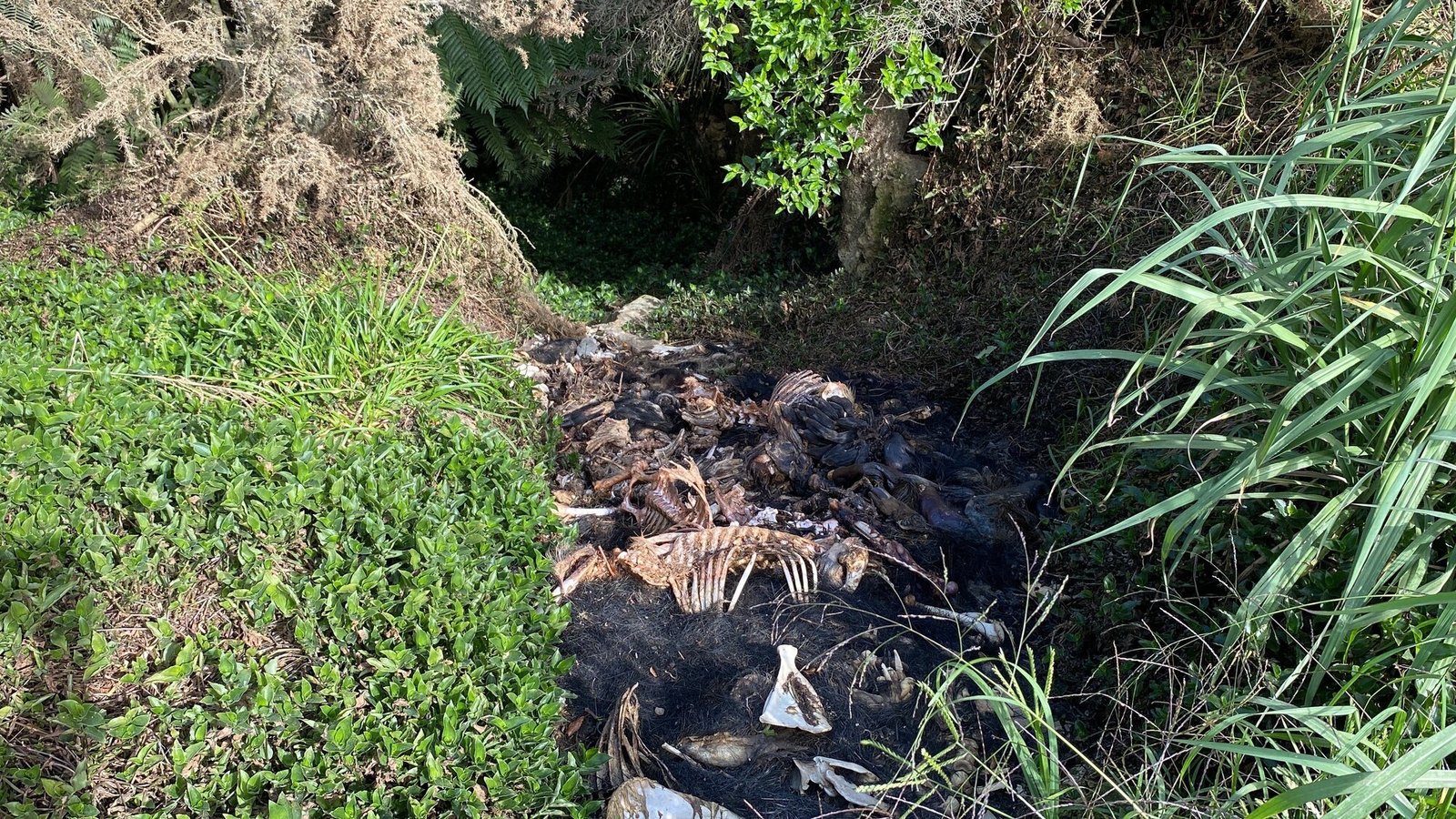
According to local Bay of Islands-Whangaroa community board member Roddy Hapati Pihema, residents have reported that thousands of dead animals have been dumped along Ruapekapeka Road near Towai for over 15 years. After visiting the site himself, Pihema described the scene as shocking.
“There were just thousands of them,” he said, recalling the scale of the dumping. “It’s unbelievable. When it rains, the runoff ends up in the local stream, which many of our families rely on for drinking water.”
The Waiomio Stream, a key water source for nearby residents, lacks connection to a centralized water infrastructure, forcing families to rely on the stream despite contamination risks. Tests by residents have shown traces of E. coli and other harmful bacteria, making the water unsafe. Still, with the high costs of trucking in clean water, many have no alternative.
Pihema, concerned for the community’s health and well-being, has taken matters into his own hands by beginning to clean up the stream. “It’s heartbreaking. People here depend on this resource, and yet we’re unable to safeguard it.”
The stream holds not only practical importance but also deep cultural significance, as it is tied to the origins of the Ngāti Hine iwi.
Regional regulations state that animal carcasses must be buried at least 50 metres away from water sources or homes and properly covered to avoid odors and vermin. If this cannot be met, a resource consent is required. However, Pihema said the current dumping site does not meet any of those requirements.
Colin Dall, Northland Regional Council’s Group Manager of Regulatory Services, confirmed that while the council has received 11 complaints about carcass dumping over the past year, none have specifically involved the Ruapekapeka site. He said the council will follow up with Pihema for further information.
Dall also reminded residents using private water sources—such as rainwater, bores, or streams—that they are responsible for ensuring the safety of their own supply, and should not assume the water is safe without proper treatment.
For now, concerned residents continue to raise their voices, demanding urgent action to protect their health, environment, and cultural heritage.