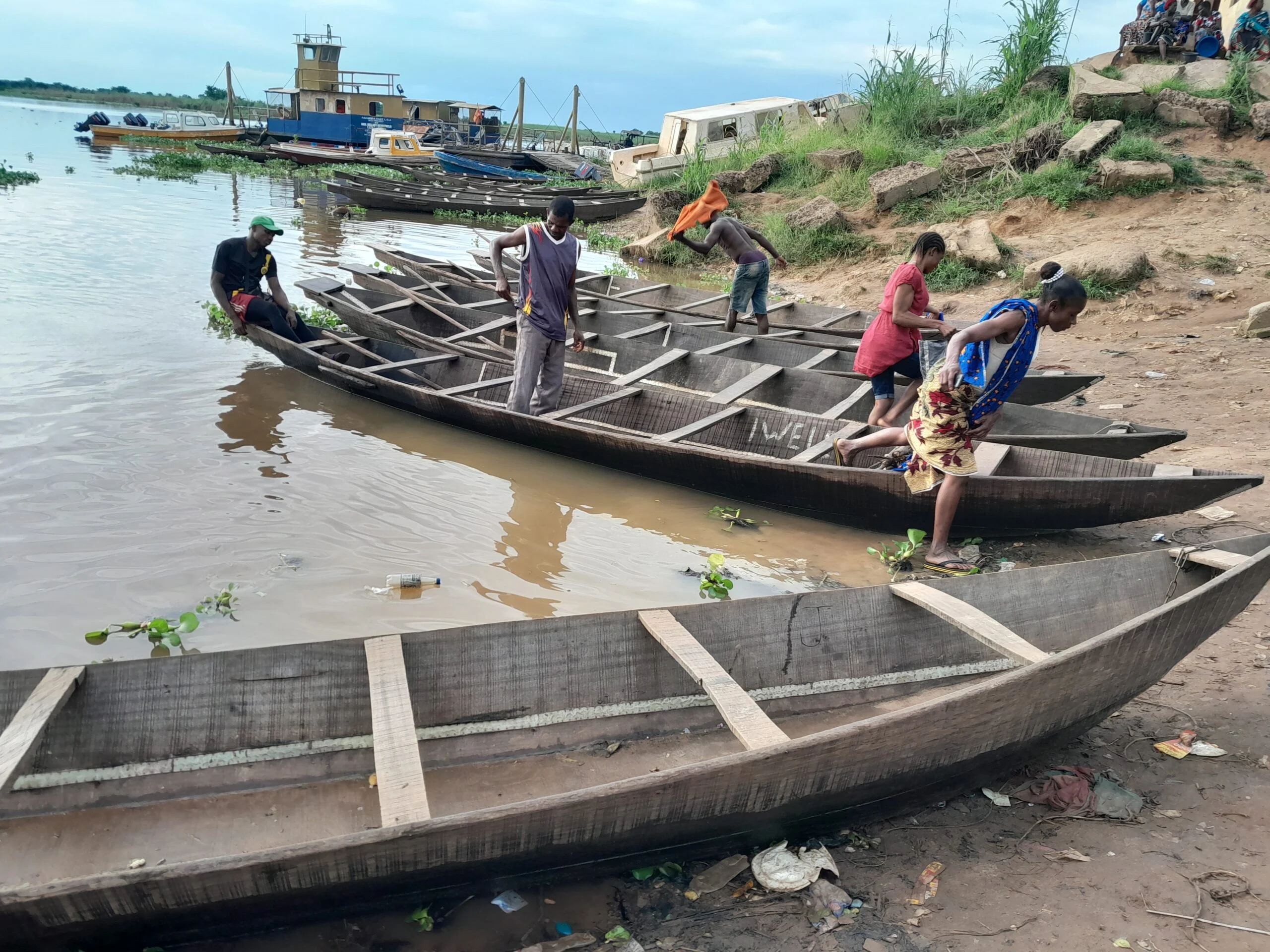
























































At least 13 people have died following a tragic ferry accident in Niger State, northern Nigeria, where persistent insecurity continues to complicate rescue and emergency operations. The vessel, which was carrying 39 passengers and 50 bags of rice en route to the bustling Zumba Market, capsized on Sunday mid-journey, according to a statement released by Nigeria’s National Emergency Management Agency (NEMA) on Monday.
Among the deceased are eight women, three men, and two children. The boat’s operator and 25 other passengers were rescued alive, NEMA confirmed. Authorities have not yet disclosed the cause of the accident, but incidents like this are not uncommon in Nigeria, where overloaded and poorly maintained vessels frequently traverse the nation’s waterways.
Efforts to reach survivors and recover bodies were severely hampered by security threats in the area. Ibrahim Hussaini, a NEMA official, told the Associated Press that rescue teams were reluctant to access the scene due to the presence of armed bandit gangs who frequently operate in the region. “Very few people can go to the scene because of banditry in that area,” Hussaini explained, highlighting the complex risks facing both survivors and responders.
The accident occurred in the Shiroro Local Government Area of Niger State, a region that has increasingly become a flashpoint for violent attacks. Just days earlier, Nigerian army troops carried out a military operation in Shiroro, killing 45 armed gang members in an ambush reportedly designed to thwart a planned assault on local communities. The Nigerian media outlet TheCable reported that the army acted on intelligence that a large group of armed militants were advancing on motorcycles toward several villages.
The violence in northern Nigeria has escalated significantly in recent years, with heavily armed gangs—commonly referred to as bandits—waging a reign of terror across rural areas. These groups routinely carry out mass abductions, extort communities for ransom, loot livestock, burn homes, and leave villages devastated in their wake. According to Amnesty International, the violence has forced thousands of people from their homes, with little or no access to security or justice.
The growing security crisis has also taken a toll on the region’s economy and social fabric. Farmers are unable to access their land, markets are becoming increasingly unsafe, and transportation by road or water is fraught with danger. As a result, incidents like the Zumba ferry accident expose a deeper humanitarian and security crisis—where the line between natural tragedy and man-made conflict is increasingly blurred.
Human rights groups and civil society organizations have called on the Nigerian government to do more to protect rural communities and secure transport routes. While military operations have had some success in neutralizing armed groups, experts warn that a purely militarized response may not be enough to address the root causes of insecurity, which include poverty, unemployment, and weak local governance.
As authorities continue to assess the fallout from the ferry disaster, residents in Niger State are left grieving yet another preventable tragedy—one that underscores the perilous intersection of infrastructural neglect and armed violence in parts of Nigeria.