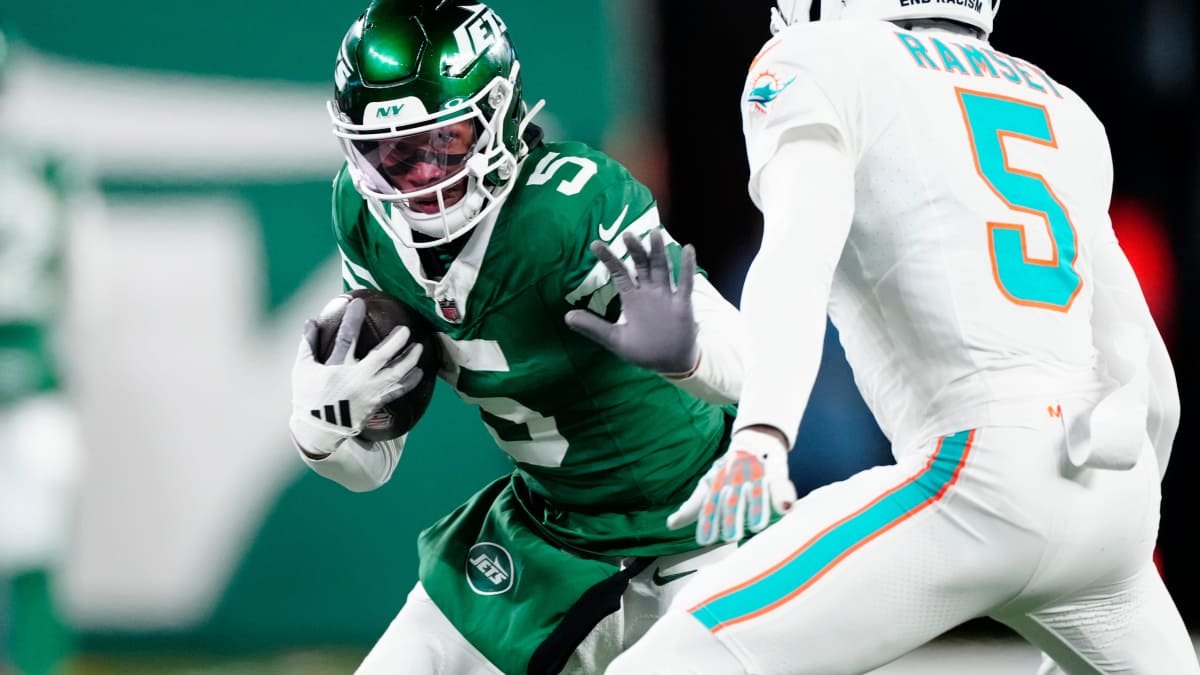




























































The New York Jets are riding a wave of optimism after locking in two of their brightest stars—cornerback Sauce Gardner and wide receiver Garrett Wilson—to massive contract extensions worth a combined $250.4 million. But as the dust settles on these headline-making deals, the big question looming over the franchise is: what’s next?
Both players, now 25, signed four-year extensions through the 2030 season. Gardner inked a $120.4 million deal, while Wilson secured $130 million. These investments mark a significant financial commitment from owner Woody Johnson and signal a shift toward building a long-term core around homegrown talent—a strategy head coach Aaron Glenn, himself a former Jets player, has openly championed.
“When you’ve got foundational players, you lock them in,” said Glenn, reflecting on his own five-year, $19.3 million extension as a Jets player back in 1997. “I want this to be the standard here.”
That standard, however, comes with its own challenges. With over $128 million in guaranteed cash headed to Gardner and Wilson in just the next three seasons, the Jets now face the complex task of balancing financial prudence with roster retention—especially as several more young stars await new deals.
Breece Hall, Jermaine Johnson, Alijah Vera-Tucker, and Quincy Williams are the next names in line for potential contract negotiations. Each player brings unique value to the team’s long-term plans—but each also comes with uncertainty.
Hall, the standout running back from the 2022 draft class, is entering the final year of his rookie contract. Because he was a second-round pick, he’s not eligible for a fifth-year option, making the 2025 season a potential walk year. Hall has racked up nearly 3,000 scrimmage yards in two seasons, but the Jets plan to rotate him in a three-back system with rookies Braelon Allen and Isaiah Davis. That raises questions about his future usage—and his leverage.
“I know I wasn’t drafted by this GM or this head coach,” Hall admitted. “So yeah, I’ve got a chip on my shoulder. It feels like this might be my last shot to prove I belong.”
Jermaine Johnson, a fellow 2022 first-rounder, saw his breakout trajectory stalled by a torn Achilles last season. While the Jets exercised his fifth-year option, securing $13.4 million in 2026, both sides seem content to delay contract talks until he reestablishes his market value.
Alijah Vera-Tucker’s situation is similarly complicated. The highly talented right guard is on his fifth-year option, but injuries have marred his early career. He’s missed 22 games over the past two seasons, raising durability concerns for a potential long-term deal. Glenn still believes in his upside.
“He’s a great player,” Glenn said. “Hopefully we can sit down and talk when the time is right.”
Vera-Tucker, for his part, expressed a desire to stay put. “It would be great to stay with the team that drafted me,” he said. “I think everybody feels that way.”
Linebacker Quincy Williams, entering the final year of a three-year, $18 million deal, is another key player whose future is up in the air. After an All-Pro season in 2023, Williams has undoubtedly outperformed his contract. Yet, the recent front office shake-up—bringing in GM Darren Mougey—has made his case more complicated. Sources say the previous administration had been exploring an extension; the new regime is expected to wait and reevaluate.
At 29, Williams is one of the older players in the Jets’ emerging core. The team must decide whether to pay up for leadership and production or reset with younger options.
Despite the major outlays for Wilson and Gardner, the Jets still enjoy roughly $32 million in cap space. However, looming decisions—most notably at quarterback—could dramatically alter that picture.
Aaron Rodgers, who was released earlier this year, will count $35 million in dead cap money in 2026. Meanwhile, current starter Justin Fields is entering a prove-it season. If Fields impresses, the Jets could be looking at another nine-figure contract extension as early as next offseason.
That’s why the front office may adopt a wait-and-see approach for the rest of its roster. Extending every young player simply isn’t feasible under the current salary cap structure—especially if a quarterback deal is on the horizon.
Glenn has been vocal about turning the Jets into an organization that drafts well, develops talent, and retains its stars. That’s been easier said than done for New York in recent history. Between 2012 and 2019, only one of the Jets’ nine first-round picks received a second contract—defensive tackle Quinnen Williams, who signed a $96 million extension in 2023.
The failures of previous regimes still haunt the team. Jamal Adams and Leonard Williams, both high draft picks, were traded away before their rookie deals ended. Ironically, one of the draft picks obtained in the Adams trade turned into Garrett Wilson—perhaps a symbol of a new, more stable era.
Glenn hopes so. “These are foundational guys,” he said of Wilson and Gardner. “They’re the types of players you build dynasties around.”
The Jets’ aggressive investment in their young stars marks a hopeful shift in team culture. But the real test lies ahead. With key players like Hall, Vera-Tucker, Johnson, and Williams heading toward free agency or extension eligibility, the franchise must make tough decisions that will shape its future.
For now, fans can celebrate the contracts for Gardner and Wilson—symbols of promise and potential. But come next offseason, the front office will be back under the microscope as it faces a potential exodus of talent.