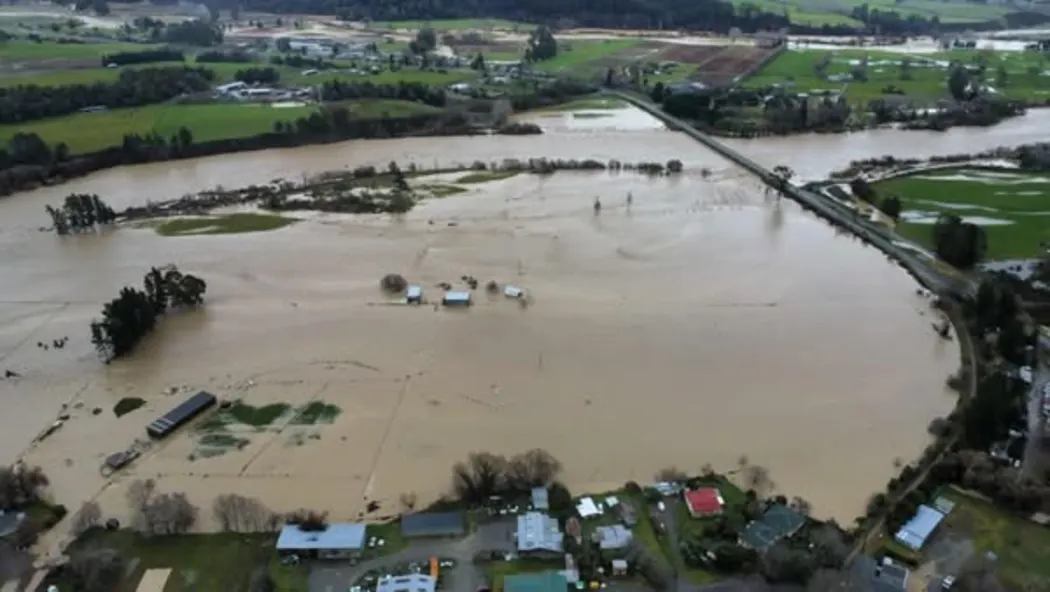


























































The government has rolled out a $500,000 support package aimed at helping farmers, growers, and foresters in the Tasman region recover from recent devastating floods, as concerns grow that total recovery costs could surpass $100 million.
Minister of Agriculture and Forestry Todd McClay visited the region on Tuesday, meeting with rural landowners and industry representatives. He announced an additional $300,000 contribution to the mayoral relief fund, earmarked specifically for rural communities. The government is also matching $50,000 contributions from both Horticulture New Zealand and Federated Farmers, targeting aid toward the horticultural and pastoral sectors.
This support comes as cleanup efforts continue across Tasman following two significant weather events, with forecasts warning of more rain in the weeks ahead. According to McClay, about 200 landowners have already sought assistance, though he expects the final number of affected properties will be much higher as assessments continue by Ministry for Primary Industries (MPI) teams. “Some areas have seen only minor or moderate damage, but others have been hit so hard that farms may be out of production for the foreseeable future—if they ever recover,” McClay said.
Eighty Eight Valley farmer Ian Parkes estimates damage to his property will cost around $200,000. His land borders both the Eighty Eight Valley Stream and Quail Valley Stream—streams that overflowed during the floods, wiping out all 25 of his floodgates and leaving large sections of his farm inaccessible to livestock. “We’ve lost stock access, which means we can’t manage feed properly,” Parkes explained. He added that 60 tonnes of rock placed to protect a farm shed and a bridge were largely washed away. During one of the storms, the water overtopped the bridge, leaving Parkes and his wife stranded on opposite sides of the property for several hours. “This is the worst flood I’ve seen in my time here—even worse than the 1983 event,” said Parkes, who has farmed the land for five generations. Facing upcoming feed shortages, he has already begun selling off stock.
Further down the valley, sheep and beef farmer Donald Ladley is also facing the aftermath of the storms. On his farm, hilly terrain has become too dangerous for machinery or even ATVs, and at least 10 hectares of pasture have been lost. In one block, silt buried eight paddocks, leaving only two usable. “It took us two years to rebuild fences from a previous flood, and now we’re back at square one,” he said. A bulldozer was brought in this week to push gravel back and create space for new fencing—though temporary fences are far from ideal, especially with lambing season approaching.
Wayne Langford, national president of Federated Farmers, said the recent succession of storms has left farmers scrambling to get properties functional ahead of calving and lambing season. “Farmers are no strangers to rough weather, but this was something else,” Langford said. “With our busiest time just weeks away, there’s real urgency to clean up and get back to work.” HortNZ chief executive Kate Scott echoed that sentiment, stating that many growers have suffered extensive damage to orchards, infrastructure, and roads. “Growers are resilient, but the frequency and severity of these weather events has made this recovery particularly difficult,” she said.
Tasman Mayor Tim King has cautioned residents to prepare for more heavy rain as a stubborn weather pattern continues to affect the region. “We’ve had two major events already, and nearly experienced a third in between,” King said. “With roads and riverbanks already compromised, even moderate rainfall could cause significant issues.” King said that restoring road access, repairing stopbanks, and stabilizing river systems are now top priorities for the council—especially as the ground remains saturated and vulnerable.
MetService and NIWA have both forecast increased rainfall through the end of July and into August, raising further concerns. Civil Defence teams are continuing to visit isolated areas, with over 40 local roads still closed and at least eight homes in the district still without power.