












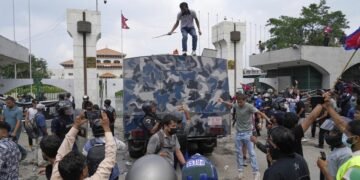


























In recent days, Nepal has witnessed a surge of protests across various cities, ignited by widespread discontent regarding corruption and a controversial ban imposed on social media platforms. This unrest has escalated dramatically, leading to a significant deployment of military forces to restore order. Reports indicate that at least ten individuals have lost their lives amid the clashes, with numerous others sustaining injuries, highlighting the severity of the situation.
The protests began in response to a government decision to restrict access to several popular social media sites, a move perceived by many as an infringement on civil liberties and freedom of expression. Activists argue that these platforms are vital for voicing dissent and rallying support against systemic corruption that has plagued the nation for years. The government’s actions have been met with outrage, prompting citizens to take to the streets in large numbers, demanding accountability and transparency from their leaders.
Amid the demonstrations, protesters have expressed their frustration with the political establishment, accusing officials of failing to address rampant corruption and mismanagement. The rise in public discontent has been fuelled by various scandals involving high-ranking officials, leading to calls for substantial reforms in governance. As the unrest continues, the government’s attempts to suppress dissent through social media restrictions have only intensified the anger among the populace.
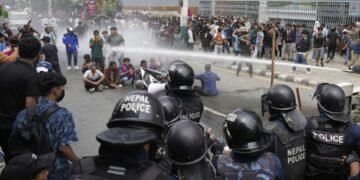
In response to the escalating violence, the Nepali Army has been deployed to key areas, particularly in the capital, Kathmandu, where clashes between protesters and law enforcement have been most intense. The military’s involvement marks a significant escalation in the government’s approach to handling the unrest. Eyewitness accounts from the ground indicate that security forces have used tear gas and water cannons in an effort to disperse crowds, leading to chaotic scenes as demonstrators retaliate.
The ongoing protests have garnered attention not only within Nepal but also internationally, as observers closely monitor the developments. Human rights organisations have raised alarms over the government’s heavy-handed tactics, warning that the suppression of peaceful protests could lead to further unrest. Activists have urged the international community to take a stand against the government’s actions, advocating for the protection of fundamental rights and freedoms.
As the situation unfolds, social media has played a crucial role in mobilising support and disseminating information about the protests. Despite the government’s attempts to restrict access, many have found ways to circumvent the ban, highlighting the resilience of those determined to voice their grievances. The use of alternative platforms and encrypted messaging services has allowed protesters to organise and share their experiences, drawing attention to their cause on a global scale.
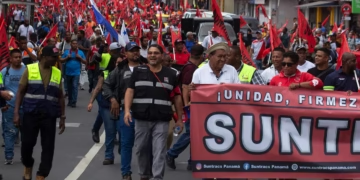
The demonstrations have attracted a diverse range of participants, from young students to seasoned activists, all united by a common goal: to demand accountability from their leaders and to reclaim their rights. The atmosphere at the protests has been charged with emotion, as individuals share personal stories of loss and hardship resulting from the government’s policies. This collective grief and anger have only served to strengthen the resolve of the demonstrators.
As calls for reform grow louder, the government faces increasing pressure to respond to the demands of its citizens. Analysts suggest that the current unrest could lead to significant political changes if the authorities fail to address the underlying issues of corruption and governance. The potential for dialogue between the government and opposition groups remains uncertain, as trust continues to erode.
In the coming days, the situation in Nepal is likely to remain volatile as both sides brace for further confrontations. The protests have not only highlighted the deep-seated issues within Nepali society but have also sparked a broader conversation about the future of democracy in the country. As citizens continue to fight for their rights and freedoms, the world watches closely, hoping for a peaceful resolution to the turmoil.