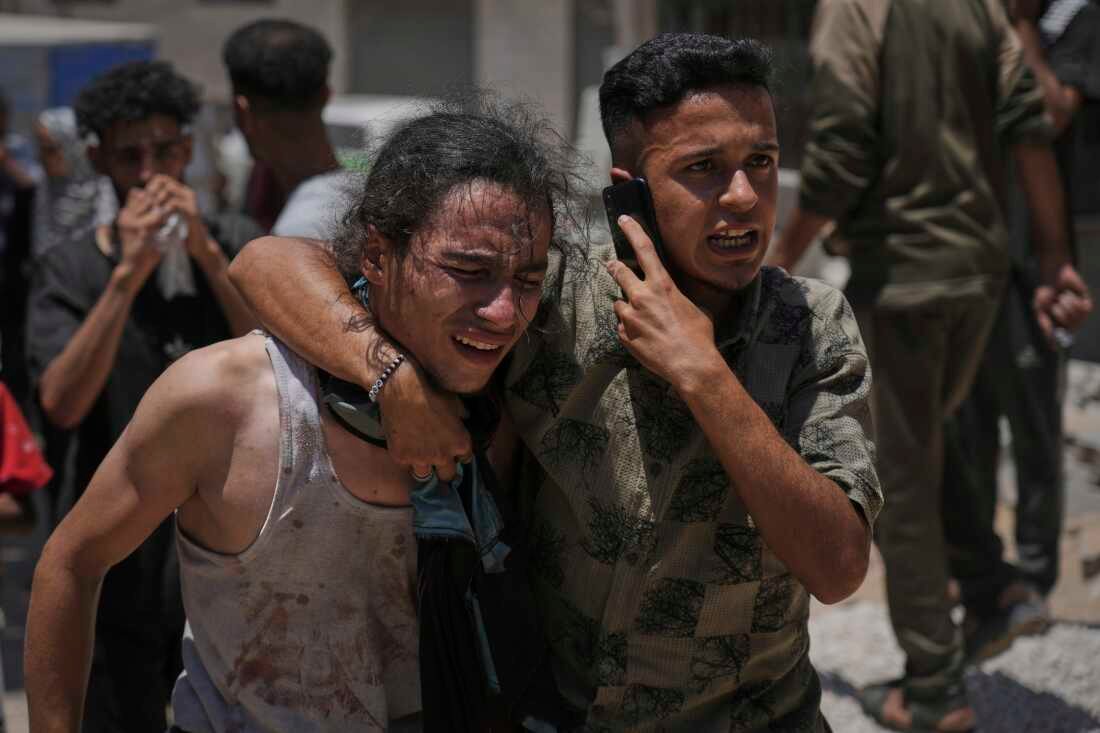


























































The humanitarian crisis in Gaza has taken another devastating turn, with at least 67 Palestinians reported killed as they waited for food aid in northern Gaza. According to the Hamas-run health ministry, the victims had gathered near a United Nations World Food Programme (WFP) convoy when Israeli forces opened fire. The Israeli military has disputed the death toll, claiming it had only fired warning shots to disperse what it described as “an immediate threat.”
The WFP confirmed that its 25-truck convoy, carrying urgently needed supplies, encountered massive crowds of starving civilians near the border. Shortly after crossing from Israel and clearing checkpoints, the convoy was caught in chaos and gunfire. “This level of violence against desperate people simply seeking food is completely unacceptable,” said a WFP spokesperson. The organization also warned that malnutrition is soaring, with an estimated 90,000 women and children in urgent need of treatment. Nearly one in three Gazans, it said, are going without food for days.
Gaza’s health ministry said at least 18 people died from hunger in the past 24 hours alone, adding to the growing list of famine-related deaths. In total, civil defense officials said 93 people were killed on Sunday across Gaza by Israeli fire: 80 in the north, nine in Rafah, and four in Khan Younis.
Hospitals in Gaza are overwhelmed. At Gaza City’s Shifa Hospital, Dr. Hassan al-Shaer described the dire conditions as unsustainable. “We simply can’t treat everyone,” he said. Outside the hospital, the anguish was palpable. “We are dying,” one woman told local media. “Children have nothing to eat. We are surviving on water and salt.”
Eyewitnesses described scenes of terror at aid points. Qasem Abu Khater, a Gaza City resident, said he ventured out to secure a bag of flour but found himself in a deadly crowd. “Tanks fired shells randomly, and snipers were shooting as if they were hunting animals,” he said. “I saw dozens fall before my eyes. No one could help them.”
Many of these violent aid incidents have occurred near aid distribution points managed by the Gaza Humanitarian Foundation (GHF), a controversial organization supported by Israel and the U.S. Critics say the group operates within Israeli military zones and uses private security forces, raising concerns over civilian safety. Other fatalities, however, have been reported near UN-operated aid distribution convoys as well.
As the crisis intensifies, the Israeli military has issued new evacuation orders for parts of central Gaza not previously targeted in ground operations. Residents of Deir al-Balah, a densely populated area in central Gaza, were told to flee immediately toward the coastal zone of al-Mawasi. Leaflets dropped from Israeli aircraft warned civilians to evacuate in preparation for a potential military operation.
The warnings sparked panic among the tens of thousands already displaced in Deir al-Balah. Many are living in makeshift tents and have few resources to relocate again. Israeli sources told Reuters that ground forces had not yet entered the area because they suspect Hamas may be holding hostages there. At least 20 of the 50 hostages still believed to be alive in Gaza may be located in this region.
The wider context of the conflict remains grim. Since the October 7 Hamas-led attacks on southern Israel that left around 1,200 Israelis dead and over 250 taken hostage, Israel has launched a relentless military campaign in Gaza. The Hamas-run health ministry now reports over 58,895 deaths in the territory—a number widely cited by the United Nations and international organizations as the most reliable available.
International criticism is mounting. On Sunday, Pope Leo XIV condemned the ongoing violence, urging “an immediate end to the barbarity of the war” and warning against “the indiscriminate use of force.” His comments came just days after an Israeli airstrike struck Gaza’s only Catholic church, drawing widespread condemnation, including a rare expression of regret from Israeli Prime Minister Benjamin Netanyahu.
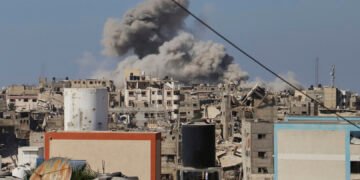
While diplomatic efforts to secure a ceasefire have stalled, the humanitarian cost continues to escalate. Most of Gaza’s population—over two million people—have been displaced at least once, and entire neighborhoods have been reduced to rubble. With starvation setting in and aid routes growing more dangerous, global aid agencies warn that Gaza is on the brink of full-scale famine.
The international community is urging immediate action to ensure unimpeded access for humanitarian assistance and to protect civilians seeking aid. But as military operations expand and the death toll rises, the prospects for relief appear increasingly uncertain.