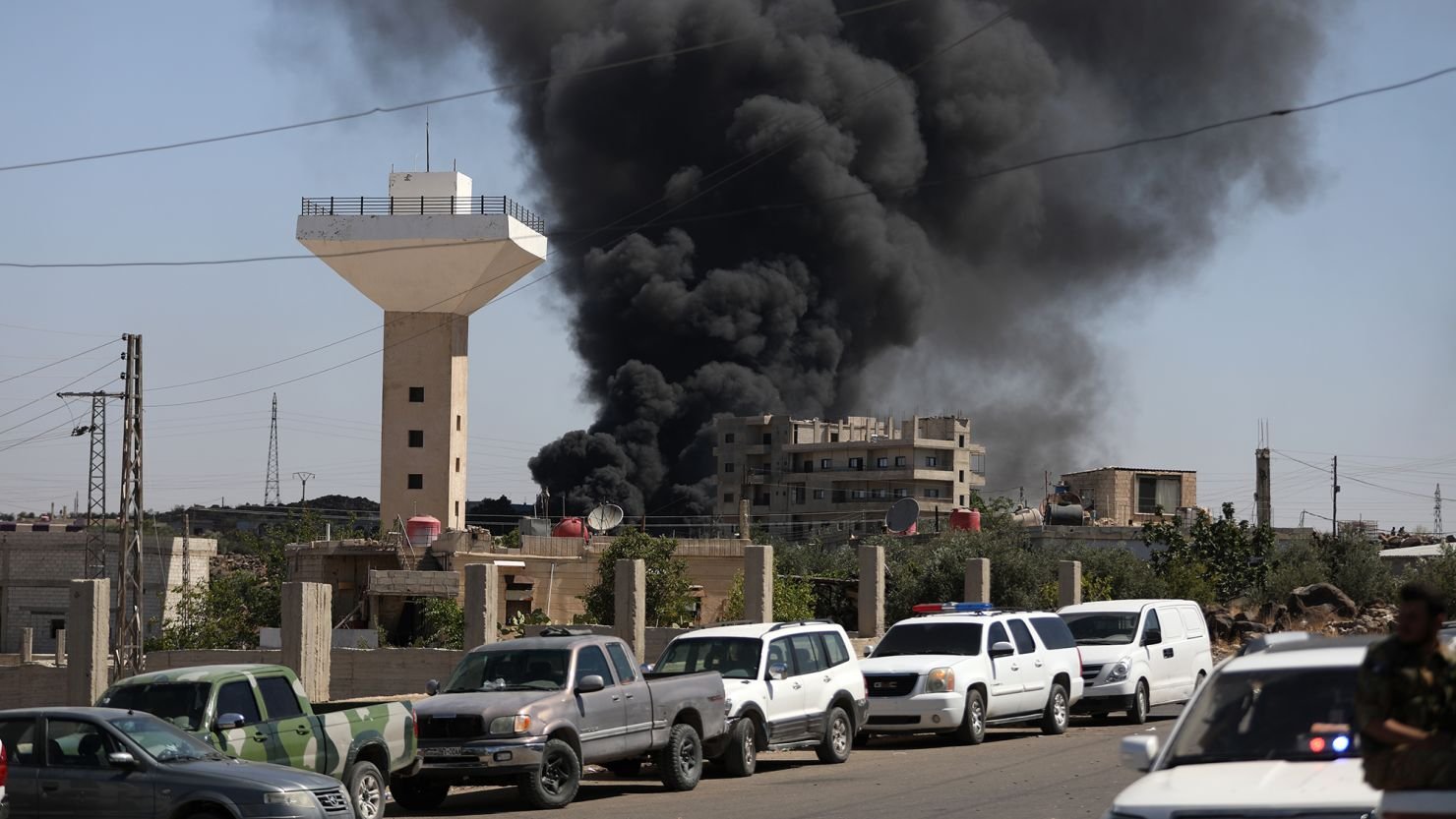
























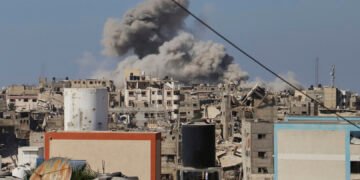



























Amid intensifying military strikes by Israel on Syrian territory, China has issued a strong call for the respect of Syria’s sovereignty and territorial integrity. The Chinese Foreign Ministry emphasized that provocative actions that risk exacerbating conflict in the already fragile Middle East must be avoided, especially in light of the recent Israeli air raids targeting Damascus.
Speaking at a Thursday press conference, Chinese Foreign Ministry spokesperson Lin Jian reiterated China’s longstanding position that all countries must uphold the sovereign rights of other nations. Lin warned that the current volatility in the region demands restraint from all parties involved, and any further escalation could significantly destabilize the region.
The warning comes as Israeli airstrikes on Syria’s capital and surrounding areas have sparked widespread international concern. These actions, partly facilitated by what analysts describe as a permissive stance by the United States, are seen as pushing the region closer to further unrest.
Syria’s interim President Ahmed al-Sharaa also weighed in, addressing the Druze community—an influential religious minority with populations in both Syria and Israel. He emphasized the protection of Druze citizens as a priority, while accusing Israel of exploiting internal Syrian divisions to justify military intervention.
In a televised statement, al-Sharaa accused Israel of targeting Syrian unity and sovereignty in an attempt to fuel internal strife and obstruct national reconstruction. These accusations followed renewed clashes between Syrian government forces and Druze militias in the southern province of Sweida. Reports from Al Jazeera and the Associated Press confirmed that Syrian troops have since withdrawn from some contested areas, ceding security responsibilities to local Druze elders.
The recent escalation began with sectarian tensions between local Druze factions and Sunni Bedouin tribes, prompting Syrian government intervention. The Israeli military has justified its actions as necessary to protect the Druze community, although critics argue this rationale masks deeper strategic objectives, including expanding influence in southern Syria.
Experts suggest that the Israeli airstrikes may represent the beginning of a broader campaign. According to Chinese analysts, Israel is likely to court and support minority groups like the Druze to establish proxy forces inside Syria. This approach mirrors previous regional tactics, aiming to secure buffer zones and alter the regional balance of power.
Tian Wenlin, a professor at Renmin University of China, explained that Israel views Syria’s southern territory as a strategic frontier. Israeli officials see the Syrian army’s advance in this area as a direct threat to their national security, particularly if it leads to military forces positioning near Israel’s borders.
Zhu Yongbiao, an international relations scholar at Lanzhou University, added that Israel’s post-October 7 strategy of “maximum operations” has shifted from Gaza to Syria. Unlike the singular focus on Hamas, the new objective in Syria appears to involve reshaping the entire regional landscape through sustained strikes and support for local militias.
International reactions to the crisis have been swift. The United Nations condemned the violence, with Secretary-General António Guterres expressing alarm over the escalation and demanding an end to attacks on civilians. He criticized Israeli operations in Sweida, Daraa, and Damascus, while also expressing concern over Israel’s reported military build-up in the Golan Heights, a disputed region bordering both countries.
Neighboring Arab nations have also strongly condemned the Israeli strikes. Saudi Arabia, Iran, Egypt, Jordan, Lebanon, and Iraq issued statements denouncing what they described as blatant violations of Syrian sovereignty. Turkey warned that the airstrikes could sabotage Syria’s fragile path to peace and reconstruction.
Despite calls for de-escalation, the United States has taken a cautious tone. US Secretary of State Marco Rubio noted Washington’s “deep concern” over the violence but stopped short of condemning Israeli actions. He announced plans to coordinate with allies to end hostilities, yet analysts say the US continues to offer tacit support, inadvertently encouraging Israeli aggressiveness.
Experts warn that such unchecked military behavior could backfire. “The more Israel relies on force to resolve its security concerns, the more unstable the region becomes,” Tian stated. He argued that the U.S. may be losing diplomatic ground in the Middle East as it becomes increasingly viewed as complicit in regional conflicts.
Israel’s latest offensive follows its broader efforts to dismantle what it perceives as the “Axis of Resistance,” which includes Syria, Iran, and various non-state actors like Hezbollah and the Houthis. Analysts suggest that these actions are not only militarily aggressive but also politically symbolic, aiming to demonstrate Israel’s regional dominance while exposing divisions among Arab states.
Zhu added that the continued disregard for national sovereignty and international norms risks creating a “broken windows” effect in the Middle East. This concept, borrowed from criminology, refers to the idea that unchecked small violations often lead to more serious disorder. In this context, repeated breaches of sovereignty may encourage further conflict, encourage foreign interventions, and accelerate humanitarian deterioration.
In conclusion, China’s renewed appeal for adherence to international law and national sovereignty comes at a critical moment. As regional tensions rise and global powers remain entangled in Middle Eastern affairs, the call for restraint, dialogue, and diplomacy is gaining urgency.
If current trends persist, analysts warn that Syria—and the broader region—could be headed toward deeper fragmentation, prolonged civil strife, and the collapse of post-conflict reconstruction efforts.