


















































President Claudia Sheinbaum has taken decisive action in response to growing concerns about corruption within Birmex, the Mexican state-owned pharmaceutical company responsible for medicine procurement. In a significant move during her administration, Sheinbaum announced the dismissal of at least five high-ranking officials due to serious irregularities linked to the awarding of overpriced medicine contracts.
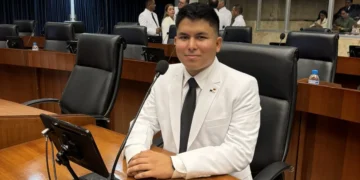
Among those removed is Iván Olmos, the general director of Birmex, who has been replaced by Carlos Ulloa, a lawmaker from the ruling Morena party and a trusted member of Sheinbaum’s inner circle during her tenure in Mexico City. During her morning press conference at the National Palace, Sheinbaum confirmed the dismissals, citing clear indications of collusion between public servants and private pharmaceutical companies. “Those involved, whether directly or indirectly, could not be allowed to remain in their posts while the investigation continues,” she stated.
The scandal first came to light in February after it was discovered that a segment of medicine contracts—covering just 6% of medication codes—had been awarded with price surcharges exceeding 13 billion pesos. These codes refer to essential identifiers used to categorize different medications. The detection of these inflated costs immediately raised red flags, prompting the Health Ministry, led by Undersecretary Eduardo Clark, to freeze that portion of the procurement process.
Although the rest of the contracts, representing approximately 73% of the total bidding process, continued, a broader investigation was launched by the federal Anti-Corruption Secretariat. After reviewing the situation, officials declared the entire procurement process invalid due to flaws and irregularities from the outset. “It’s like restarting a game where cheating was involved. Even if only some rounds were manipulated, the integrity of the whole process is compromised,” explained Secretary of the Treasury Raquel Buenrostro.
Buenrostro emphasized that the government is conducting two parallel investigations. The first, now concluded, led to the annulment of the procurement procedure. The second probe focuses on identifying the individuals responsible for misconduct within Birmex and other government departments. Those found guilty could face administrative sanctions, criminal charges, or both. “No stone will be left unturned,” Buenrostro said firmly.
The corruption scandal stems from concerns flagged by two separate government entities. The Health Ministry identified contract awards made at unusually high prices, while the Anti-Corruption Secretariat received complaints from pharmaceutical companies that had participated in the bidding. These complaints prompted further examination of the process, although procurement activities continued to ensure medicine supplies were not disrupted. This comes after a reported 30% medicine shortage last year—a major concern for the administration.
While the entire bidding round was officially canceled, the government confirmed that any contracts awarded legally will still be honored. Suppliers who delivered medications under valid agreements will be compensated. To work around legal complications caused by the annulment, the administration plans to reissue contracts directly to companies that were awarded bids legitimately. “We anticipated the possibility of needing to restart, so we prepared with high initial supply orders to avoid shortages,” Buenrostro explained.
The Anti-Corruption Secretariat has given Birmex until April 21 to initiate a new procurement process. As of early April, approximately 233 million units—around 61% of the total 381 million ordered—had already been delivered. The total cost of this procurement round is estimated at 248 billion pesos.
This incident is not the first to cast a shadow over state laboratories. Earlier this year, a forensic audit of Birmex’s 2023 financial activity uncovered irregularities totaling over one billion pesos, representing a quarter of the examined transactions. The government has remained silent on that audit’s findings, but this latest development has forced Sheinbaum to respond publicly.
“We can’t just pretend nothing happened,” Sheinbaum said. “Our commitment is to a clean and transparent government. We said zero corruption—and that’s what we mean.”
The latest developments underscore the administration’s pledge to stamp out corruption within government agencies, particularly in sensitive sectors like public health. As legal proceedings and investigations continue, all eyes will be on how swiftly and thoroughly the administration follows through on its promise of accountability.