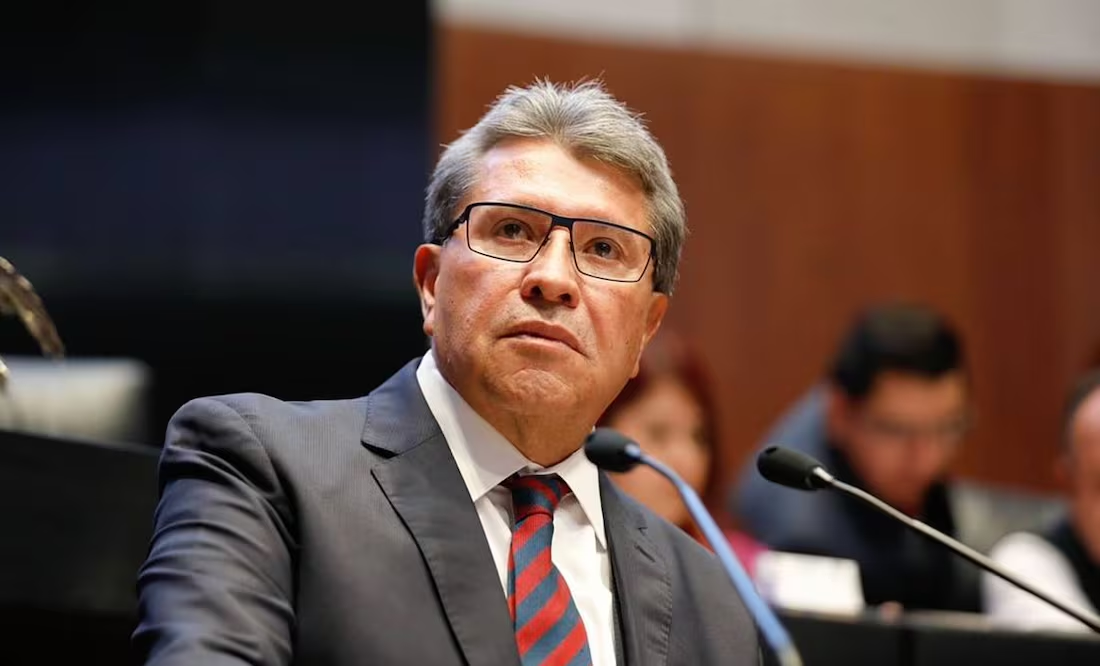
































Mexican lawmaker Ricardo Monreal, a key figure in the ruling Morena party and current coordinator of its parliamentary group in the Chamber of Deputies, has publicly denied allegations that he used government funds to finance a personal vacation in Spain. The senior politician clarified that the recent trip to Madrid with his wife was entirely paid for out of pocket and was part of a private celebration marking their 40th wedding anniversary.
The controversy erupted after a photograph surfaced online showing Monreal and his wife dining at “Flor y Nata,” a restaurant located inside the luxurious Rosewood Villa Magna hotel in Madrid. This prompted widespread speculation on social media and in some media outlets that the couple was enjoying a lavish stay possibly funded by taxpayer money.
Monreal swiftly addressed the claims through a post on his official account on X (formerly Twitter), stating, “In the face of the legislative recess, my wife and I planned a few days of rest for our 40 years of marriage, a plan covered with our own resources.”
He went on to categorically deny that he stayed at the upscale Villa Magna hotel, despite being photographed on the premises. “There is not a single peso of public funds involved, and it is false that we are staying in expensive hotels,” Monreal wrote.
The long-time Morena leader acknowledged that public officials are subject to scrutiny and public interest, but warned against the spread of misinformation. “Public servants have rights too. While I fully accept the accountability that comes with public life, it’s not acceptable to distort the truth or peddle falsehoods that harm our integrity,” he added.
Monreal’s statement is a direct response to what he described as “insinuations” from unnamed news agencies suggesting misuse of public resources for personal luxury. His message comes amid heightened political tensions within Morena and increased public attention on the spending habits of elected officials, especially in the lead-up to the next legislative period.
Adding to the scrutiny was Monreal’s absence from Morena’s National Council meeting on July 20. In a formal letter addressed to Luisa María Alcalde, the national president of the Morena party, Monreal explained that he had a prior family engagement scheduled during the legislative recess. This absence, coupled with rumors about his Madrid stay, sparked further speculation about his political positioning and loyalties within the party.
In his letter, Monreal also rejected claims that he was in Madrid with Pedro Haces, a controversial figure and former senator, stating plainly: “The assertion that I am there with him is false.”
The timing of this political drama is significant. Monreal is considered one of Morena’s more moderate and pragmatic voices, often walking a fine line between party loyalty and broader national interests. He previously ran for Morena’s presidential nomination but ultimately stepped aside in favor of a unity process led by Claudia Sheinbaum, now Mexico’s President-elect.
While Monreal’s clarification may calm immediate suspicions, the episode underscores how personal actions by public officials are increasingly scrutinized in a hyper-connected era — where a single photo can spark a wave of criticism, particularly when public trust in government transparency remains fragile.
Monreal’s handling of the situation — directly addressing the rumors and providing clear denials — suggests an effort to avoid further political damage as Morena prepares for a new phase under incoming national leadership.
In conclusion, the seasoned politician remains firm in asserting that his personal celebration did not cross ethical or legal boundaries. “Let’s not allow falsehoods to cloud moments of personal joy that are entirely within the law,” he concluded.