

















































Amid growing trade tensions and an upcoming tariff deadline, Mexico has made slight progress in its negotiations with the United States. While two tangible outcomes—the resumption of livestock exports and a reduced remittance tax—are seen as small victories, experts warn that the broader bilateral relationship remains fragile and far from secure.
The Mexican government recently announced that a contentious 3.5% tax on cash remittances from migrant workers to Mexico will now be reduced to 1%, and only applied to cash transfers—a minor portion of total remittances. At the same time, President Claudia Sheinbaum confirmed that livestock exports, previously halted due to a screwworm infestation, will gradually resume.
Although these developments provide some relief, analysts argue they stem more from sectoral negotiations between private actors and local officials than from strong diplomatic leadership. “These aren’t the results of high-level diplomacy, but rather pressure and dialogue from U.S. business leaders, legislators, and unions in coordination with their Mexican counterparts,” says Aribel Contreras, international analyst and coordinator at Universidad Iberoamericana.
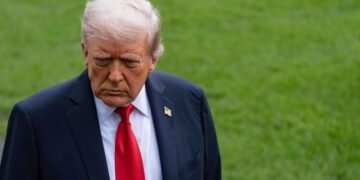
Contreras sees these small breakthroughs as a distraction from more serious shortcomings in Mexico’s diplomatic strategy. “Diplomacy is falling short. Mexico has a trade agreement with the United States and yet is facing tariff threats. That’s deplorable,” she said, suggesting that the calm may be temporary while President Donald Trump focuses on other global crises, including conflicts in the Middle East and rising tensions with China.
With a shared border stretching nearly 2,000 miles, the U.S. and Mexico have long maintained strong economic and social ties. Local cross-border initiatives like the Sonora-Arizona Commission have historically played a key role in resolving regional issues. Roberto Zepeda, a researcher at UNAM’s Center for Research on North America (CISAN), notes this model of “paradiplomacy” may have helped resolve the livestock export issue. He adds that similar behind-the-scenes agreements—such as a labor pact easing conditions for Mexican farmworkers in the U.S.—are emerging in response to domestic concerns from American agricultural stakeholders.
Yet Trump’s administration has bundled these isolated deals into broader political rhetoric, complicating the relationship further. “Few diplomatic channels exist today,” Zepeda explains. “There’s a lack of flexible engagement, and diplomacy has become more reactive. We lack a counterpart to Jared Kushner—who once served as Trump’s backchannel to Mexico.”
Others believe President Sheinbaum’s cautious approach is delivering incremental results. “We’re progressing step-by-step,” says Arturo Rocha, who coordinated Mexico’s North American strategy during the previous administration. He points to the livestock deal, improved water-sharing terms at the Texas border, and the remittance tax cut as recent wins. “Diplomacy may be quiet, but it’s yielding outcomes.”
Still, nearly all observers agree that more robust and proactive diplomacy is urgently needed. Aribel Contreras criticizes the current ambassador to the U.S., Esteban Moctezuma, for lacking the commercial experience needed to navigate today’s challenges—especially as the U.S.–Mexico–Canada Agreement (USMCA) is due for renegotiation. She also notes that the downgrade of the former Undersecretariat for North America to a lower-level department staffed with less experienced personnel is undermining Mexico’s foreign policy capacity.
Frequent phone calls—reportedly up to 10—between Trump and Sheinbaum suggest that top-level communication may be patching over gaps left by inadequate institutional diplomacy. Meanwhile, under-resourced Mexican consulates across the U.S. are struggling to keep up, leading experts to call for increased staffing and funding.
“Mexico needs to engage more directly with Republican lawmakers,” Rocha insists. “Our consulates should be key lobbying tools, but without the right people and budget, that won’t happen.”
As the July 9 tariff deadline approaches, analysts warn that the fragile calm in U.S.–Mexico relations could easily give way to renewed turbulence. Without a stronger diplomatic presence and a clearer long-term strategy, Mexico risks being caught unprepared for whatever storms lie ahead.