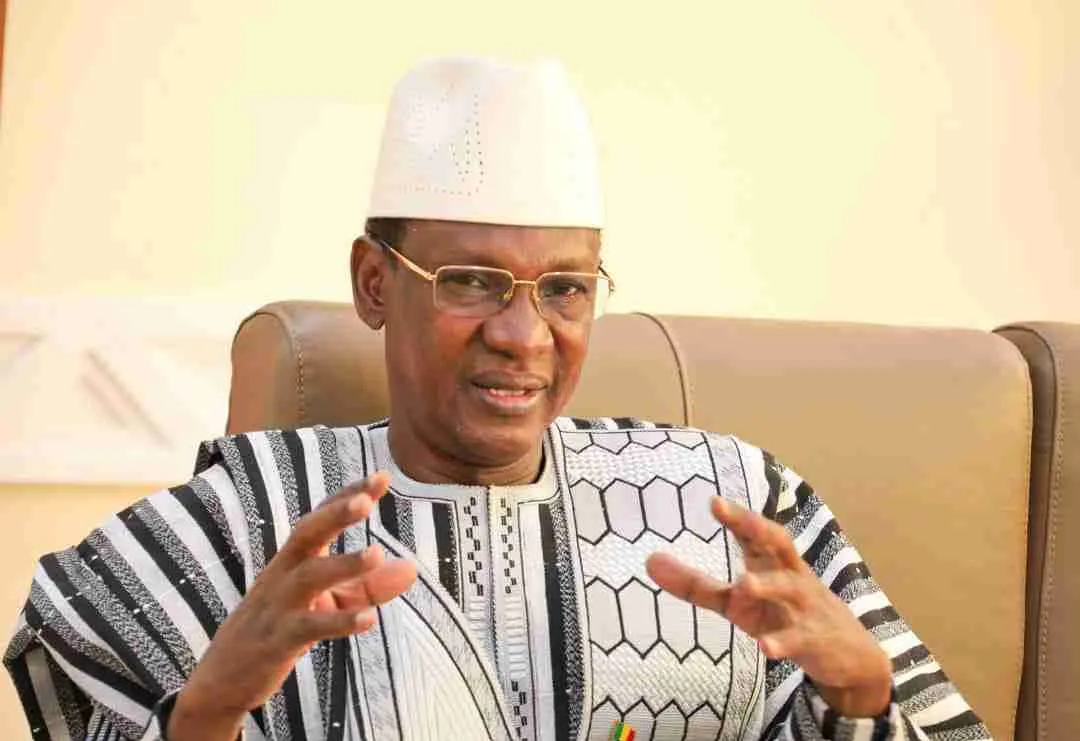











































Choguel Kokalla Maïga, the former Prime Minister of Mali, is at the centre of a growing legal storm as allegations of financial misconduct during his time in office come under judicial review. The Malian Office of the Auditor General has formally submitted evidence to the country’s judiciary, pointing to suspected irregularities and the possible misuse of significant public funds while Maïga held the nation’s second-highest office.
Sources within Mali’s judiciary have confirmed the emergence of what is being referred to as the “Choguel Maïga Files.” According to reporting from Radio France Internationale (RFI), the Attorney General of the Supreme Court of Mali spent the past weekend studying the documentation, and legal proceedings may soon intensify. A summons for Maïga to appear for questioning could be imminent, raising the stakes in what many are viewing as a politically charged investigation.
The inquiry focuses on two major incidents that allegedly occurred during Maïga’s tenure as prime minister. The first involves suspect expenditures related to the inauguration of a high-profile public project. The second centers on questionable mission-related payments, including disbursements for travel and official duties that auditors claim lacked justification. At the heart of the case is the alleged misappropriation of nearly 2 billion CFA francs—approximately $3.3 million USD—by the Office of the Prime Minister.
A judicial source close to the matter emphasized the seriousness of the investigation. “No one is above the law,” the source stated, affirming the Malian judiciary’s commitment to accountability and transparency, even at the highest levels of government.
Despite the gravity of the allegations, supporters of Maïga have been quick to defend him. One former aide said that the former prime minister is “not afraid” and would willingly cooperate with the justice system if called upon. “He has nothing to hide,” the aide insisted. Others close to Maïga have suggested the charges may be politically motivated, especially given Maïga’s outspoken criticism of the transitional military government that assumed power following the 2021 coup.
“He has files of his own,” warned one associate, hinting that Maïga may have damaging information about other figures within the current political leadership. This suggests the legal battle could escalate into a wider political confrontation in a country still reeling from years of instability, insurgency, and leadership transitions.
Maïga, who served as Prime Minister from June 2021 to December 2022 under the military-led transitional regime, was known for his nationalist rhetoric and resistance to Western influence, particularly from France. His term in office was marked by efforts to strengthen regional cooperation and reframe Mali’s foreign policy. However, he also became a controversial figure, both domestically and internationally, for his alignment with the junta and later criticism of its direction.
Mali remains under intense scrutiny from the international community due to concerns over democratic backsliding, human rights abuses, and worsening insecurity in the Sahel region. The current transitional government, led by military officers, has promised to restore civilian rule but has repeatedly delayed elections. Against this backdrop, the legal case against a high-profile political figure like Maïga has added fuel to the nation’s already simmering political tensions.
As the investigation unfolds, many in Mali and abroad will be watching closely to see whether the process marks a genuine commitment to fighting corruption or becomes another example of politically motivated justice in a fragile democracy.