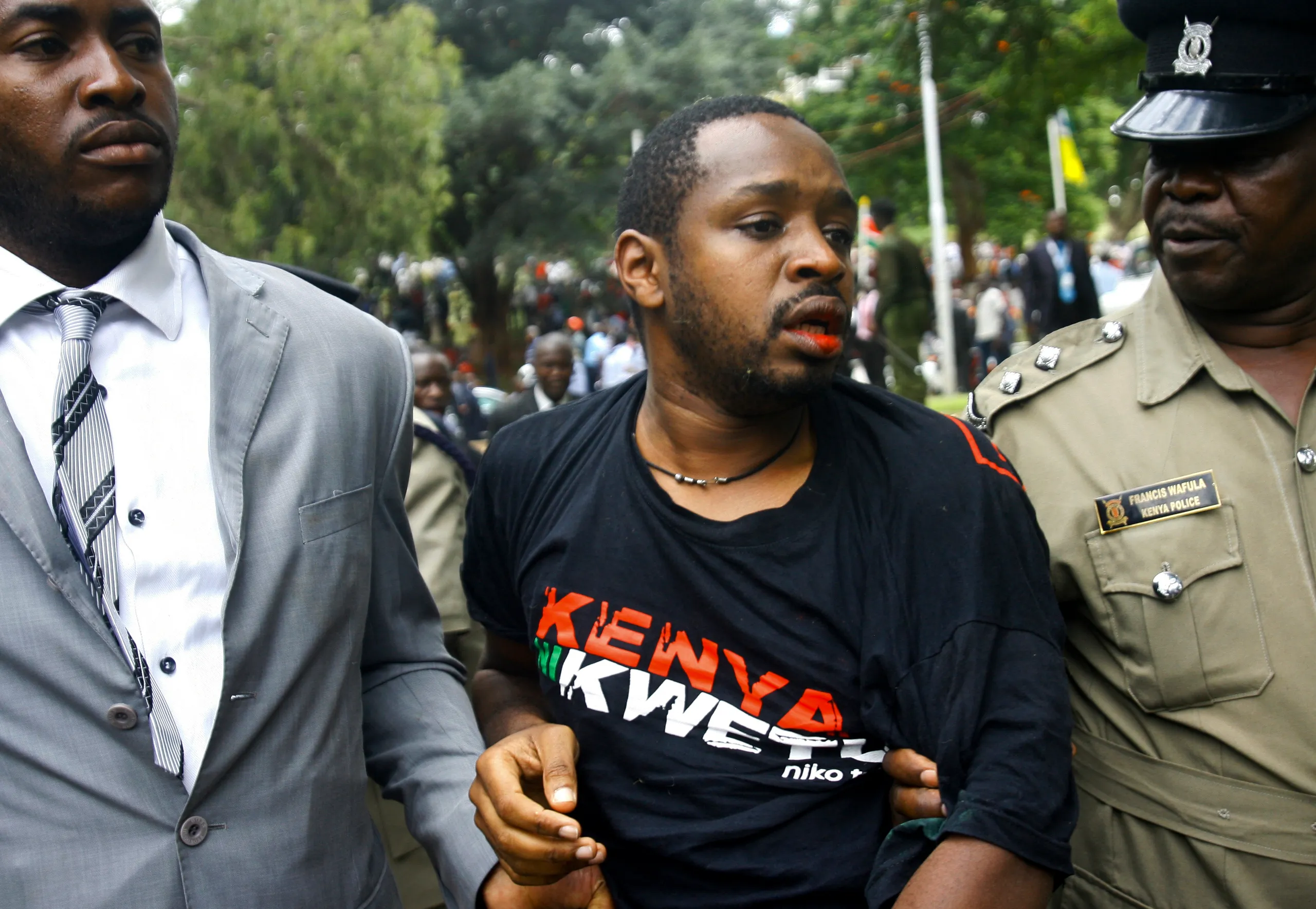














































Kenyan activist and outspoken government critic Boniface Mwangi has denounced what he calls politically motivated charges following his arrest in connection with nationwide protests that have swept across Kenya in recent weeks. Mwangi, a longtime human rights advocate and prominent voice against corruption and police brutality, appeared in court on July 21, 2025, where he was charged with illegal possession of ammunition.
Authorities claimed Mwangi was found in possession of three tear gas canisters and one blank rifle round, seized during a police raid on his home and office. The activist, however, dismissed the allegations as an attempt to intimidate and silence dissent, declaring outside the courthouse:
“We’re not terrorists — we’re hunting the real terrorists, and that’s the leadership killing our people.”
Mwangi was released on bail later the same day, with the case adjourned for further hearing. His arrest and defiant response come amid a growing wave of youth-led unrest across the country, triggered by deepening public discontent with government policies, corruption, and economic hardships.
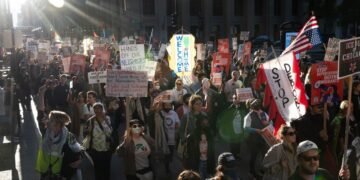
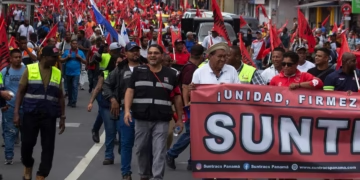
The charges against Mwangi follow weeks of demonstrations organized primarily by Generation Z activists, mobilized online to protest economic inequality and government excess. The immediate spark for the protests was the controversial 2024 Finance Bill, but tensions intensified in June 2025 after the suspicious death of blogger Albert Ojwang in police custody.
What began as digital activism has since evolved into one of Kenya’s most significant protest movements in recent history. At least 70 people have been killed and hundreds more injured in clashes between protesters and police. Human rights organisations, including Amnesty International, have condemned the use of excessive force and have called for independent investigations into the deaths and the conduct of security forces.
Boniface Mwangi, 42, is no stranger to confrontation with authority. A former award-winning photojournalist turned activist, Mwangi rose to prominence during Kenya’s 2007–08 post-election violence, capturing haunting images of the chaos. Since then, he has become a tireless campaigner for justice, transparency, and political reform.
In the past, he has led nationwide protests under the “Team Courage” movement, which confronts issues like police brutality, inequality, and government graft. His work has earned international recognition—but also drawn threats, arrests, and frequent harassment from Kenyan authorities.
Most recently, Mwangi and Ugandan journalist Agather Atuhaire were arrested in Tanzania in May 2025 and claim they were tortured during detention before being deported. The pair are now pursuing legal action against Tanzanian authorities through the East African Court of Justice, accusing the government of sexual violence and unlawful detention
Human rights defenders and legal experts have labelled the charges against Mwangi as part of a broader crackdown on civic freedoms under President William Ruto’s administration. Critics argue that laws intended to combat terrorism are increasingly being used to stifle protest and suppress voices critical of the government.
Several civil society organisations have rallied behind Mwangi, calling for the charges to be dropped. “What we are seeing is the criminalization of dissent,” said George Kegoro, a Nairobi-based human rights lawyer. “This is a dangerous trajectory for a country that considers itself a democratic leader in the region.”
The protests have been largely peaceful, driven by a tech-savvy generation that grew up under promises of reform. Hashtags like #RutoMustGo and #RejectFinanceBill have gained traction on platforms like TikTok and X (formerly Twitter), galvanizing nationwide demonstrations that stretch far beyond Nairobi.
Despite arrests and repression, many young Kenyans say they’re undeterred. Mwangi’s arrest may have only intensified their resolve.
Organisers have now called for renewed demonstrations on August 8—a day activists are calling “8/8” or “Nane Nane,” a symbolic turning point in their fight for a more accountable government. Mwangi is expected to play a central role in mobilising the public for this next wave of protests.
Boniface Mwangi’s defiance in the face of state charges reflects a larger struggle unfolding in Kenya—a generational demand for justice, equality, and real political reform. As protests continue to gain momentum, the country stands at a crossroads. Will the government respond with dialogue and reform, or will it double down on repression?
One thing is clear: Mwangi, and the movement he supports, are not backing down.