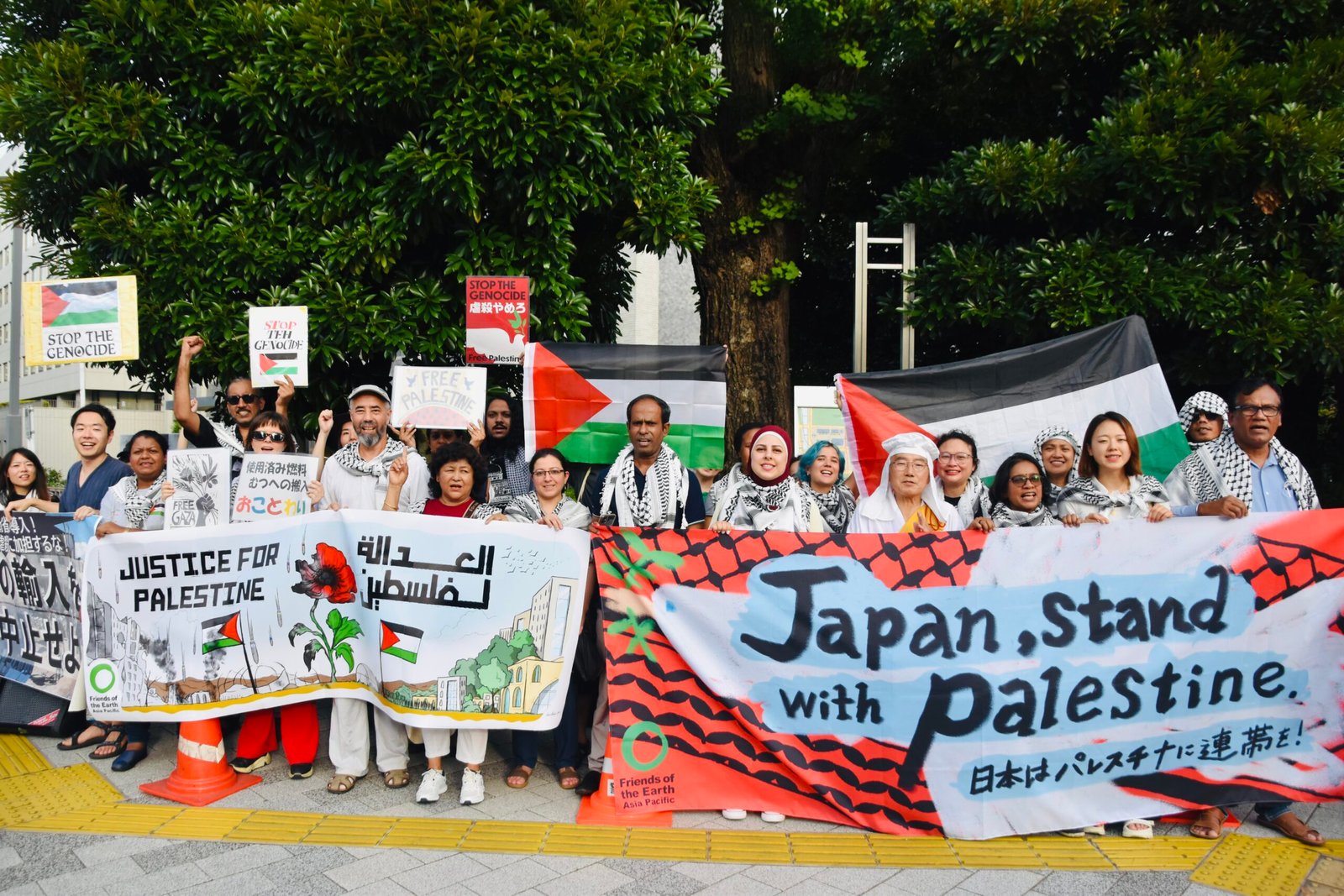





























































Japan has traditionally adopted a careful, development-focused approach to its policy towards Palestine, a strategy grounded in unobtrusive multilateralism. However, the intensifying devastation wrought by the Gaza War is increasingly calling into question the effectiveness of this seemingly reserved approach.
Delving deeper into Japan’s long-standing approach, it is evident that it is not merely a diplomatic stance but a carefully calibrated strategy deeply rooted in the principles of quiet multilateralism. This concept involves engaging in international cooperation without fanfare or excessive publicity. For Japan, quiet multilateralism has been a cornerstone of its foreign policy for decades, allowing it to engage with various global issues, including the Palestine-Israel conflict, in a non-confrontational and respectful manner.
Integral to Japan’s Palestine policy is an emphasis on development. Japan’s approach is not simply cautious but is also fundamentally oriented towards the growth and development of Palestine. This emphasis is manifest in Japan’s extensive aid efforts in the region, which are designed to foster economic growth, infrastructure development, and social stability. This development-focused approach is a hallmark of Japan’s foreign policy, reflecting a broader commitment to supporting sustainable growth in developing nations.
The Conference on Cooperation among East Asian Countries for Palestinian Development (CEAPAD) is a key part of Japan’s development-oriented policy towards Palestine. Established by Japan, this multilateral forum serves as a platform for East Asian countries to collaborate on supporting Palestinian development. CEAPAD’s initiatives focus on promoting economic growth, social stability, and infrastructure development in Palestine, reflecting Japan’s commitment to fostering sustainable development in the region.
However, the increasingly dire situation in Gaza, the result of a protracted war, has cast a shadow over Japan’s cautious yet development-focused approach. The Gaza War, an ongoing conflict between Israel and the Gaza Strip, has caused immense devastation, leading to significant loss of life and massive displacement of people. This has exacerbated the already precarious humanitarian situation in Palestine, making the task of sustainable development all the more challenging.
In the face of the escalating crisis in Gaza, Japan’s cautious and development-oriented approach appears increasingly at odds with the harsh realities on the ground. Critics argue that Japan’s quiet multilateralism, while respectful and non-confrontational, may not be enough to address the magnitude of the crisis unfolding in Palestine. The effectiveness of development-focused strategies, such as those promoted by CEAPAD, are being questioned in the face of the escalating conflict and humanitarian crisis.
Nonetheless, Japan’s steadfast commitment to a development-oriented approach should not be dismissed outright. It is important to remember that sustainable development is a long-term endeavour, one that demands patience, persistence, and a vision for a better future. Japan’s cautious approach to Palestine, while seemingly at odds with the urgency of the current crisis, may yet prove to be a vital component in the quest for a peaceful resolution to the conflict.