




























































Italy has reignited global controversy after expanding its long-standing surrogacy ban in a way that critics say disproportionately affects LGBT famItaly is once again at the center of international controversy following renewed attention on its hardline surrogacy laws, which many critics argue disproportionately harm same-sex couples. Although no new legislation has been passed in 2025, a law enacted in October 2024 continues to generate backlash across Europe and beyond. The amendment extended Italy’s existing ban on surrogacy to include arrangements made abroad, making it a criminal offense for Italian citizens to seek surrogacy services in other countries. Offenders could face up to two years in prison and fines reaching €1 million.
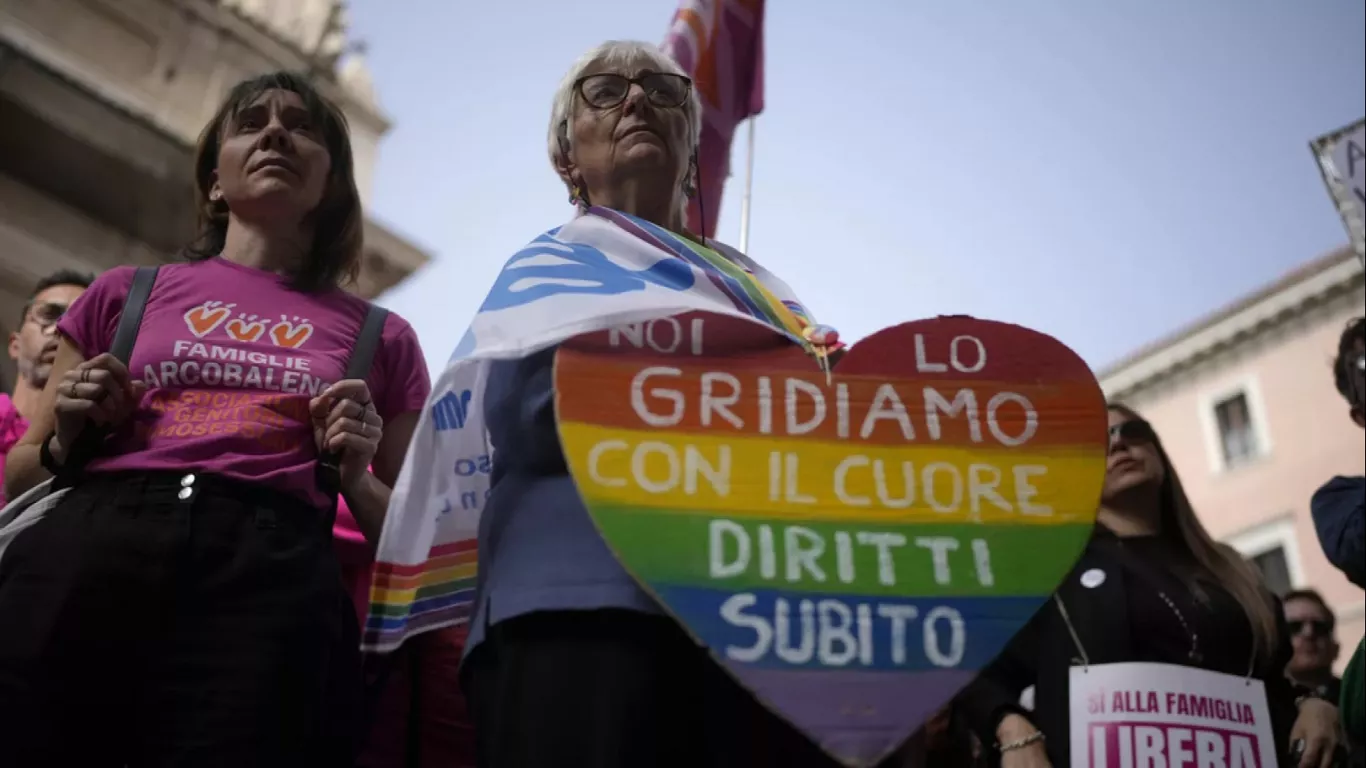
The issue gained renewed visibility this week following fresh protests in major Italian cities and a wave of online debate. While the 2004 Law 40 already banned all forms of surrogacy within Italy, the 2024 expansion has been seen by many as a deliberate move by Prime Minister Giorgia Meloni’s right-wing government to limit LGBT rights under the guise of protecting women and children. Supporters of the law claim it defends human dignity and prevents the commodification of female bodies. However, LGBTQ+ advocacy groups and legal experts say that the amendment effectively eliminates one of the last viable options for same-sex couples hoping to become parents, especially given Italy’s limited access to IVF and adoption for non-heterosexual families.
Although the law does not explicitly reference sexual orientation, the impact on LGBT citizens is disproportionately severe. Critics argue that by criminalizing international surrogacy, the government is not just reinforcing traditional family ideals but also weaponizing the legal system to marginalize queer families. ILGA-Europe, one of the continent’s leading LGBTQ+ rights organizations, warned that Italy’s surrogacy policy could lead to violations of basic human rights, including the right to form a family. In a public statement, the group described the policy as both unjust and discriminatory, particularly because same-sex couples in Italy are left with virtually no other legal route to parenthood.
The European Parliament has also taken note, with some Members of the European Parliament calling for an inquiry into whether Italy’s policies breach EU anti-discrimination principles. Concerns over democratic backsliding have grown louder in Brussels, with Italy’s approach cited as part of a broader trend among right-wing governments across Europe that seek to frame reproductive rights through cultural or moral lenses.
There has, however, been a glimmer of hope for LGBT families from the Italian judiciary. In May 2025, the Constitutional Court ruled in favor of a lesbian couple who had undergone IVF abroad, affirming both women’s rights to be recognized as legal parents on their child’s birth certificate. The landmark decision was widely welcomed by rights groups, although it did not overturn the criminal penalties associated with surrogacy. The ruling underscores the increasing legal and ethical tension between Italy’s conservative lawmakers and a more progressive judiciary attempting to interpret family law in line with evolving social norms.
Italy’s constitution does not provide a clear definition of what constitutes a family, giving courts significant leeway to interpret parenthood and family rights. This ambiguity is at the heart of the ongoing struggle between traditionalist political forces and modern interpretations of equality and inclusion.
Compared to nations like Spain, the Netherlands, and Ireland—where surrogacy, even when commercial, is more openly regulated—Italy now finds itself increasingly isolated. Its strict approach reflects a broader pattern of nationalist governments pushing back against liberalized views on family and identity. International observers, including human rights lawyers and policymakers, are closely monitoring whether Italy’s stance will trigger broader legal challenges, possibly reaching the European Court of Human Rights. That court has previously ruled in favor of same-sex parents in comparable situations, and future rulings could set important precedents.
As legal, political, and social pressure mounts, the global spotlight remains fixed on Italy’s evolving family policies—and the people most affected by them.