



























































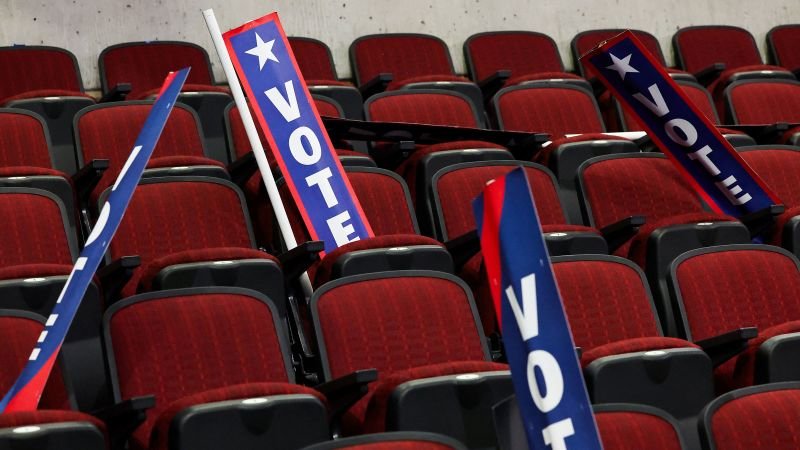
The Democratic National Committee (DNC) convened for its summer meeting in Minnesota this week, highlighting significant internal debates within the Democratic Party. Topics ranged from the ongoing conflict in Gaza to the party’s stance on crime. These unresolved issues were showcased during the meeting, with some attendees attempting to reframe the narrative by suggesting that the ability to debate and disagree is a testament to the party’s vitality. This, they argued, distinguishes them from their Republican counterparts.
Minnesota Governor Tim Walz, the 2024 vice-presidential candidate, encapsulated this sentiment, saying, “There’s a division in my damn house and we’re still married and things are good. We can have our internal decision making, our internal healthy debates, but I refuse to believe we do not have the luxury to fight amongst ourselves while that thing sits in the White House.” Walz’s reference to “that thing” was aimed at President Donald Trump, whose second term has stirred controversy and, at times, unified Democrats in opposition to his domestic and foreign policies.
One of the central questions facing the party is whether these internal discussions are beneficial or detrimental to its public image, which has recently reached record lows in favourability. A presentation on crime, advocating for a “serious about safety” message rather than a “tough on crime” approach, drew criticism from moderates. They urged the party to avoid using academic language when discussing public safety, arguing that it alienates voters.
Another contentious issue was a resolution calling for an arms embargo with Israel, which was blocked in a committee vote. This decision angered progressives who believe the party is out of touch with voters on the matter. Despite losing the initial vote, supporters of the resolution vowed to bring it before the full DNC membership.
The meeting took place in DNC Chair Ken Martin’s home state of Minnesota, nearly seven months after his election as chair following a competitive race. Since assuming leadership, Martin has faced scrutiny over his fundraising and spending strategies, as well as his stance on a neutrality clause that led to a dispute with former DNC vice-chair David Hogg regarding endorsements of primary challengers.
The Minneapolis gathering also served as a precursor to potentially contentious discussions about which states will lead the 2028 Democratic presidential primary calendar. The committee announced that its rules and bylaws panel would meet next month to establish a formal process for states to apply. “Let me say this for everybody to hear: The presidential calendar process starts today,” Martin declared. “We will be holding a series of meetings this year. We’re planning for meetings throughout the fall and winter, and through the spring, to make sure that we have a rigorous, effective, and fair calendar process.”
During the rules and bylaws meeting, Martin introduced reform plans aimed at increasing the influence of state party chairs on key committees and limiting the number of at-large members appointed by Democratic presidents or DNC chairs. These amendments, which will be voted on by the full DNC, also propose allowing members to elect some committee members. A heated debate ensued over who should temporarily assume the role of party chair if the position becomes vacant, but the amendment ultimately failed.
Martin emphasised the party’s capacity to accommodate diverse opinions, stating, “What I have always believed is the beauty of the Democratic Party is we are a big tent. We can agree to disagree. It doesn’t mean we’re not unified.”
The war in Gaza has been a particularly divisive issue, testing the party’s ability to engage in healthy debates. The split was evident during the 2024 presidential election when pro-Palestinian activists urged allies to withhold their votes from Democratic leaders due to the Biden administration’s support of Israel. Progressives argue that the party’s stance, coupled with the DNC’s refusal to allow a Palestinian speaker at the party convention, has cost them support among young voters.
The DNC’s resolutions committee considered two opposing visions for the party’s stance on the conflict: a proposal from progressives calling for the recognition of Palestine as a country and an end to all weapons shipments to Israel, and another backed by Martin that echoed the party’s platform. The progressive resolution failed, even after an attempt to amend it to only oppose offensive weapons and call for the release of hostages in Gaza. Martin subsequently withdrew his own proposal to allow further debate and announced the creation of a task force to continue discussions.
James Zogby, a long-standing DNC member, praised Martin’s decision to extend the debate, calling it a “politically smart and gracious move” aimed at fostering unity. Allison Minnerly, a Florida DNC member who introduced the arms embargo resolution, expressed frustration with the leadership’s stance but remained hopeful that activists could effect change. “If I’ve seen anything in Florida organising as a young person, that when there are people on the ground that are willing to speak up, to stand up and to really organise, that we can see change, even if it takes a little longer than we want it to be,” she said.
Stephanie Beal, a Colorado DNC member who introduced the amendment, echoed the sentiment that debate is a healthy process. “My daughters fight more with each other than they do anyone else, but that doesn’t mean they don’t have each other’s backs,” she remarked. “You can have these discussions that seem argumentative or really high energy, but that doesn’t mean this isn’t your group, your family, who you love, who you support.”
The DNC is navigating not only internal committee discussions but also broader conversations within the party. The meeting concluded with a presentation on crime messaging, advocating for a “serious about safety” approach amid Trump’s deployment of National Guard members to Washington, D.C. This stance was mocked by some Democrats online. Matt Bennett, co-founder of the centrist think tank Third Way, warned that Democrats risked alienating voters by conceding the “tough on crime” rhetoric to Republicans. “The bad news is the DNC seems totally lost,” Bennett commented. “The good news is that doesn’t much matter, because they’re not really responsible for getting messaging out there. It’s not the job of the DNC. It never has been, and they’ve never been very good at it.”
As the Democratic Party continues to grapple with these internal debates, the outcomes of these discussions will likely have significant implications for its future direction and public perception.