












































In a move that has shocked political circles across India, Vice President Jagdeep Dhankhar tendered his resignation on Monday night, citing health-related concerns. The announcement, made on the opening day of Parliament’s monsoon session, has triggered intense speculation about possible underlying reasons behind the decision, especially given the sudden timing and Dhankhar’s significant role in Indian governance.
Dhankhar, 74, who also serves as Chairman of the Rajya Sabha (Upper House of Parliament), was expected to complete his tenure in 2027 after being elected to the vice presidency in August 2022. However, he abruptly stepped down just hours after presiding over a key Rajya Sabha session and swearing in new members. His official schedule for the week had included a planned visit to Jaipur on Wednesday—an engagement he was apparently prepared to carry out until the evening resignation.
In his resignation letter submitted to President Droupadi Murmu, Dhankhar wrote, “I want to prioritise health care and abide by medical advice. It has been a privilege and satisfaction to witness and partake in India’s remarkable economic progress and unprecedented exponential development during this significant period. Serving in this transformative era of our nation’s history has been a true honour.”
While the vice president cited medical reasons, his resignation—especially on such short notice—has raised eyebrows. Earlier this year, Dhankhar underwent angioplasty in New Delhi but had since returned to work, appearing active and engaged in his parliamentary duties.
Opposition leaders have been quick to suggest that more may be behind the decision than what has been disclosed publicly. Congress MP Manish Tewari described the resignation as “totally unexpected,” while Shiv Sena (UBT) spokesperson Anand Dubey remarked, “This decision came without proper consultation or discussion. If health was the concern, the resignation could have been submitted a few days before the session or even after.”
Adding fuel to the speculation, Congress MP Jairam Ramesh highlighted a recent incident in which two cabinet ministers failed to attend an advisory committee meeting chaired by Dhankhar on Monday afternoon. According to Ramesh, the vice president was not informed about their absence, took “umbrage” at the perceived slight, and rescheduled the meeting for the following day. Hours later, he resigned. “His resignation speaks highly of him. It also speaks poorly of who got him elected as vice president in the first instance,” Ramesh added.
Dhankhar, a senior lawyer by profession, entered politics in 1989 as a Member of Parliament from Rajasthan’s Jhunjhunu constituency. He joined the Bharatiya Janata Party (BJP) in 2003 and later led the party’s legal cell. In 2019, he was appointed Governor of West Bengal, where he frequently clashed with the Trinamool Congress-led state government, earning a reputation for being assertive and unyielding.
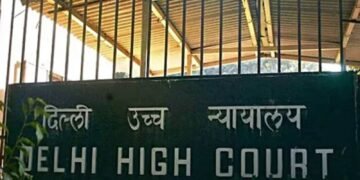
In 2022, the BJP nominated him for the vice presidency, a post he secured comfortably. Throughout his tenure, Dhankhar was often vocal in parliamentary debates and carried a visible presence in public life. He was notably involved in presiding over the recent submission of an impeachment motion against High Court Judge Yashwant Varma, following the discovery of unaccounted cash in the judge’s residence—a case that has sparked its own wave of controversy.
With Dhankhar’s resignation, responsibilities of the vice president’s office, particularly within the Rajya Sabha, are likely to be temporarily overseen by the house’s deputy chairperson or another member designated by the president until a formal successor is appointed.
The BJP, which nominated Dhankhar, has yet to release an official statement on the development, adding to the opacity surrounding the resignation. Political analysts note that while health issues may indeed have influenced the decision, the lack of forewarning and the backdrop of recent tensions within government circles suggest potential political undercurrents.
As the monsoon session of Parliament gets underway, the vacuum left by Dhankhar’s departure is expected to cast a long shadow over proceedings. With key legislative debates looming and a national election just over a year away, the timing and implications of his resignation could play a larger role in shaping the political narrative in the months to come.