
























































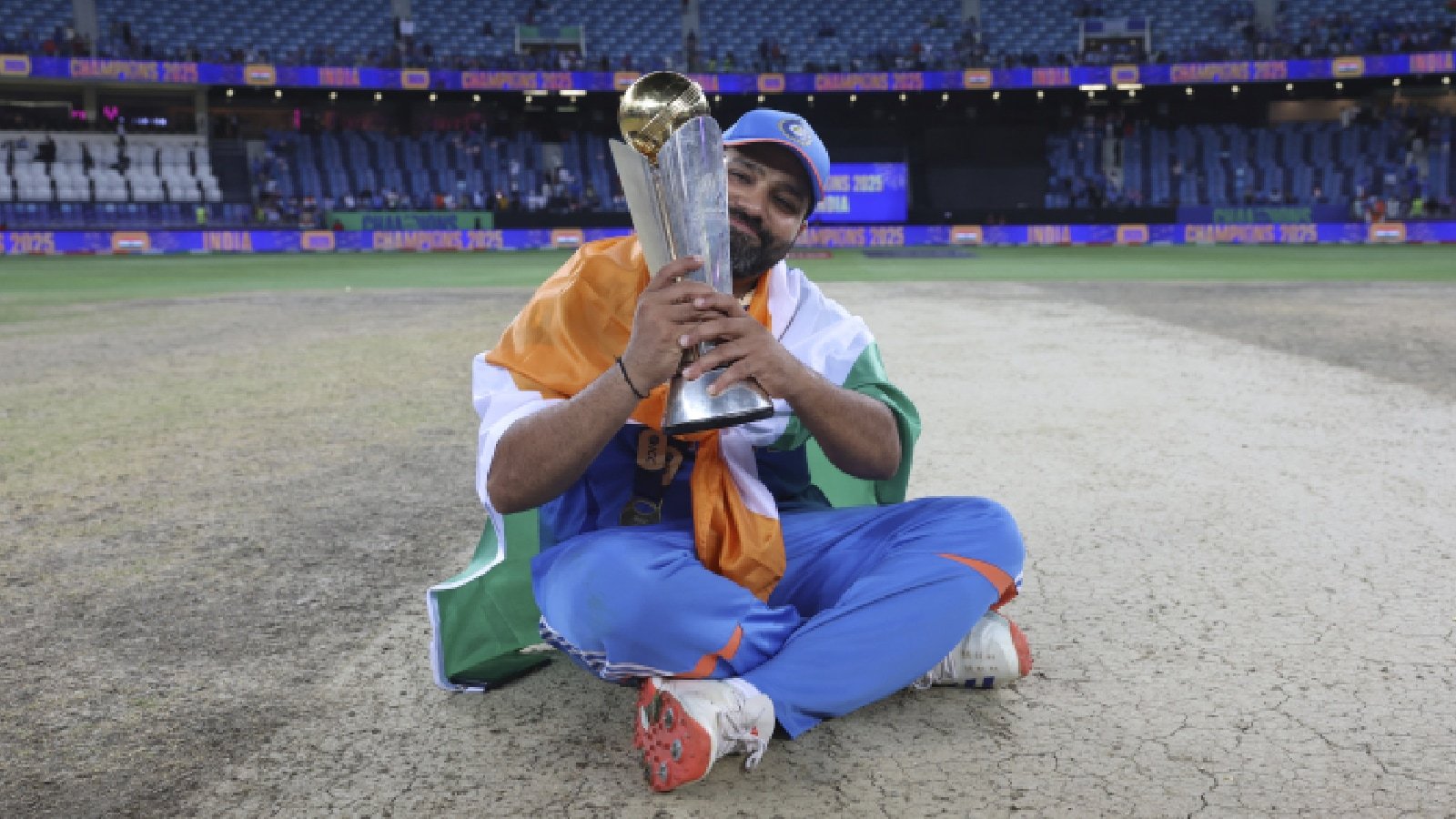
Ambati Rayudu, the former Indian cricketer, has expressed strong support for Rohit Sharma to continue leading the national team in One Day Internationals (ODIs), particularly as preparations begin for the 2027 ODI World Cup. Rayudu’s comments come in the wake of Sharma’s successful captaincy earlier this year, where he guided India to victory in the Champions Trophy.
Despite ongoing discussions about the future of India’s leadership in the shorter format of the game, Rayudu firmly believes that Sharma’s experience and skill set make him the ideal candidate to steer the team forward. He dismissed any doubts regarding Sharma’s capabilities, suggesting that the ODI batting giant should be retained in his role leading up to the next major international tournament.
Sharma’s leadership has been pivotal for the Indian cricket team, especially considering the pressures of high-stakes matches. His ability to remain calm under pressure and make strategic decisions has earned him respect both from teammates and opponents alike. Under his captaincy, India has not only secured the Champions Trophy but has also been competitive in various bilateral series and tournaments.
The 2027 ODI World Cup, set to take place in South Africa, Zimbabwe, and Namibia, will present a fresh set of challenges for the Indian team. The tournament is expected to attract significant global attention, and the performance of the captain will be crucial in determining how far India progresses in the competition.
Rayudu’s endorsement of Sharma is reflective of a broader sentiment among cricket analysts and former players who recognise the importance of continuity in leadership roles. As teams prepare for major tournaments, stability can often be a key factor in achieving success. Sharma’s past experiences, including leading the Mumbai Indians to multiple Indian Premier League titles, provide a wealth of knowledge that could benefit the squad in the lead-up to the World Cup.
The upcoming World Cup will also be an opportunity for Sharma to cement his legacy as one of India’s great captains. Historically, Indian cricket has seen various leaders rise and fall, with some managing to leave an indelible mark on the sport. Sharma’s journey, marked by significant achievements and challenges, has positioned him as a prominent figure in contemporary cricket.
Moreover, the dynamics of international cricket are ever-evolving, with emerging players consistently challenging established norms. As the landscape changes, the Indian team will need to adapt, and having a captain who understands these shifts will be vital. Sharma’s ability to integrate new talent while maintaining the team’s core strength will be a crucial aspect of his leadership as they head towards the World Cup.
In the context of cricket’s global landscape, the 2027 ODI World Cup will be more than just a tournament; it will be an opportunity for countries to showcase their cricketing prowess on an international stage. For India, a nation with a rich cricketing history, performing well is not just about winning titles but also about upholding the pride and expectations of millions of fans.