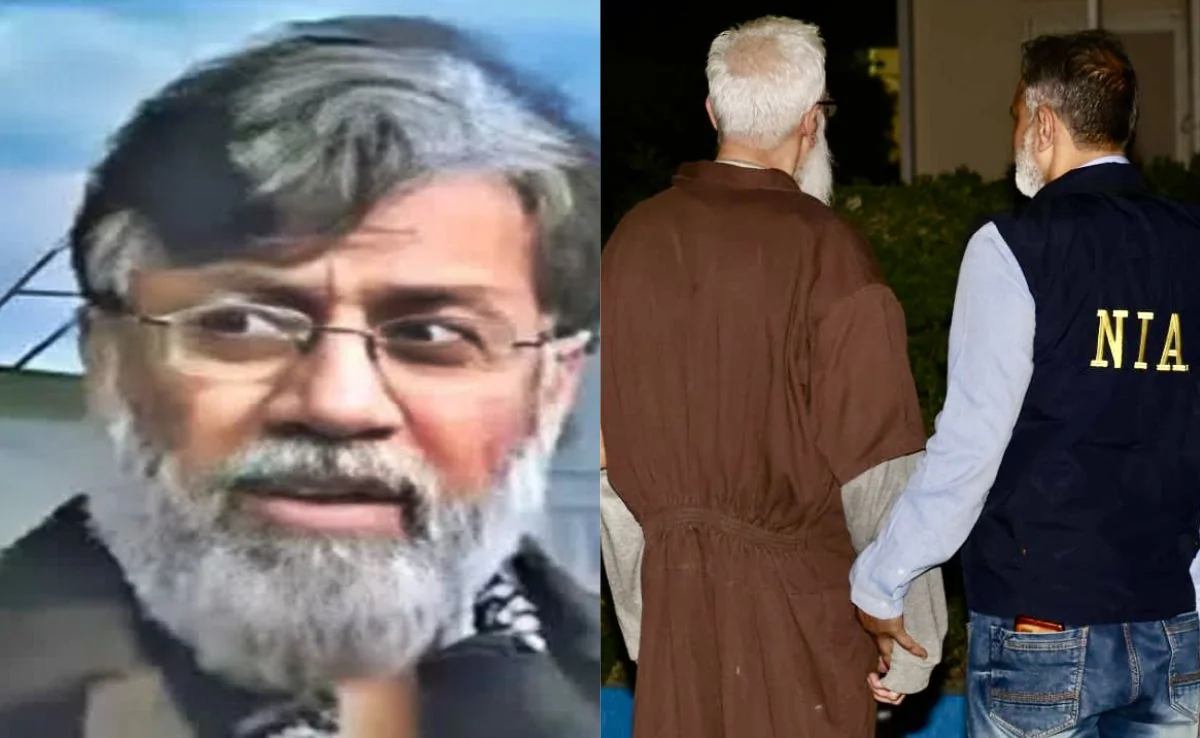
























































Tahawwur Hussain Rana, a Pakistani-Canadian national accused of being a key planner in the 2008 Mumbai terror attacks that left 166 people dead, was arrested by the National Investigation Agency (NIA) upon his arrival in India on Thursday. He was extradited from the United States and brought to Delhi aboard a special chartered flight under tight security measures.
Immediately after landing at the Palam airport’s technical area, Rana was taken into custody by NIA officials and subjected to a medical examination. He was then transported under heavy security to a special NIA court presided over by Judge Chander Jit Singh. The hearing, held in-camera, saw the NIA request a 20-day remand for interrogation. After considering the arguments presented by NIA special public prosecutor Narender Mann and Rana’s court-appointed lawyer Piyush Sachdeva, the court granted an 18-day custody period.
The process of bringing Rana to India was marked by extreme caution and secrecy, given the high-profile nature of the case and the potential for sabotage. Indian security agencies, including the Ministry of Home Affairs, National Security Advisor’s office, and Intelligence Bureau, tracked every stage of his journey from Los Angeles to New Delhi. To prevent any threat or detection, a dummy flight code was used for the Gulfstream G550 aircraft, which also made a scheduled stopover in Romania en route.
During the 2008 Mumbai attacks, Rana had worked closely with his childhood friend Daood Gilani, better known as David Coleman Headley. Together, they allegedly played a critical role in planning the deadly assault by helping select targets and facilitating reconnaissance operations. While Headley had turned approver in the case years ago, Rana had avoided extradition until now by engaging in prolonged legal battles in the US courts.
When he arrived in India, Rana no longer resembled the unassuming businessman he had posed as during his 2008 trip. At the time, he had entered India under the guise of promoting an immigration consultancy, staying at a hotel in Powai and visiting multiple cities including Agra, Kochi, and Hapur. However, Indian authorities suspect these trips were a front to identify potential Lashkar-e-Taiba (LeT) recruits.
As a known strategic operative for LeT and Pakistan’s military-intelligence apparatus, Rana’s movements were closely coordinated during the extradition. Seated between National Security Guard (NSG) commandos throughout the flight, he was accompanied by senior NIA officials and US Sky Marshals, who ensured his secure transfer. Upon touchdown in Delhi, a 20-vehicle convoy, supported by SWAT units, escorted him to the designated court.
The NIA officially confirmed Rana’s extradition in a statement, describing him as a “key conspirator” in the 26/11 attacks. It noted that he had been held in judicial custody in the United States after India initiated proceedings under the India-US extradition treaty. The extradition was approved by the Central District Court of California in May 2023, following which Rana filed multiple appeals — including one to the Ninth Circuit Court of Appeals and an emergency plea to the US Supreme Court — all of which were dismissed.
The extradition effort was made possible through close cooperation between multiple US government agencies, including the Department of Justice’s Office of International Affairs, the FBI’s Legal Attaché in New Delhi, the US Marshals Service, and the Department of State’s legal advisers.
For the NIA, Rana’s return marks a critical juncture in its investigation. Officials will now focus on obtaining fresh intelligence about the planning of the Mumbai attack, particularly any previously undisclosed details regarding the involvement of top Pakistan-based LeT leaders like Hafiz Saeed and Zakiur Rehman Lakhvi. The agency hopes Rana’s interrogation will offer insights into the operational logistics, foreign support networks, and the broader strategic goals behind one of the most devastating terror attacks on Indian soil.
Rana’s extradition underscores India’s persistent diplomatic and legal efforts to bring those responsible for the 2008 attacks to justice, and signals renewed momentum in holding accountable the masterminds who remain beyond its borders.