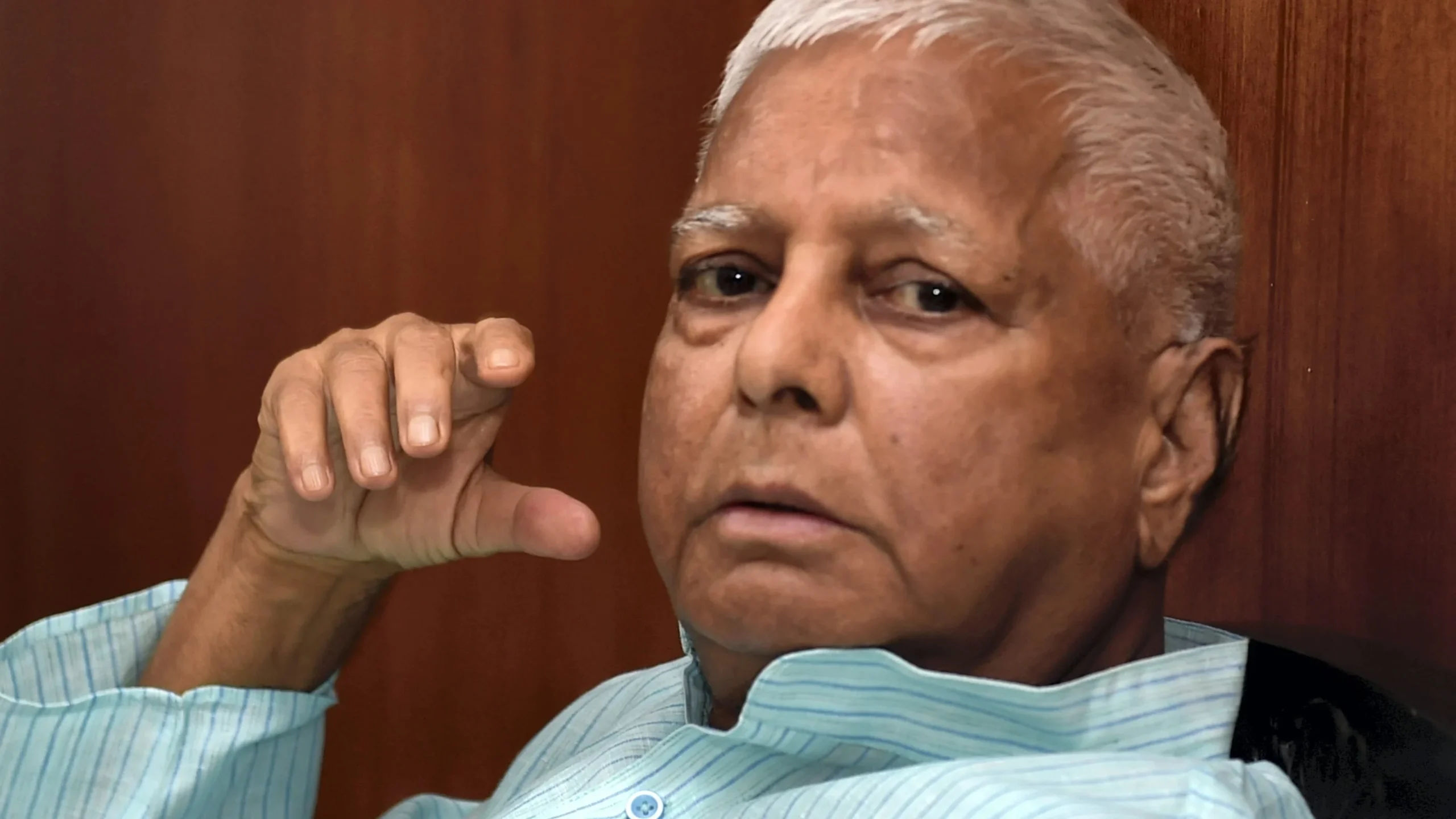
























































In a significant legal setback for Rashtriya Janata Dal (RJD) chief and former Bihar Chief Minister Lalu Prasad Yadav, the Supreme Court of India has refused to stay the ongoing trial in the alleged land-for-jobs scam. The apex court has instead directed the lower court to expedite the trial process while allowing Yadav exemption from personal appearance during proceedings.
A bench comprising Justices M. M. Sundresh and N. Kotiswar Singh dismissed Yadav’s plea seeking an interim stay on the proceedings, stating there was no reason to interfere at this stage. The court remarked that it was not inclined to entertain “such a small matter” and emphasized the importance of letting the trial continue unhindered. The justices made it clear that the merits of the main case should be decided by the appropriate forum.
The scam, which allegedly took place between 2004 and 2009 during Lalu Prasad Yadav’s tenure as Union Railway Minister, involves serious accusations of corruption, nepotism, and money laundering. According to the Central Bureau of Investigation (CBI), the former minister and his family received land parcels at rates far below market value in exchange for securing jobs in the Indian Railways for candidates connected to the landowners.
The CBI’s investigation claims that at least three land parcels located in Patna were transferred to Lalu and members of his family by individuals seeking employment or their relatives. In exchange, nine individuals were allegedly appointed to Group-D positions in the Central Railways. The CBI noted that the land was sold to the Yadav family at a fraction of the official circle rate — roughly ₹26 lakh was paid for properties valued at over ₹4.39 crore at market rate.
Further raising concerns about the integrity of the appointments, the investigative agency pointed out discrepancies in documentation, such as sequential roll numbers on caste and residence certificates. This, the CBI claims, indicated that the documents were likely fabricated en masse for a common illegal purpose.
In its first chargesheet, the CBI named Lalu Prasad Yadav, his wife and former Bihar Chief Minister Rabri Devi, and their daughter Misa Bharti, along with 13 other individuals. A subsequent supplementary chargesheet also named Lalu’s son and current Bihar Deputy Chief Minister Tejashwi Yadav as an accused.
Meanwhile, the Enforcement Directorate (ED), which is probing the money laundering angle of the scam, has filed a comprehensive 4,700-page chargesheet. The ED has alleged that a shell company — AK Infosystems — was created solely to facilitate the purchase of land from job seekers and to launder the proceeds of crime. This chargesheet names Rabri Devi, daughters Misa Bharti and Hema Yadav, as well as individuals and entities connected to the alleged financial transactions. These include AB Exports Pvt. Ltd, former railway employee Hridyanand Chaudhary, and Amit Katyal, director of AK Infosystems.
This case has further intensified the political and legal challenges facing Lalu Prasad Yadav and his family, many of whom are still active in Bihar politics. The accusations come amid broader scrutiny of political corruption in India, especially in the public sector job recruitment processes.
Legal experts say that the trial’s progression without delay reflects the judiciary’s growing insistence on timely adjudication of high-profile corruption cases, particularly those involving public officials. While the court has allowed Lalu Prasad Yadav to skip personal appearances due to his age and health conditions, the decision to let the trial proceed unhindered signals a firm stance on accountability and rule of law.
The land-for-jobs scam is one of several corruption cases that have haunted Lalu Prasad Yadav, who was earlier convicted in multiple fodder scam cases and served time in prison. However, his release on bail and continued political relevance, particularly in alliance politics at both state and national levels, has kept public attention focused on the outcomes of ongoing investigations.
With both the CBI and ED actively pursuing cases against the RJD leader and his family, and with mounting documentary evidence in their respective chargesheets, the legal battle is poised to be long and closely watched. The Supreme Court’s refusal to halt proceedings underscores the gravity of the allegations and the seriousness with which judicial authorities are treating the matter.