



























































South Asian University Expels Bangladeshi Scholar After Campus Clash Over Non-Veg Food Served on Maha Shivratri
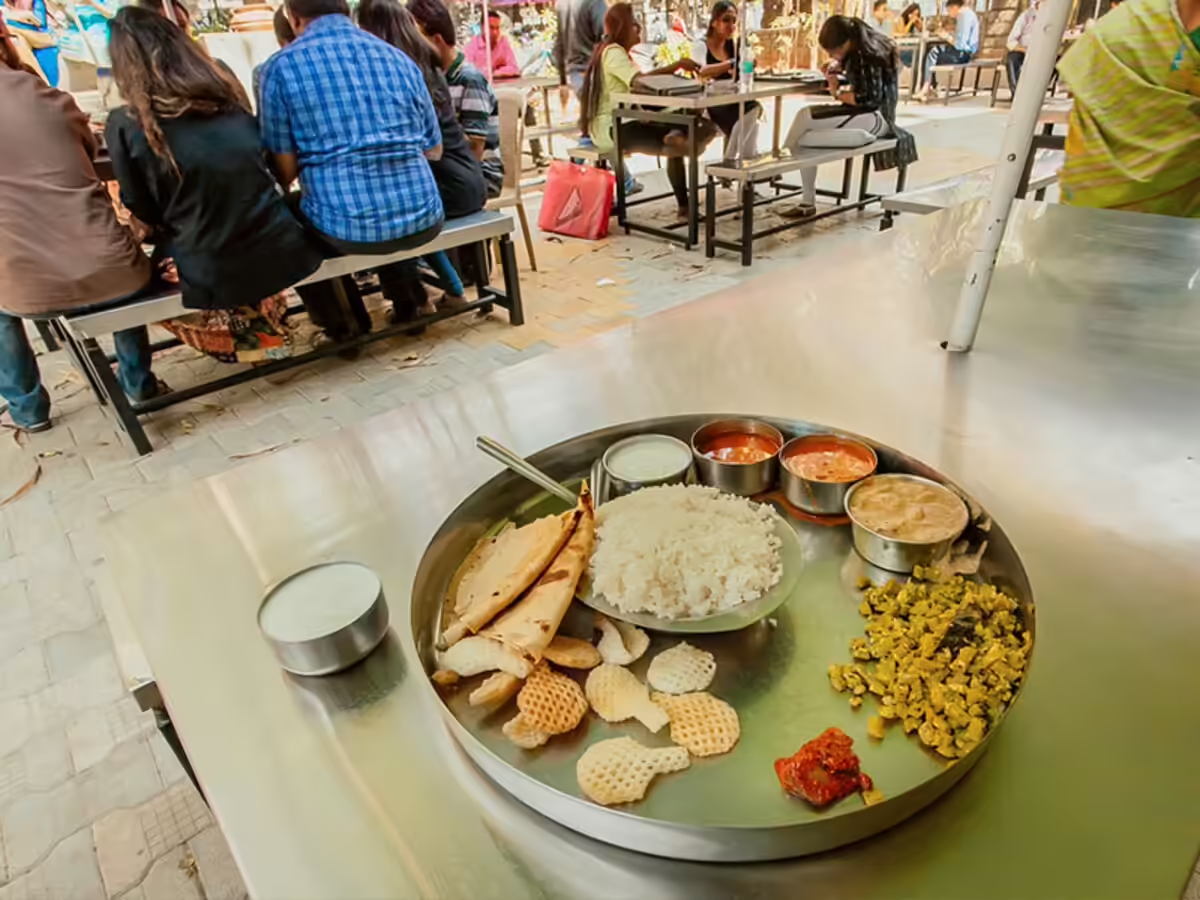
A clash over religious and dietary sensitivities at South Asian University (SAU) in New Delhi has led to the expulsion of a Bangladeshi student and disciplinary action against another, according to university officials. The incident, which occurred on February 26, stemmed from the serving of non-vegetarian food in the campus mess during Maha Shivratri, a major Hindu festival traditionally associated with fasting and vegetarianism.
The university’s disciplinary committee concluded its investigation this week, determining that doctoral student Sudipto Das had engaged in multiple acts of misconduct. As a result, Das, a Bangladeshi national enrolled in the PhD programme, has been expelled from the institution with immediate effect. The order also bars him from applying to any future programs at the university and instructs him to vacate his hostel room within 24 hours.
The controversy erupted when two rival student groups—the Students’ Federation of India (SFI) and the Akhil Bharatiya Vidyarthi Parishad (ABVP)—engaged in a heated exchange over the decision to serve meat during a religious observance. The SFI alleged that ABVP members were attempting to enforce their religious and dietary views on others, framing it as an attack on the university’s secular ethos. In contrast, ABVP leaders condemned the menu choice as “deliberately provocative” and disrespectful to the sentiments of Hindu students observing the fast.
The university’s mess secretary was also fined Rs. 5,000 for his role in the conflict, though he was not accused of instigating violence. The administration maintained that the secretary had failed to anticipate the sensitivity surrounding food offerings during a major religious occasion.
Delhi Police were called to the campus on the day of the altercation, but no physical violence was reported upon their arrival, and no formal complaints were filed with law enforcement. Consequently, the university opted to resolve the matter through its internal disciplinary mechanisms.
A senior SAU official stated that Das had a prior history of disciplinary violations. “His record showed a pattern of disruptive behavior, including a previous suspension in 2022. The decision to expel him was not taken lightly but was based on repeat offences that were deemed incompatible with the values of the academic community,” the official said.
The incident highlights a growing tension in Indian universities between student groups aligned with differing political and ideological outlooks. The ABVP, affiliated with the Rashtriya Swayamsevak Sangh (RSS), and the SFI, associated with the Communist Party of India (Marxist), have long been rivals on campuses across the country. Their confrontations often mirror national debates on secularism, freedom of expression, and religious sensitivities.
Legal experts have weighed in, noting that public universities in India often struggle to maintain a balance between freedom of cultural expression and respect for religious practices. “There is no law banning non-vegetarian food on festivals, but public institutions must manage such issues with care to avoid communal or ideological flare-ups,” said Prof. Alok Sinha, a constitutional law expert.
The South Asian University, established under a SAARC (South Asian Association for Regional Cooperation) initiative, hosts students from all member countries, including India, Pakistan, Bangladesh, Nepal, Bhutan, Sri Lanka, Afghanistan, and the Maldives. The diverse student body is often seen as a symbol of regional academic collaboration, but incidents like this reveal the complexities of cross-cultural and political tensions even in scholarly spaces.
The university has not yet issued a broader public statement but is expected to review its dining policies and festival sensitivity protocols in the wake of the controversy.