









































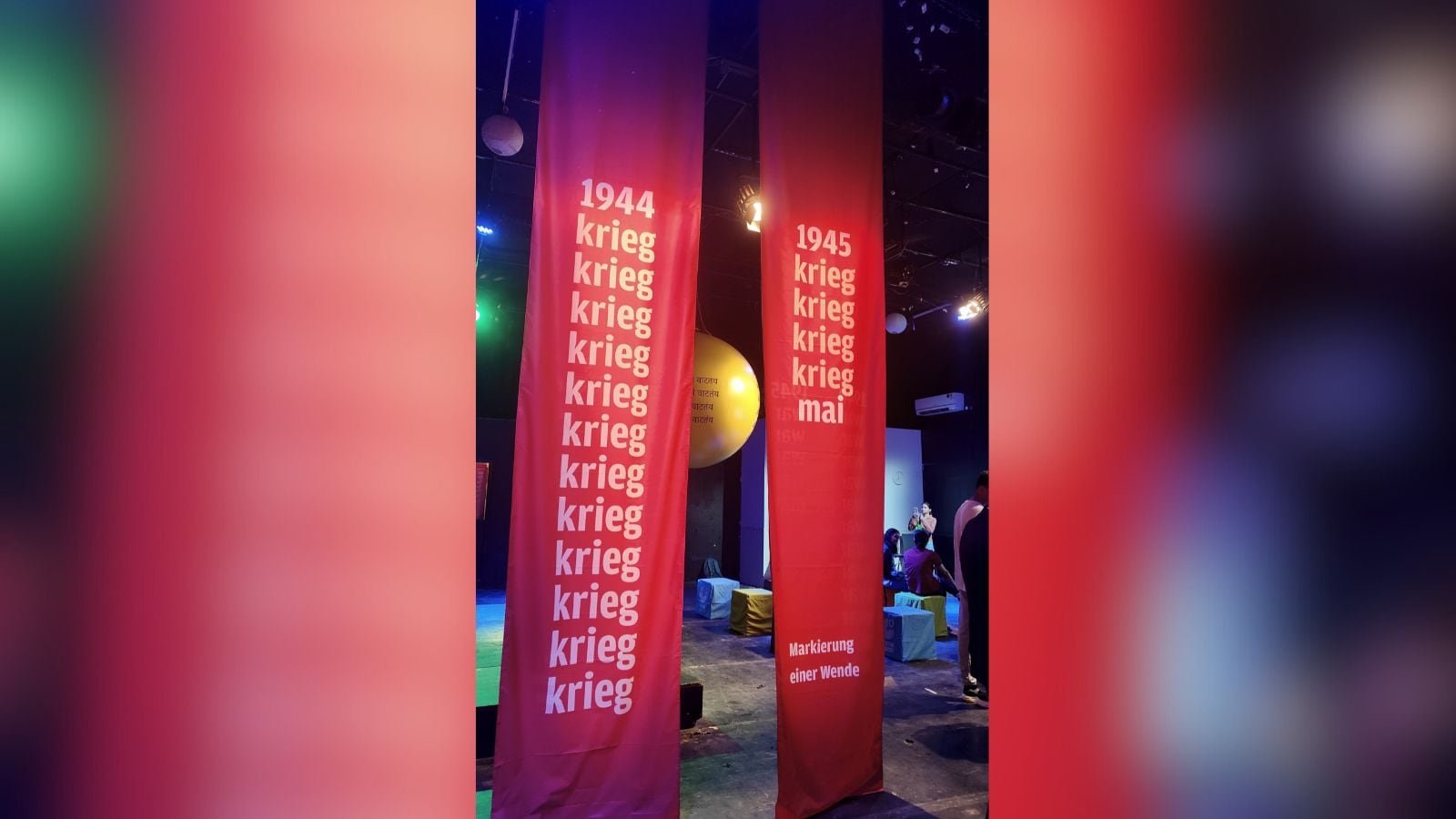
In a vibrant tribute to the influential Austrian poet Ernst Jandl, an exhibition has been launched in Pune to commemorate the centenary of his birth. The event, organised by the Goethe-Institut Max Mueller Bhavan Pune in partnership with the German Department of Savitribai Phule Pune University (SPPU), showcases Jandl’s distinctive and experimental approach to poetry.
Jandl, who was born in 1925 and passed away in 2000, is renowned for his avant-garde style that often challenged conventional notions of language and form. His work frequently incorporated elements of sound and visual art, making it particularly suited for a multi-disciplinary exhibition. The Pune exhibition aims to immerse visitors in Jandl’s creative world through an array of innovative presentations, including three-dimensional structures, soundscapes, and visual projections. These artistic interpretations breathe life into Jandl’s unique poetic voice, allowing audiences to engage with his work in new and exciting ways.
The exhibition not only highlights Jandl’s literary contributions but also serves as a platform for cultural exchange between Germany and India. It underscores the importance of poetry as a form of expression that transcends geographical boundaries, connecting diverse audiences through shared artistic experiences. The collaboration between the Goethe-Institut and SPPU reflects a growing interest in fostering international dialogue through the arts, particularly in a global landscape increasingly shaped by cultural interconnectivity.
Visitors to the exhibition can expect to encounter a range of engaging installations that invite them to explore the intersections of sound and visual art, mirroring the complexity and innovation found in Jandl’s own poetry. The incorporation of technology in the presentation of his work is particularly significant, as it mirrors contemporary trends in the arts that seek to redefine how poetry is experienced and understood in the digital age.
As part of the centenary celebrations, the exhibition also aims to inspire a new generation of poets and artists. By showcasing Jandl’s experimental techniques, it encourages attendees to embrace creativity and push the boundaries of traditional literary forms. This emphasis on innovation is particularly relevant in today’s fast-evolving cultural landscape, where artists are continuously redefining their mediums in response to technological advancements and shifting societal contexts.
The exhibition in Pune is not just a local event; it resonates with a broader global movement that seeks to honour the legacy of significant literary figures while simultaneously encouraging contemporary artistic exploration. Jandl’s work, which often delves into themes of language, identity, and the human experience, remains relevant today, prompting discussions about the role of poetry in society and its capacity to reflect and shape cultural narratives.
The ongoing dialogue between different cultures, as exemplified by this exhibition, is crucial in fostering mutual understanding and appreciation. As audiences engage with Jandl’s work, they are invited to reflect on their own experiences and interpretations, creating a rich tapestry of voices that celebrate the power of poetry.