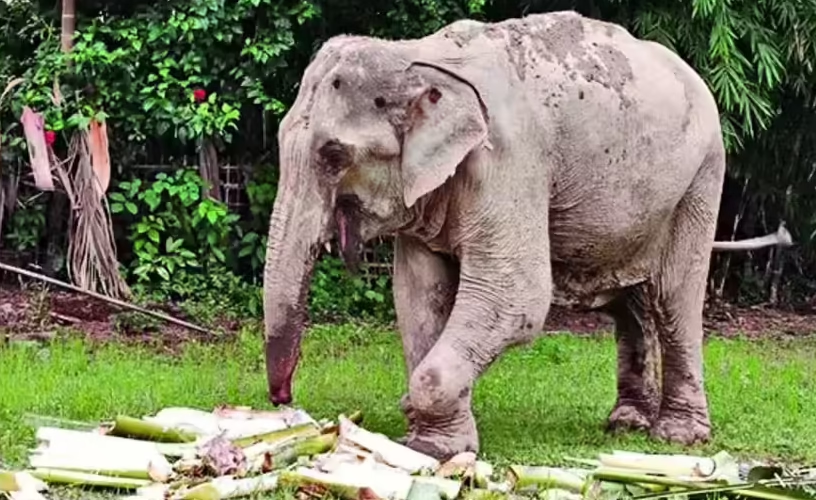


























































An intriguing spectacle has been unfolding on the fringes of Assam, a vibrant state in the northeastern part of India. A wounded elephant has been making its way to a local village every day, evidently in search of food and water. The rural community has been playing host to this unexpected visitor, who seems to have found a lifeline amidst the human habitation due to an incapacitating leg injury.
The elephant, a majestic creature that is typically seen in the wild, has been showing up at this particular village with remarkable consistency. It has become a daily ritual for this gentle giant to venture out of its natural habitat into this human settlement. The reason for this unusual behaviour is a significant leg injury that appears to have limited the elephant’s ability to fend for itself in the wild.
While it’s not uncommon for elephants to approach human settlements in search of food, especially when natural resources are scarce, the consistent visits by this injured elephant are a testament to its struggle for survival. This unique situation underlines the sometimes blurred boundaries between wildlife and human communities, particularly in areas such as Assam where densely populated settlements are nestled amidst lush forests.
Assam is a state of natural beauty, rich in biodiversity. It is known for its many national parks and wildlife sanctuaries, which are home to a diverse array of flora and fauna. The state is also home to a significant population of elephants, both in the wild and in captivity. In fact, Assam has the highest number of wild elephants in India, with an estimated population of over 5,000.
The relationship between humans and elephants in Assam has been historically complex. On one hand, elephants are deeply revered creatures in Indian culture, symbolising strength, wisdom and royalty. They are worshipped as incarnations of the elephant-headed god Ganesha and feature prominently in myths, folklore and religious ceremonies. On the other hand, the increasing human-elephant conflict due to habitat loss and fragmentation has led to numerous challenges.
The escalating human population and the expansion of agricultural activities have resulted in shrinking habitats and resource scarcity for wildlife, including elephants. Consequently, these magnificent creatures often wander into human settlements, leading to conflicts that sometimes result in injuries or even fatalities on both sides.
In the context of this intricate dynamic, the injured elephant’s daily pilgrimage to the village for sustenance is both a symbol of its resilience and a critical reminder of the urgent need for effective wildlife conservation measures. It is a stark illustration of the pressures faced by wildlife in a world where their habitats are increasingly encroached upon by human activities.
The elephant’s condition also throws light on the need for timely medical intervention for injured wildlife. While the local community has been supportive, providing food and water, the elephant’s injury requires professional medical attention. It is hoped that wildlife rehabilitation specialists can provide the necessary care to ensure the elephant’s survival and eventual return to the wild.
This situation also underscores the importance of fostering a harmonious co-existence between humans and wildlife. The villagers’ compassionate response to the elephant’s plight demonstrates the potential for peaceful interaction, even amidst the challenges posed by human-wildlife conflicts.
As this injured elephant continues to visit the Indian village, it serves as a poignant reminder of the interdependence of humans and animals, and the need for urgent, effective measures to protect wildlife and their habitats. It emphasises the profound responsibility that humans bear in ensuring the survival of these magnificent creatures, who are an integral part of our planet’s biodiversity.