

















































India has formally handed over a detailed dossier on The Resistance Front (TRF), a proxy terror outfit operated by Pakistan’s Inter-Services Intelligence (ISI) and Lashkar-e-Taiba (LeT), to both the United States and the United Nations’ 1267 Sanctions Committee. This strategic move is aimed at tightening international pressure on Pakistan and highlighting its role in sustaining cross-border terrorism in Jammu and Kashmir.
The dossier, delivered by Indian Foreign Secretary Vikram Misri during his visit to Washington from May 27 to 29, was submitted to senior officials at the US State Department. A similar dossier was also shared with UN officials in New York to push for TRF’s designation as a globally sanctioned terrorist group under the UN’s anti-terrorism framework.
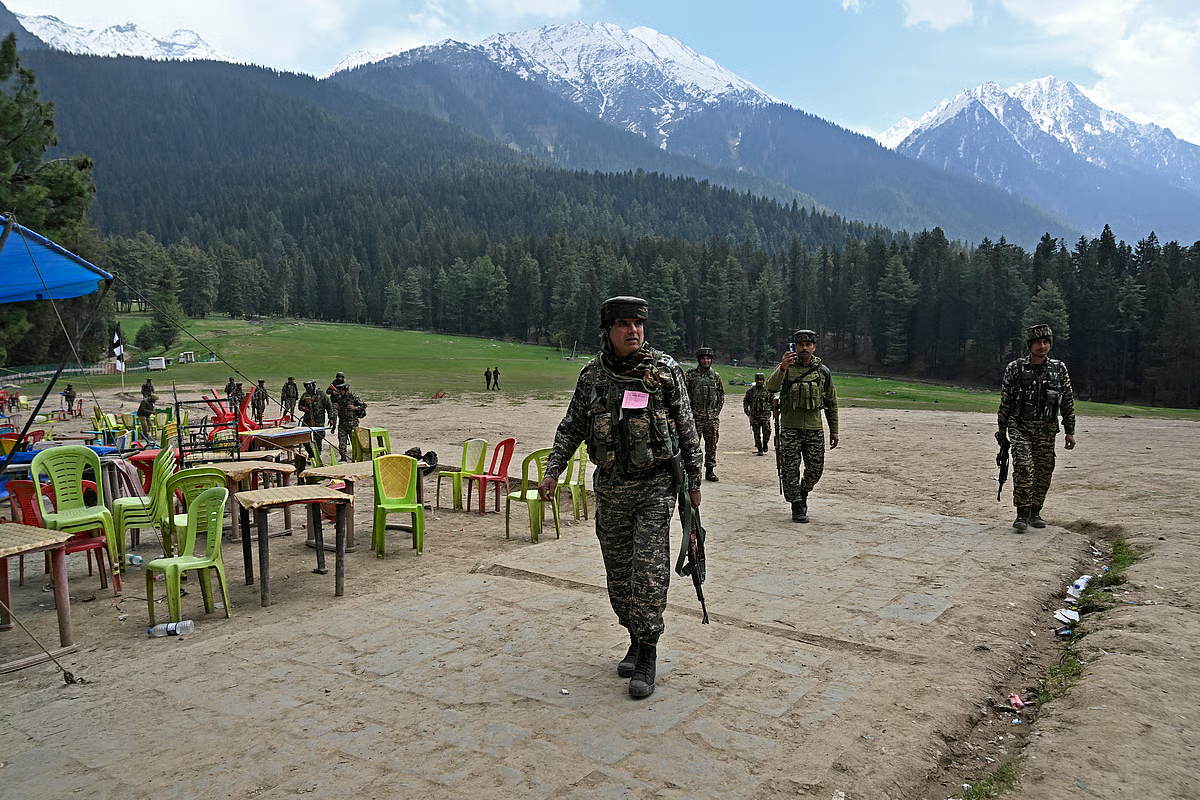
The diplomatic effort came shortly after the tragic killing of 26 Hindu civilians in Baisaran, Pahalgam, on April 22 — an attack attributed to TRF operatives. Within weeks of this massacre, India intensified its campaign to expose Pakistan-backed terror networks operating under the guise of local insurgency in Kashmir.
India was privately informed of the US decision to designate TRF as a global terrorist organization several days before the official announcement was made by the State Department. The designation underscores growing counter-terrorism cooperation between New Delhi and Washington and sends a firm message to Islamabad: support for terrorism will not be tolerated.
TRF, which emerged in 2019, has been actively involved in targeted killings, grenade attacks, and ambushes across central and south Kashmir over the past five years. The group, largely a rebranded front for LeT, has been used by Pakistani intelligence to project militancy in Kashmir as a local, home-grown resistance rather than foreign-sponsored terrorism.
Its leader, Sheikh Sajjad Gul, also known as Sajjad Ahmed Sheikh, is a native of the HMT area in Srinagar. Now believed to be living in Rawalpindi, Pakistan, Gul was once arrested in India in 2003 for planning bomb blasts in Delhi and possessing explosives. He was sentenced to 10 years in prison, released after serving his term, and fled to Pakistan in 2017. There, he became the ISI’s preferred figurehead to front TRF.
Gul’s background reflects a disturbing evolution from student to terrorist. After completing an MBA in Bengaluru and a lab technician course in Kerala, he returned to Kashmir to open a diagnostic lab — which allegedly served as a cover for his involvement with LeT. His radicalization and eventual escape to Pakistan underscore the ISI’s long-term strategy of recruiting educated Kashmiri youth for leadership roles in terror organizations to enhance their credibility and deflect blame from Pakistan.
The TRF has been linked to numerous attacks between 2020 and 2024, including:
- Grenade attacks in Central Kashmir (2023),
- Ambushes on Jammu and Kashmir Police in Anantnag (2023),
- The Gagangir and Z-Morh tunnel attacks (2024),
- The massacre in Pahalgam (2024),
- An attack in Ganderbal (2024).
India’s dossier also outlines the involvement of Gul’s brother, Parvez Ahmed Sheikh — a former doctor who moved from Kashmir to Saudi Arabia and later to Pakistan — in hawala transactions and terror financing. Indian intelligence has linked him to fugitive operatives based in the Gulf.
TRF’s creation followed the global backlash against Pakistan in the wake of the 2019 Pulwama bombing, in which 40 Indian paramilitary soldiers were killed. To deflect blame, ISI rebranded LeT’s operations under the TRF name, falsely portraying the group as an indigenous Kashmiri outfit.
The recent designation by the US and India’s move at the UN reflect a broader strategy to counter Pakistan’s use of hybrid militant proxies and deny them international legitimacy. It also strengthens India’s narrative on the global stage that terrorism in Kashmir is not a domestic uprising but part of a state-sponsored agenda.
This development adds further strain to India-Pakistan relations and places the spotlight on Islamabad’s ongoing support for non-state actors, even as it faces mounting international scrutiny over its failure to dismantle terror infrastructure on its soil.