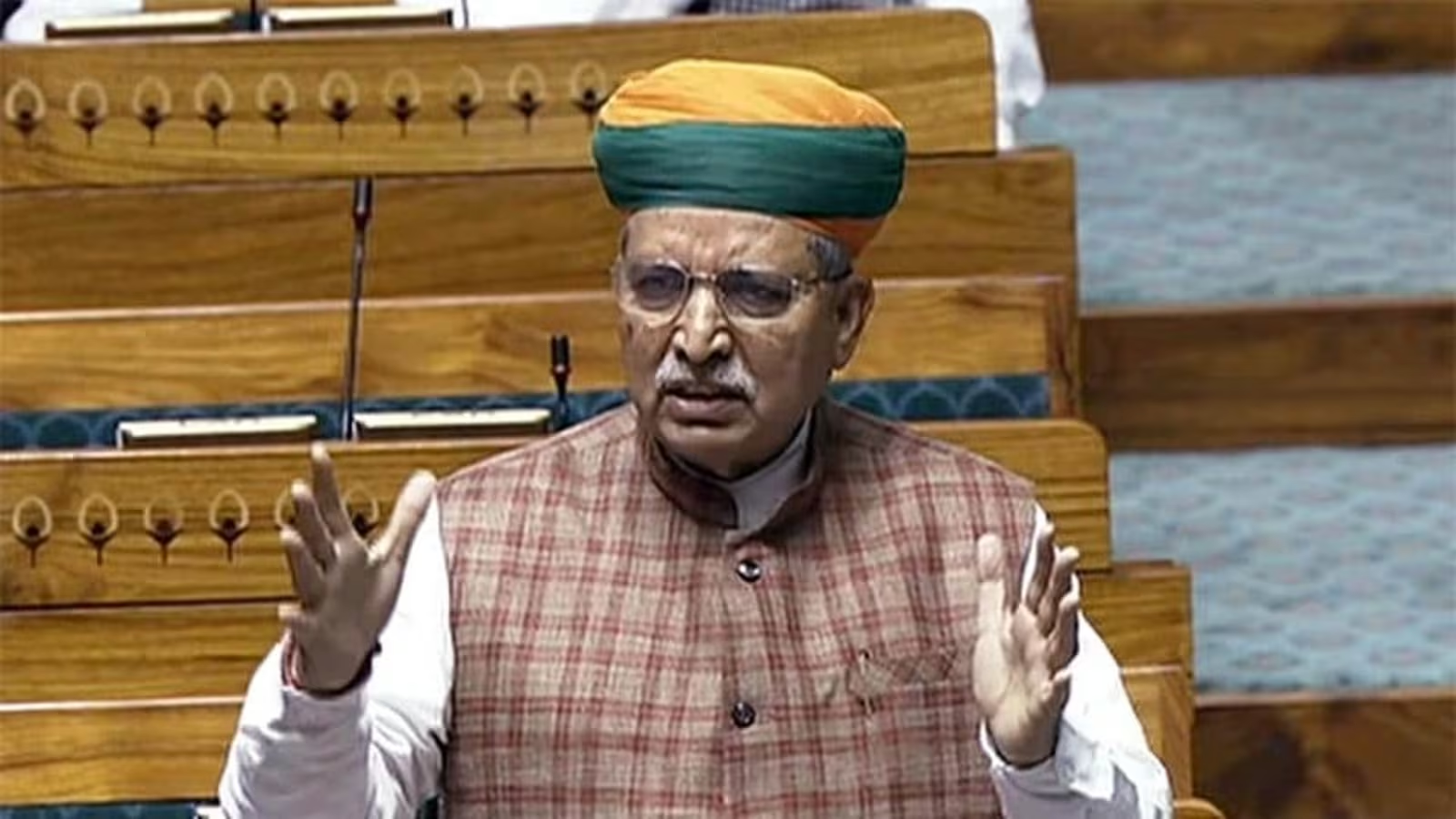



























































Union Law Minister Arjun Ram Meghwal has reaffirmed that Parliament holds the constitutional authority to remove judges of the Supreme Court and High Courts, as debate intensifies over a potential impeachment motion against Justice Yashwant Varma. The remarks come amidst a swelling political and legal storm triggered by allegations of judicial misconduct involving the former Delhi High Court judge.
Speaking on the matter Friday, Meghwal noted that while the Indian Constitution empowers Parliament to remove judges, it is the prerogative of elected Members of Parliament (MPs) to initiate such a motion. “Parliament has this authority under constitutional provisions, but the process must be initiated by the members themselves,” the minister stated.
The controversy centers on Justice Varma, now serving at the Allahabad High Court, who has challenged the findings of an internal inquiry panel that found him guilty of misconduct. The panel, led by Delhi High Court Chief Justice D.K. Upadhyaya and constituted by then Chief Justice of India Sanjiv Khanna, completed its investigation and submitted a report in May this year.
According to the findings, the inquiry was sparked by a fire incident on March 14 at Justice Varma’s government residence in Lutyens’ Delhi. The fire, allegedly caused by a short circuit, led to the discovery of partially burnt sacks containing a significant quantity of currency notes. The report raised serious questions about the unexplained presence of large sums of cash at a judge’s residence.
Justice Varma has denied all wrongdoing, stating in his plea to the Supreme Court that neither he nor any of his family members kept cash at the premises. He has sought to have the inquiry panel’s report declared invalid and has petitioned the apex court to set aside Chief Justice Khanna’s recommendation for his removal.
Under Article 124(4) of the Indian Constitution, the process of removing a judge involves a multi-step process requiring substantial parliamentary support. A motion for impeachment must be signed by at least 100 Lok Sabha MPs or 50 Rajya Sabha MPs before it can be admitted for consideration. If admitted, it leads to a full inquiry and, if proven, a two-thirds majority vote in both Houses is required for removal.
Meghwal’s statement confirms that some MPs have shown interest in pursuing the motion, hinting that the issue could see serious movement in the upcoming Monsoon Session of Parliament, set to commence on July 21. Senior Congress leader Jairam Ramesh has already stated that his party’s MPs are prepared to support the motion if tabled, suggesting a potential bipartisan effort.
While no formal impeachment proceedings have been launched yet, the momentum surrounding the case has already brought renewed scrutiny to the judiciary’s internal accountability mechanisms. Legal experts note that such proceedings are rare in Indian parliamentary history—only one judge, Justice Soumitra Sen of the Calcutta High Court, resigned in 2011 before his impeachment could be completed, while another, Justice V. Ramaswami, survived an impeachment attempt in 1993 due to political deadlock.
The case of Justice Varma is being watched closely, not only for its legal implications but also for its potential political ripple effects. With Parliament preparing for what could be a contentious session, questions of judicial integrity, transparency, and the balance of powers between the judiciary and legislature are poised to take center stage.