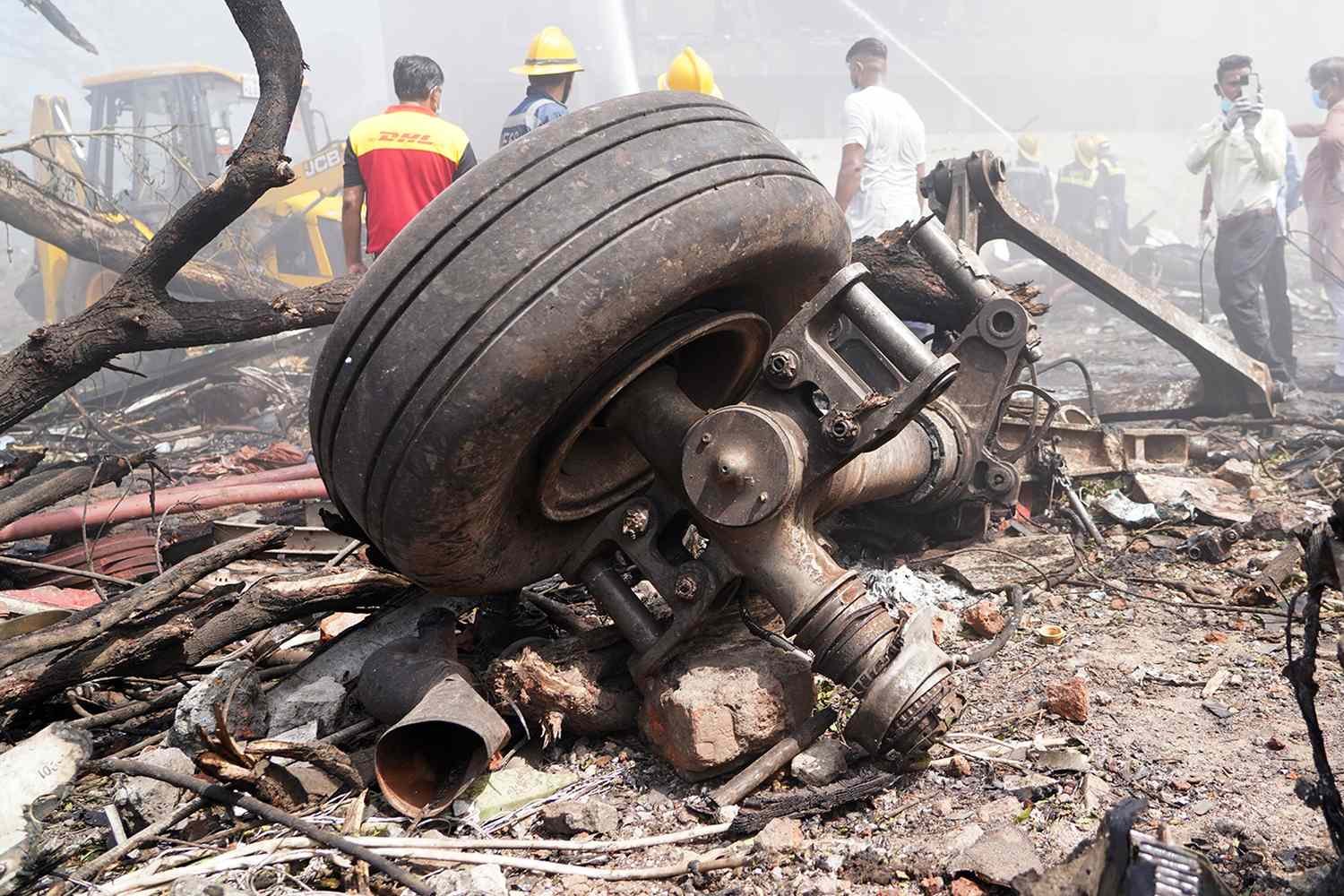
























































The tragic crash of Air India Flight 171 in June, which claimed the lives of 260 people, continues to spark intense speculation and controversy as investigators work through conflicting clues and growing public scrutiny. What was initially hoped to be a clarifying preliminary report has instead raised more questions, particularly around a key moment in the cockpit involving a mysterious and catastrophic shutdown of both engines just seconds after take-off.
The aircraft, a 12-year-old Boeing 787 Dreamliner, crashed into a densely populated neighbourhood in Ahmedabad, western India, less than one minute after leaving the runway. What has baffled aviation experts and the public alike is that both fuel-control switches — which are designed to cut off fuel flow and shut down the engines — were moved to the “cut-off” position moments after the plane became airborne. This is an action typically reserved for after a plane has landed and its engines are no longer needed.
Even more puzzling is the recorded exchange captured by the cockpit voice recorder (CVR). One pilot asks, “Why did you do the cut-off?” to which the other replies, “I didn’t.” However, the preliminary report did not identify who said what, and with both the captain and co-pilot having extensive experience — over 19,000 combined flying hours, nearly half of that on the Dreamliner — the conversation has added to the confusion rather than cleared it.
At the time of the incident, co-pilot Clive Kunder, 32, was flying the plane while 56-year-old captain Sumeet Sabharwal monitored the controls. Investigators have confirmed that both pilots were medically cleared for flight and had passed all routine health checks.
The cockpit voice recording, though brief in the publicly released excerpt, has become the focal point of the ongoing investigation. While it confirms the switches were manually moved — leading to total engine failure — the full transcript has not been released, leaving only a single, ambiguous line to fuel global speculation.
Adding to the intrigue, media reports from outlets including The Wall Street Journal, Reuters, and Italy’s Corriere della Sera suggest the captain may have initiated the fuel cutoff, though these accounts remain unconfirmed. Investigative officials from India’s Aircraft Accident Investigation Bureau (AAIB), however, have pushed back against such narratives, calling the media coverage “selective” and “irresponsible.” Jennifer Homendy, chair of the U.S. National Transportation Safety Board (NTSB), which is assisting in the investigation, has also warned that the reports are “premature and speculative.”
Pilots’ unions in India have rallied behind the crew, condemning the public finger-pointing as insensitive and dangerous. The Indian Commercial Pilots’ Association labelled the speculation “reckless,” while ALPA India urged investigators to focus on the aircraft’s maintenance records, flight data, and system behaviour — not just pilot interactions.
The AAIB’s preliminary report confirmed the switches were physically moved, triggering engine shutdown, but left unanswered whether it was due to human error, automation failure, or something more deliberate. One aviation investigator, speaking anonymously, proposed a scenario in which the pilot who moved the switches might have done so unconsciously or out of confusion, while the other — potentially aware of the voice recorder — may have framed the conversation to deflect blame. However, with no definitive identification of the speakers or motive, this remains speculative.
Some analysts have raised the possibility of a technical fault. In particular, a malfunction in the plane’s Full Authority Digital Engine Control (FADEC) system — which regulates engine performance — could, in theory, lead to unintended shutdowns if it received faulty sensor inputs. But that theory hinges on the timeline: if the pilots reacted after the switches moved, it would suggest an automation failure. If the exclamation came before or during the movement, it might indicate human involvement.
Peter Goelz, former managing director of the NTSB, emphasized that flight data recorders would typically log any engine malfunctions or alerts and that these would have been discussed by the crew if noticed. His comments suggest that more comprehensive information — including full CVR and Flight Data Recorder (FDR) transcripts — are essential before drawing any conclusions.
Meanwhile, India’s aviation community has called for transparency. Many question whether the decision to release only a fragment of the cockpit conversation was a matter of sensitivity or an indication that even investigators are still piecing together who said what and why. The lack of clarity has done little to dampen public speculation.
Alternative theories, such as an electrical fire in the aircraft’s tail or a battery malfunction, have been floated, particularly in Indian media. However, the report’s data indicates the engines lost power due to the fuel switches — not a mechanical fire or structural issue. Any fire in the rear of the aircraft likely occurred after the impact, investigators say.
AAIB chief GVG Yugandhar has urged patience, noting that the preliminary findings were meant only to explain whathappened, not why. He reaffirmed the agency’s commitment to uncovering the root cause in the final report, which is expected to take up to a year to complete.
Aviation expert and former investigator Shawn Pruchnicki summed up the ongoing investigation this way: “It boils down to two possibilities — either deliberate action or confusion, or a possible issue with the plane’s automated systems.” But he cautioned against jumping to conclusions. “There’s no proof this was intentional. And until we have that, everything else is just guesswork.”
In a disaster already marked by grief and loss, the mystery of the cockpit voices and the unexplained movement of the fuel switches continues to loom over the investigation — a haunting detail in a tragedy that has left India, and the aviation world, searching for answers.