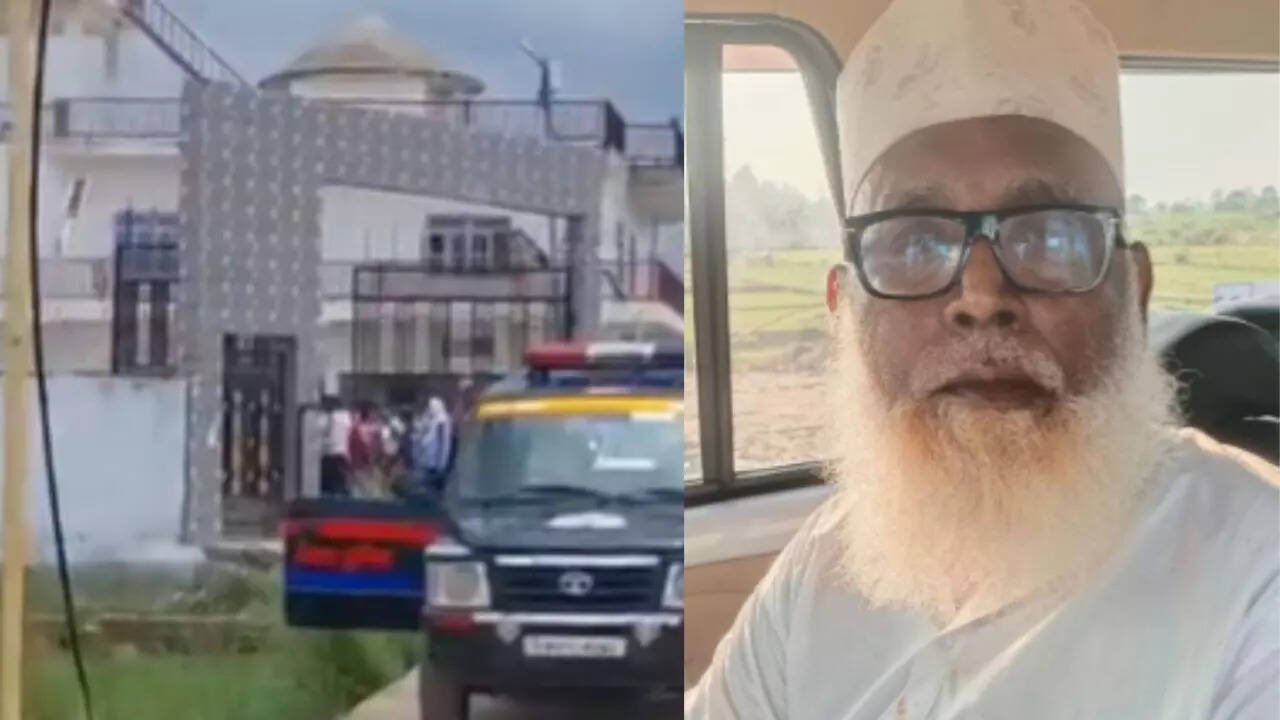




















































A major scandal has erupted in Uttar Pradesh after the discovery of a “red diary” allegedly belonging to Chhangur Baba—also known as Jamaluddin—a man accused of masterminding a massive religious conversion racket reportedly backed by over ₹106 crore in foreign funds. The diary, seized by the Uttar Pradesh Anti-Terrorist Squad (ATS) during recent raids, allegedly names several politicians and former bureaucrats who are suspected to have received financial support from Baba ahead of the 2022 state Assembly elections. Authorities say this single document could unravel a much wider political and financial nexus, as multiple agencies including the Enforcement Directorate (ED) and the Special Task Force (STF) intensify their investigations.
Chhangur Baba’s journey from a humble seller of religious charms and amulets on a bicycle to a political influencer with crores in overseas funding is now at the center of a national controversy. Based in Rehra Mafi, a village near the India-Nepal border in Balrampur district, Baba reportedly built a financial empire over the past decade with the help of donations from Middle Eastern countries. According to official reports, he maintained more than 40 bank accounts through which ₹106 crore was funneled. Two major properties linked to him—one in Balrampur and another in Lonavala, Maharashtra—are valued at more than ₹18 crore combined. The Lonavala property, purchased in August 2023, was jointly registered with one of his key associates. Investigators are now examining financial transactions tied to Mohammad Ahmed Khan, the seller of the Lonavala property, who is also suspected of being one of the foreign funders.
The seized red diary is becoming a focal point of the investigation. Sources within the ATS suggest it lists names of at least six politicians and former officials who allegedly received large sums of money from Baba, especially during the 2022 assembly elections. One diary entry reportedly details a ₹90 lakh payment made to a former candidate from the Utraula constituency. Although that candidate lost the election, Baba was allegedly already planning to support a former IPS officer for the 2027 polls from the same region. Authorities say Chhangur Baba used his financial muscle to actively support political campaigns not just through direct funding, but also by instructing his large follower base to vote en masse for particular candidates. His connections are believed to have spanned across Balrampur and neighboring districts. Viral images from previous years show him with gangster-turned-politician Atiq Ahmed, who was killed in 2023—adding further intrigue to his political reach.
Chhangur Baba was arrested on July 5 along with his alleged accomplice Neetu, also known as Nasreen, from a hotel in Lucknow. He is accused of orchestrating illegal religious conversions, targeting marginalized communities such as widows, daily wage laborers, and members of Scheduled Castes. The conversions were reportedly carried out using financial incentives, coercion, and false promises of marriage. The Enforcement Directorate officially opened a probe under the Prevention of Money Laundering Act (PMLA) on July 9 and is currently examining whether the laundered funds were routed through shell companies or NGOs that may have violated the Foreign Contribution (Regulation) Act (FCRA).
On July 17, ED officials conducted coordinated raids on 14 premises—12 in Utraula and 2 in Mumbai. Authorities also uncovered a large, illegally built complex in Madhupur village, approximately 3 km from Baba’s native village. The structure, complete with 15 CCTV cameras and two guard dogs, was found to be on government land. It was partially demolished by the local administration shortly after the raids.
The ongoing probe has rattled political circles in Uttar Pradesh, with calls mounting for greater scrutiny of election financing and foreign-funded religious organizations. Analysts warn that the revelations could have far-reaching consequences ahead of the 2027 state elections. The BJP-led government has vowed to root out foreign-funded extremist networks, while opposition parties are demanding an independent judicial probe, citing concerns over selective leaks and potential political vendettas. As the contents of the red diary continue to be analyzed, political observers believe this case could reshape the conversation around foreign interference, electoral integrity, and religious freedom in India.