













































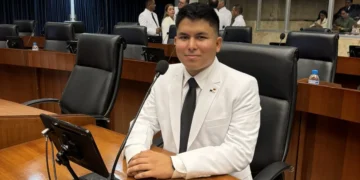

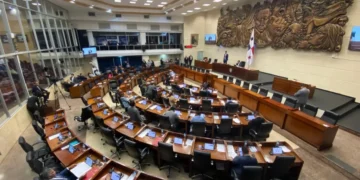









Tensions between Guatemala’s Public Ministry (MP) and the Ministry of the Interior (Mingob) reached a new high this week after senior officials criticized the government’s failure to prevent a dramatic rise in extortion and violent crime across the country. The critique came during a congressional meeting with Deputy Ronald Portillo of the Vamos party, where officials from the MP expressed alarm over the record number of extortion complaints and the alleged inaction of law enforcement.
According to Melvin Portillo, the MP’s Secretary of Criminal Policy, Guatemala is now experiencing historic levels of extortion. In May alone, authorities received more than 1,835 complaints, a figure that surpasses previous monthly records. He argued that if the Ministry of the Interior’s performance were evaluated solely on these statistics, the current minister would already be out of a job.
“If we measured the Ministry of the Interior in a qualitative and quantitative way, we would no longer have a minister,” Portillo asserted. “We have seen a surge in homicides and extortion, which clearly shows that either there is no prevention strategy in place or that existing crime prevention plans are ineffective.”
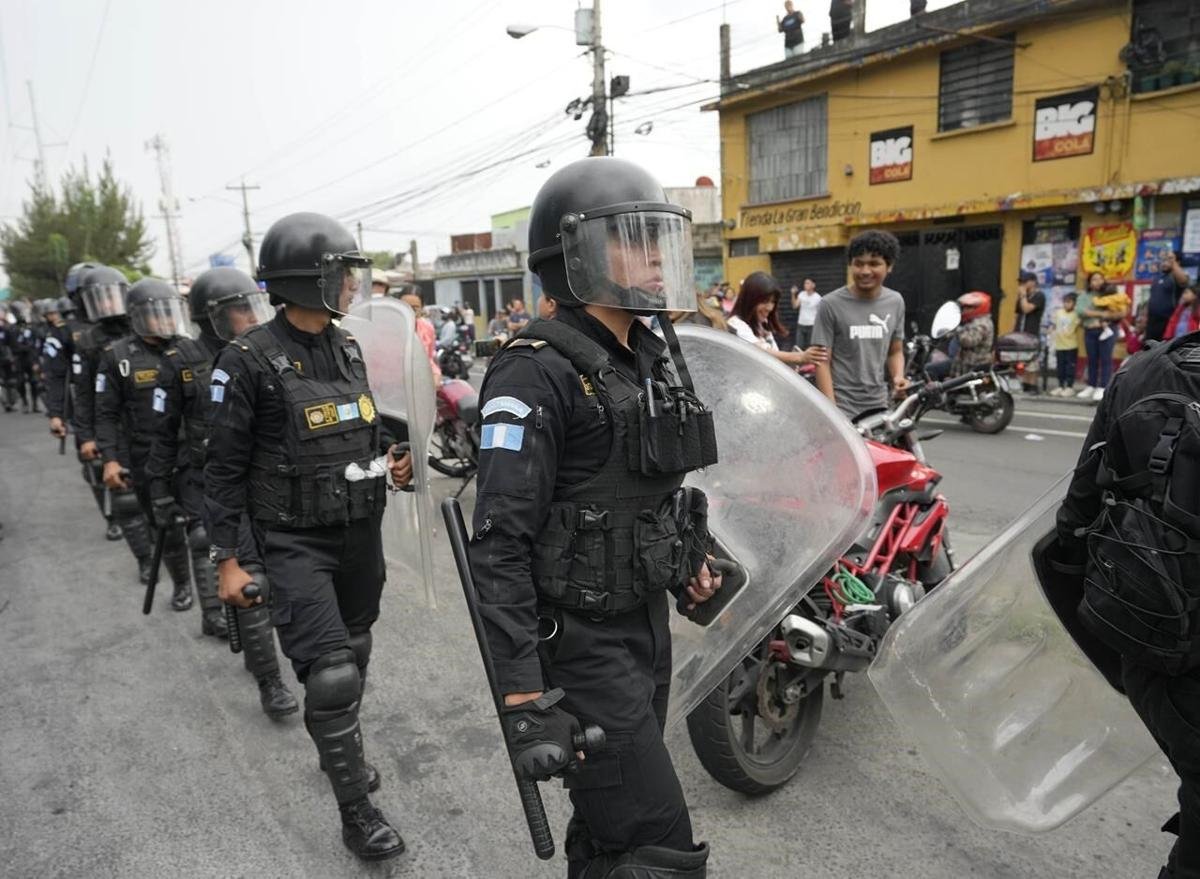
Portillo further accused the National Civil Police (PNC) of failing to execute arrest warrants related to extortion. He painted a dire picture of law enforcement inaction, saying, “We could fill the Doroteo Guamuch Flores stadium with the number of pending arrest warrants in Guatemala.”
While the MP maintains that its role is focused on criminal prosecution after crimes occur, officials stressed that it is the Ministry of the Interior’s responsibility to prevent these crimes in the first place. The absence of Mingob representatives at Tuesday’s congressional dialogue table only added to frustrations.
Enma Flores, the lead prosecutor against extortion, shed further light on the situation by revealing how extortion tactics are evolving. According to her office’s findings, criminal groups are now leveraging inside help from unlikely sources — including delivery personnel, company employees, and even public transport drivers — to gather information on victims. This internal collaboration has made it easier for extortionists to target individuals and businesses with increasing precision.
In June, the MP recorded 1,689 new extortion complaints, with the department of Guatemala continuing to register the highest volume of cases. Flores highlighted that a significant portion of these extortion demands originate from within prisons, where inmates — often referred to as “immigrants” in criminal slang — contact civilians to demand payments.
The prosecutor also addressed the ongoing issue of “talachas”, or illegal fees demanded from new inmates by fellow prisoners or even prison staff. “Sadly, when someone is incarcerated, they’re often forced to pay money simply to survive. Many victims choose not to report these demands out of fear, especially when the perpetrators are fellow inmates or prison personnel,” Flores said.
She emphasized that the extortion crisis is being driven by a mix of actors — from notorious gang members to independent criminal rings — and sometimes involves employees of major companies who supply private customer information to extortionists.
When approached for comment, the Ministry of the Interior declined to respond directly to the accusations. In a brief statement referencing Guatemala’s constitutional protections of free speech, a spokesperson for Mingob stated: “Article 35 of the Constitution guarantees citizens the right to express their opinions within a framework of respect and responsibility. The Ministry reserves the right not to respond to this type of commentary or publication.”
This refusal to engage with mounting criticism has sparked public debate about the effectiveness of Guatemala’s crime prevention infrastructure and the government’s transparency in addressing rising insecurity. With crime rates continuing to soar and public confidence in law enforcement eroding, the spotlight remains firmly on the Ministry of the Interior — and its ability to stem the tide of violence engulfing the nation.
Extortion in Guatemala has become a systemic issue, particularly affecting small business owners, transport workers, and vendors, many of whom are regularly forced to pay “protection money” to criminal groups. These activities are often orchestrated by prison-based gang leaders, who rely on mobile phones and outside collaborators to carry out their operations.
Despite government pledges to increase surveillance and boost anti-gang units, critics argue that institutional weaknesses, corruption, and poor coordination among agencies have allowed the crisis to persist. With pressure now mounting from lawmakers, civil society, and prosecutors alike, there is growing urgency for structural reforms in crime prevention and a clearer delineation of accountability within the country’s security apparatus.