


















































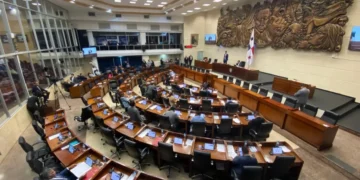









Opposition Leader Inia Seruiratu has raised concerns in Parliament that Fiji’s national debt is on track to reach $11.7 billion by 2026, nearly doubling the country’s debt from 2019. Speaking during the 2025–26 national budget debate, Seruiratu said the government’s fiscal policy was leading Fiji into dangerous territory, with limited room for correction unless immediate action is taken.
According to Seruiratu, Fiji’s total public debt in 2019 stood at $5.7 billion, which was approximately 48.4 percent of the country’s gross domestic product (GDP) at the time. That figure climbed to $6.7 billion in 2020 and $7.7 billion in 2021, driven primarily by the economic impacts of COVID-19 and several natural disasters. By the 2022/23 fiscal year, national debt had surged to $9.1 billion, representing a 91.1 percent debt-to-GDP ratio. The Opposition Leader emphasized that this spike coincided with the beginning of the current administration’s term in December 2022.
Seruiratu acknowledged the necessity of borrowing during the pandemic years, but expressed alarm that since the current government took office, the debt has increased by another $2.6 billion despite the absence of any major natural disasters or economic crises. He accused the government of breaking promises to reduce borrowing and warned that, if the current trend continues, the country could face a severe fiscal crisis. He projected that by July 2025, Fiji’s debt would rise to $10.6 billion, equating to roughly 77.5 percent of GDP.
The Opposition Leader cautioned that elevated debt levels have long-term consequences. High government borrowing can crowd out private investment by driving up interest rates, making it more expensive for businesses to expand, innovate, or even operate. He also warned that sustained debt increases could lead to reduced investor confidence and put pressure on Fiji’s credit rating, which in turn could increase the cost of future borrowing.
Recent analysis from international financial institutions has placed Fiji among the most heavily indebted nations in the Pacific, with few other island countries exceeding a 70 percent debt-to-GDP ratio. While economic growth has resumed following the pandemic, reaching a modest 3 percent annually, the size and pace of borrowing remains a critical concern for economists, especially as Fiji faces climate-related vulnerabilities and global financial uncertainty.
Fiji’s debt strategy has shifted toward focusing borrowing on infrastructure investments, rather than operational or recurrent expenditure. Capital projects, such as road networks, school construction, and hospital upgrades, now make up a larger share of national spending. However, questions remain about whether these projects are delivering the kind of economic returns needed to offset the long-term cost of borrowing.
The government has argued that the rising debt is being managed responsibly and that recent borrowings are essential to fund growth, infrastructure, and service delivery. It has pledged to reduce budget deficits over time, with the aim of bringing the debt-to-GDP ratio down gradually. According to current projections, debt could stabilise around 77 to 78 percent of GDP by mid-2025 and eventually decline toward the 70 percent range by the end of the decade, assuming continued growth and tighter fiscal controls.
Yet critics argue that the projections are overly optimistic and rely on assumptions that may not hold, such as uninterrupted tourism recovery, stable global markets, and the absence of further natural disasters. Any significant disruption to these factors could derail the government’s fiscal path and prolong Fiji’s high-debt cycle.
Seruiratu concluded his address by urging the government to take stronger, swifter steps to reduce the debt burden. He emphasized that unless the current trajectory is reversed, future generations could be saddled with unsustainable obligations that limit national sovereignty and weaken economic resilience.
The debate over the 2025–26 budget continues, with debt sustainability expected to remain a central issue in the weeks ahead.