






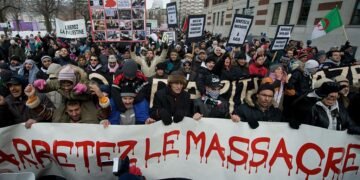




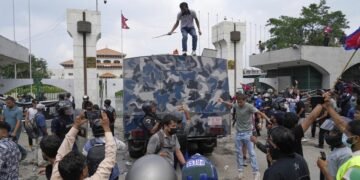
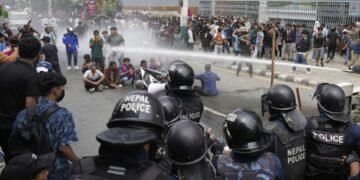


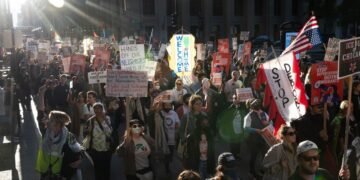








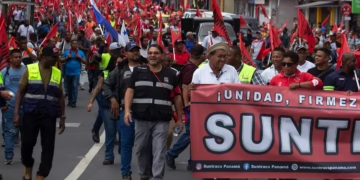










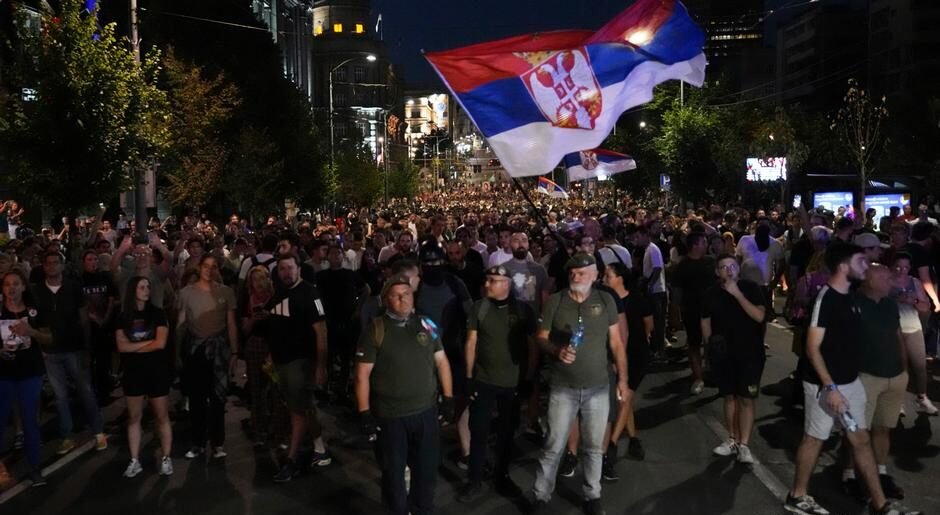
In recent days, Serbia has witnessed significant unrest, marked by violent confrontations between demonstrators and law enforcement across various cities. The protests have erupted in response to a growing sense of discontent among the populace, who accuse the government of repressive measures and a lack of accountability.
The turmoil began as a reaction to the government’s handling of several pressing issues, including corruption, economic instability, and the perceived erosion of democratic freedoms. Many protesters are voicing their frustration over what they consider an authoritarian drift under President Aleksandar Vučić’s administration. The protesters argue that their right to assemble and express dissent is being stifled, leading to a surge in public demonstrations.
Clashes have intensified in the capital, Belgrade, and other urban centres, where police have deployed tear gas and water cannons to disperse crowds. The situation has escalated into a chaotic scene, with protesters responding with rocks and other projectiles. The streets have been filled with smoke and noise, reflecting the heightened tensions as both sides assert their positions.
President Vučić has publicly condemned the protests, insisting that his government will not tolerate violence or disorder. He has characterised the demonstrations as attempts to destabilise the country and has vowed to take firm action against those who engage in illegal activities during the protests. This hardline stance has further inflamed tensions, prompting fears among some observers that the government may resort to even more stringent measures in response to the unrest.
The backdrop to these protests is a broader context of political dissatisfaction that has been simmering in Serbia for years. Economic challenges, including high unemployment rates and inflation, have exacerbated public grievances. Many citizens feel that the government has failed to address their needs, leading to a sense of betrayal among those who had hoped for reform and progress.
Additionally, the political landscape in Serbia has been characterised by a lack of genuine opposition. Critics argue that the ruling party has effectively marginalised dissenting voices, creating an environment where public discontent can quickly escalate into widespread protest. The opposition parties, fragmented and often lacking cohesive strategies, have struggled to present a united front against Vučić’s administration, leaving many citizens feeling disenfranchised.
Internationally, Serbia’s political climate has garnered attention, particularly in light of its aspirations for European Union membership. The EU has expressed concerns regarding the state of democracy and the rule of law in Serbia, urging the government to adhere to democratic principles and respect civil liberties. As the protests continue, the EU’s response could play a significant role in shaping the future of Serbian politics and its relationship with the bloc.
The ongoing unrest has also raised questions about the potential for further escalation. While many protesters are calling for peaceful demonstrations, the volatile environment has the potential to lead to more severe confrontations. Observers are closely monitoring the situation, as the balance between state authority and public dissent hangs in the balance.
As Serbia stands at a crossroads, the coming days will be crucial in determining the direction of the protests and the government’s response. The desire for change among the populace is evident, but whether this will translate into meaningful political reform or further unrest remains uncertain. The world watches as Serbia navigates this critical juncture in its history, with implications not only for its domestic stability but also for its future on the European stage.