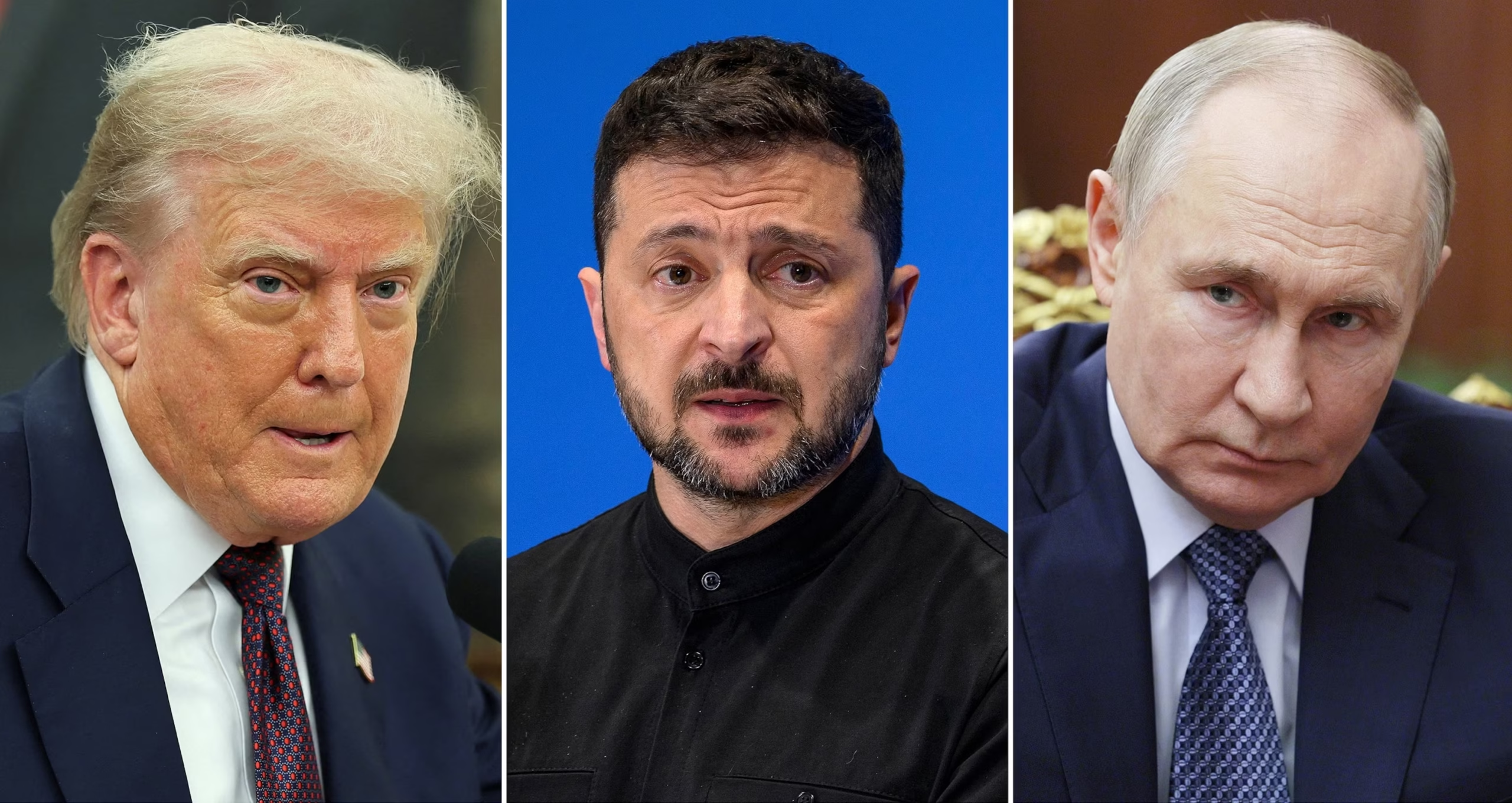
In the current state of global affairs, the possibility of Ukraine’s leader, Volodymyr Zelensky attending a meeting between US President Donald Trump and Russian President Vladimir Putin is not ruled out, despite the fact that the rest of Europe appears to be left off the guest list. This intriguing development is a noteworthy observation by James Waterhouse.
Ukraine, a nation embroiled in conflict, and Europe, the continent where it is geographically located, seem to have been overlooked when it comes to invitations for this potentially significant summit. This exclusion raises questions about the dynamics of international relations and the strategic purposes underlying such a meeting.
In the complex tapestry of global politics, Ukraine holds a pivotal position, particularly in the context of its ongoing conflict with Russia. Since 2014, the Eastern European country has been grappling with a Russian-backed insurgency in its eastern territories, a conflict that has resulted in thousands of deaths and has displaced many more. The country’s leadership, under President Volodymyr Zelensky, has been striving to maneuver through this crisis, seeking assistance from global powers, notably the United States.
Zelensky’s potential attendance at the meeting between Trump and Putin could be viewed from multiple perspectives. On one hand, it could be seen as a diplomatic opportunity for Ukraine to address its issues directly with Russia and the United States, two influential powerhouses whose decisions could have far-reaching implications for the resolution of the Ukrainian conflict. Alternatively, it could also be interpreted as a subtle indication of Ukraine’s complex, and at times strained, relationship with the rest of Europe.
Europe’s exclusion from the meeting is another aspect that warrants attention. Europe, as a continent, has a vested interest in the resolution of the Ukrainian crisis due to its geographical proximity and the potential for the conflict to destabilise the region. The European Union, in particular, has been actively involved in mediating the conflict and providing support to Ukraine. Therefore, its apparent exclusion from this meeting could be seen as a surprising and somewhat concerning development.
The relationship between Europe and the United States has traditionally been one of mutual cooperation and shared values. However, this dynamic has been tested in recent years due to differing perspectives on issues such as climate change, trade policies, and defence spending. The Trump administration, in particular, adopted a more isolationist stance, straining transatlantic ties. This meeting, therefore, could be viewed as a continuation of this trend, further highlighting the shifts in global power dynamics.
The presence of Putin at this meeting is also significant. Russia’s annexation of Crimea in 2014 and its support for the separatist movement in eastern Ukraine have placed it at odds with much of the international community. The country’s role in the Ukrainian crisis, coupled with allegations of interference in the 2016 US Presidential election, have further complicated its relationship with the United States and Europe. Hence, Putin’s participation in this meeting could signal a potential shift in these relationships, or at least an attempt to navigate the intricate dynamics of global politics.