

























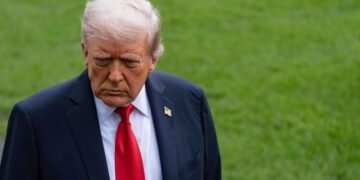













Former U.S. President Donald Trump has accused Ukrainian President Volodymyr Zelensky of damaging ongoing peace negotiations with Russia through what he called “inflammatory remarks.”
Zelensky stirred controversy on Tuesday by firmly rejecting any recognition of Russia’s control over Crimea, stating: “This is against our constitution.” The comments drew a sharp rebuke from Trump, who claimed on his social media platform, Truth Social, that such declarations would only serve to “prolong the killing.”
“It’s statements like these that make peace harder to achieve,” Trump said. “Stopping the killing must be our first priority.”
His remarks came just after Vice President JD Vance signaled that the United States could withdraw from its mediating role if the warring sides fail to make progress. Speaking during a visit to India, Vance said: “It’s time for them to say yes, or for the U.S. to walk away.”
Diplomatic activity has shifted focus this week, with U.S. officials skipping a planned meeting in London to concentrate instead on discussions in Moscow. Recent leaks suggest the American peace proposal could involve acknowledging Russian sovereignty over Crimea—annexed by Russia in 2014—raising alarms in Kyiv.
In his Wednesday response, Zelensky emphasized: “Ending the violence is our top mission.”
Peace Talks in Flux Amid U.S. and European Disagreements
A round of ceasefire discussions in London involving representatives from the U.S., UK, France, Germany, and Ukraine was downgraded after U.S. Secretary of State Marco Rubio and special envoy Steve Witkoff unexpectedly withdrew. The two will instead focus on separate negotiations, with Witkoff traveling to Moscow to meet Russian President Vladimir Putin for the fourth time.
The abrupt reshuffling surprised British officials, and while the U.S. cited “logistical issues,” sources say the move left the UK’s Foreign Office scrambling.
Meanwhile, reports suggest that Moscow may be open to freezing the conflict along current frontlines in exchange for major concessions, including recognition of its control over Crimea. However, this idea has been firmly rejected by both Zelensky and his advisors, who argue that altering borders by force is incompatible with international law.
Yuriy Sak, an advisor to Ukraine’s ministry of strategic industries, told BBC Radio 4 that such proposals were “not productive” and that Crimea remains a non-negotiable issue. Ukrainian representatives attending the London talks are operating under a “clear and narrow mandate” to focus on securing a ceasefire.
Violence Continues Despite Ceasefire Claims
Although Putin declared a temporary truce for the Easter holiday, British Defence Secretary John Healey told Parliament there was no sign of a meaningful pause in hostilities. “Putin talks of peace, but his actions show otherwise,” Healey said.
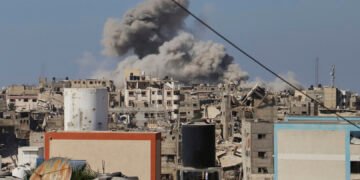
Just this week, a Russian drone strike killed nine and injured dozens more in the eastern Ukrainian city of Marhanets. The attack underscores the ongoing toll of the war, which has claimed hundreds of thousands of lives since it began in February 2022. Nearly seven million Ukrainians remain displaced.
The roots of the conflict trace back to 2014, when Russia annexed Crimea following the ouster of Ukraine’s pro-Russian president and subsequently supported separatists in the eastern regions.
As the war continues, efforts to forge peace remain fragile and fraught with political tension—not just between Kyiv and Moscow, but also among international actors trying to broker a resolution.