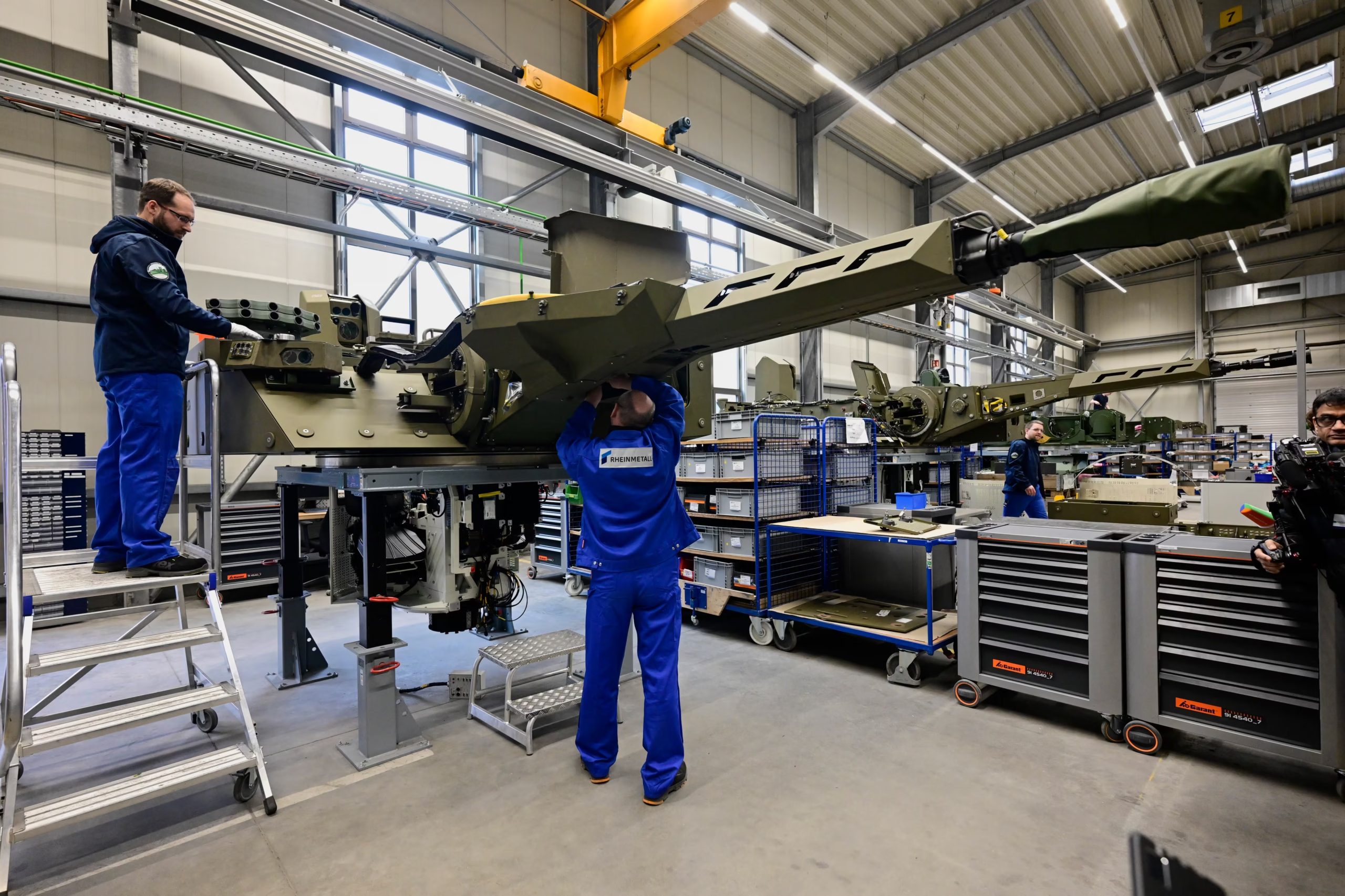



























































The European defence industry is calling on policymakers to commit at least €100 billion in defence spending under the European Union’s next long-term budget, set to cover the period from 2028 to 2034. Industry leaders argue this figure is the absolute minimum required to reverse decades of underfunding and to rebuild Europe’s military capabilities amid growing global threats.
In a position paper released by the Aerospace, Security and Defence Industries Association of Europe (ASD), executives warned that the current €13 billion allocated for security and defence in the EU’s 2021–2027 budget barely scratches the surface of what is needed. The ASD urged EU leaders to significantly raise their ambitions, recommending a total of approximately €150 billion for both military and non-military security efforts over the next seven-year cycle.
This request comes as concerns mount over Europe’s ability to defend itself independently. The ASD highlighted that underinvestment in previous decades — often referred to as the “peace dividend” era — has created a €600 billion “defence deficit.” With the United States increasingly focusing on the Indo-Pacific and uncertainty about its future commitment to NATO, the need for Europe to reinforce its own defence infrastructure has become more pressing.
Although EU member states have pledged increased national defence budgets in response to Russia’s invasion of Ukraine and other regional security risks, collective EU-level action has lagged. A previously proposed €800 billion rearmament initiative has seen slow implementation, prompting renewed calls from industry and political leaders to accelerate action.
According to leaked drafts ahead of the European Commission’s formal budget proposal, a new consolidated fund — the European Competitiveness Fund (ECF) — is expected to be unveiled. This new mechanism would merge up to 14 existing EU funding programmes, including those related to defence, space, technology, health, and energy. The fund is anticipated to include the European Defence Fund, IRIS² satellite programme, InvestEU, and other strategic tools to support industrial and military capabilities.
The ECF would also implement a “European preference clause” to prioritize investments that enhance EU sovereignty across sectors such as biotech, cybersecurity, space systems, and digital infrastructure. This is seen as a step toward reducing the EU’s dependence on foreign technologies, particularly from the United States and China.
Policymakers are also considering a structural shift in the EU’s budget architecture. There are discussions about merging the Common Agricultural Policy (CAP) and cohesion policy into a single budget framework. This potential change could free up financial space for new priorities such as defence and security while streamlining the bloc’s broader fiscal planning.
In addition to military and security demands, the ASD is urging the EU to dedicate €40 to €60 billion to space-related projects, and €23.5 billion to civil aviation. Industry representatives warn that chronic underfunding in these areas could delay key technological advancements and leave Europe strategically vulnerable in sectors that are increasingly vital to both economic and national security.
European Commissioner for Defence and Space Andrius Kubilius stressed the importance of increased space investment in a recent interview. He noted that the existing €17 billion allocation for space is insufficient even for system maintenance, let alone innovation. Failure to act, he warned, could leave the EU lagging far behind global competitors by 2035.
The European Commission is expected to present its full proposal for the next Multiannual Financial Framework later this week. While consensus is far from guaranteed, the defence and security industry’s appeal for a robust financial commitment reflects growing concern that the EU must act swiftly to secure its long-term stability and strategic autonomy.
For now, all eyes are on Brussels as Europe grapples with how to balance fiscal responsibility with the urgent need for security in a rapidly changing world.