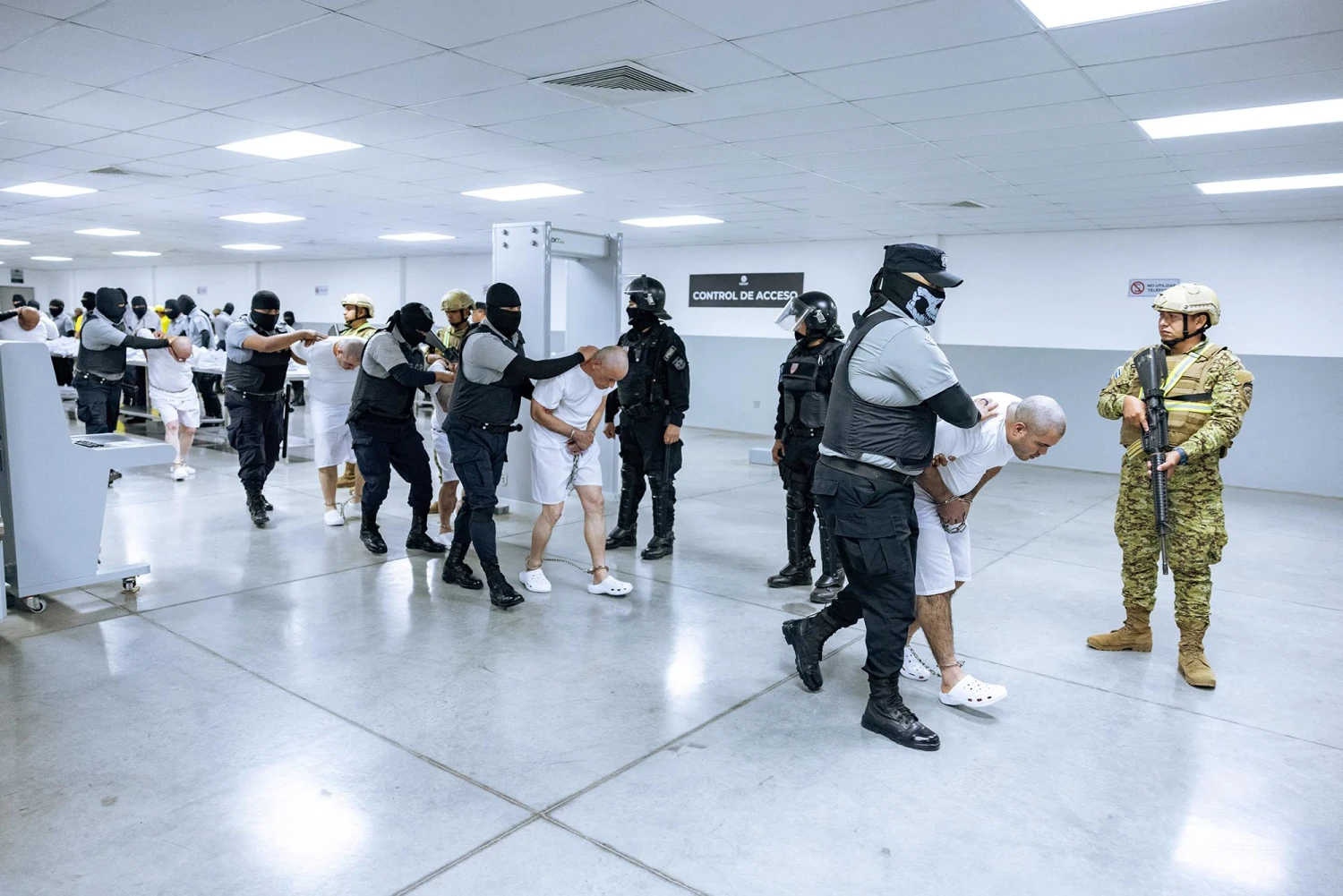












































The government of El Salvador has confirmed to the United Nations that legal and operational responsibility for over 200 Venezuelan migrants detained at its high-security Cecot prison lies with the United States—not with Salvadoran authorities. This revelation contradicts earlier public assertions from the U.S. administration, which claimed it no longer had jurisdiction over the men following their deportation in March.
In a formal response to an inquiry from the Office of the UN High Commissioner for Human Rights, El Salvador clarified that its role in the detentions was limited to hosting the prisoners under a bilateral agreement. “El Salvador has only facilitated the use of its prison infrastructure for the custody of individuals detained under the legal framework of another State,” the response stated. It added that jurisdiction and legal responsibility “rest solely with the foreign authorities involved,” citing international cooperation and sovereignty agreements.
The deportation of the Venezuelan men—many of whom are accused by U.S. authorities of gang affiliations—sparked immediate legal and human rights concerns. U.S. courts had attempted to intervene, including a late court order to halt the deportation flights, but the planes had already landed in El Salvador. In a post on social media, Salvadoran President Nayib Bukele appeared to mock the court’s effort, posting “Oopsie… too late” in response to news about the injunction.
The incident has led to a series of legal challenges against the U.S. government. Lawyers for the deported individuals, now held at Cecot (El Salvador’s maximum-security Center for the Confinement of Terrorism), argue that the United States remains fully accountable for their detention and must respond to habeas corpus petitions filed on their behalf. These lawyers have cited El Salvador’s recent acknowledgment as critical evidence supporting their case.
American Civil Liberties Union (ACLU) attorney Lee Gelernt, who is representing more than 100 detainees in a case filed in Washington, D.C., told the Associated Press: “El Salvador has confirmed what we and everyone else understood: it is the United States that controls what happens to the Venezuelans languishing at Cecot. Remarkably, the U.S. government didn’t disclose this to us or the court.”
Despite the international spotlight, the Trump administration has continued to argue that the detainees are beyond the reach of the U.S. legal system, citing their physical removal from U.S. territory. Officials have invoked the Alien Enemies Act—a little-used wartime law from 1798—to justify the mass expulsions, claiming that many of the men were linked to criminal organizations such as Venezuela’s Tren de Aragua and El Salvador’s MS-13.
The U.S. reportedly agreed to pay $6 million to El Salvador in exchange for housing up to 300 deportees as part of this deal. The arrangement has drawn criticism from international human rights groups, which have described the deportations as a form of “mass enforced disappearance.”
Among the most notable legal cases is that of Kilmar Abrego García, a deportee who was later returned to the U.S. in June. His ongoing legal battle has become a focal point in the growing number of lawsuits challenging the expulsions.
So far, the U.S. Department of Homeland Security, the Department of Justice, and the White House have declined to comment on the matter. Meanwhile, multiple international bodies, including the United Nations, are continuing their investigations into the legality and human rights implications of the deportations.