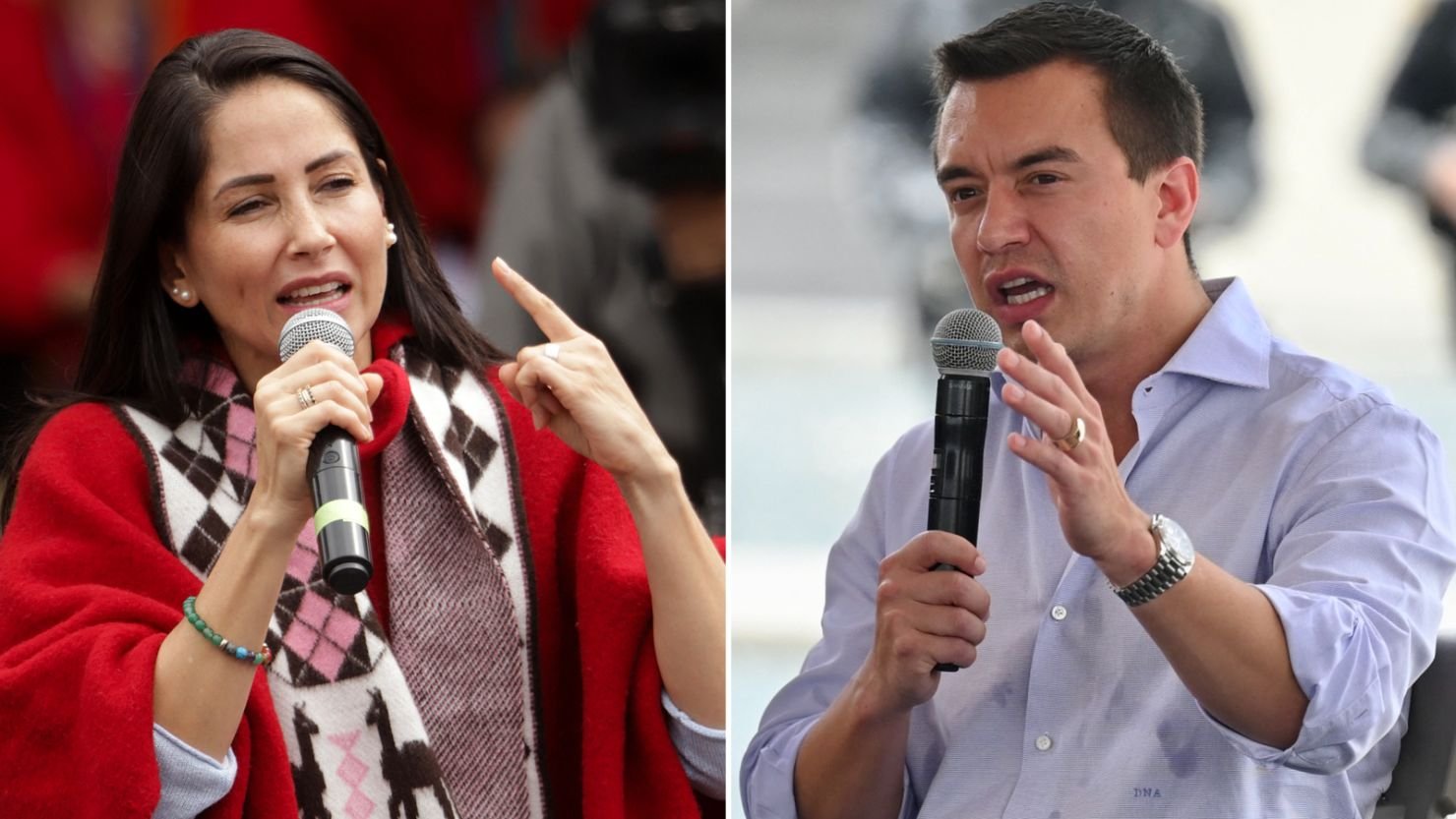








































With just days left before Ecuador heads to the polls, the race between President Daniel Noboa and leftist challenger Luisa González remains too close to call. The second-round runoff, set for this Sunday, has brought the political tension in the country to a peak, with both camps mobilizing supporters and issuing last-minute appeals in a bid to tip the balance in their favor.
On Thursday, both candidates staged their final campaign events in Guayaquil, a strategic electoral battleground that holds over 3.2 million votes—enough to sway the outcome. The coastal city, known as a political stronghold, became the epicenter of dueling rallies, setting the stage for a high-stakes showdown.
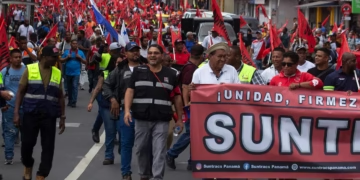
Luisa González, the candidate backed by former president Rafael Correa, took to the streets early, holding a massive rally along the symbolic Avenida 9 de Octubre. Flanked by supporters waving flags and chanting slogans, she declared her candidacy a symbol of unity. Joining her was Guillermo Churuchumbi, national coordinator of the Confederation of Indigenous Nationalities of Ecuador (Conaie), marking a significant alliance after a strained relationship between indigenous communities and the Correa administration. In exchange for electoral support, González signed a 25-point agreement pledging to meet specific demands if elected. However, past grievances—including state repression and environmental damage during Correa’s term—still cast a shadow over this new alliance.
“This is a new chapter for Ecuador. We’re leaving behind hate and division,” González said, signaling her intention to form broader coalitions. She also referenced a potential alliance with former conservative candidate Jan Topic, offering him a future role in security policy—an unexpected move that highlights the campaign’s shifting dynamics.
Concerns over potential electoral fraud have also resurfaced. Both candidates have expressed unease over the razor-thin margin separating them—only 16,000 votes divided them in the first round—and have deployed over 90,000 observers nationwide to monitor the vote count. González, in particular, took aim at the National Electoral Council (CNE), accusing its president, Diana Atamaint, of political bias in favor of Noboa. She specifically criticized a controversial ban on mobile phone use inside polling stations, a measure requested by Noboa and enforced with heavy fines. “You’re fining people $32,000 for using a phone, but just $235 for bringing in a weapon?” she asked, questioning the rationale behind the rule.
President Noboa, seeking to extend his term beyond the 17 months he served to complete Guillermo Lasso’s presidency, also ended his campaign in Guayaquil. Choosing a more controlled venue—the Voltaire Paladines Polo coliseum—he addressed a crowd gathered for a concert-style rally. Supporters brought life-sized cardboard cutouts of the president, a quirky marketing tool that gained viral popularity during last year’s elections and has since become a symbol of his campaign.
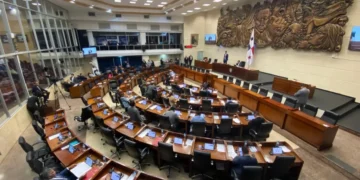
“The cardboard version of me has soul—it reflects the will of the Ecuadorian people,” Noboa joked from the stage. He was joined by several key political figures, including his mother, Anabella Azín, who not only topped the list of votes for the National Assembly but is also poised to take on a leadership role in Congress if Noboa wins. A Noboa victory could effectively consolidate power in both the executive and legislative branches.
Noboa also received international backing from Isabel Díaz Ayuso, the president of the Community of Madrid, who traveled to Ecuador to show her support. From the stage, Noboa framed the election as a choice between two starkly different futures. “This Sunday, we’re choosing between socialism and freedom—between progress and regression,” he declared. Drawing comparisons to Venezuela, he warned voters of falling into “the same trap” and promised a path toward “freedom and prosperity.”
As both candidates make their final appeals, Ecuadorians prepare to cast their votes in what is shaping up to be one of the most closely contested elections in the country’s recent history. The outcome could redefine the nation’s political direction—and the suspense will hold until the last ballot is counted.