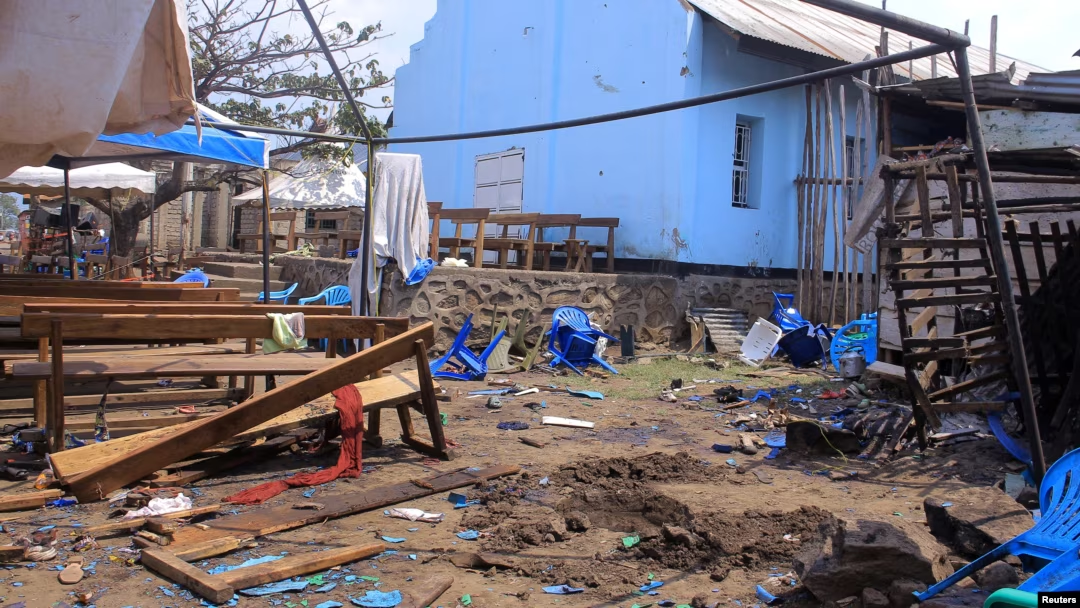








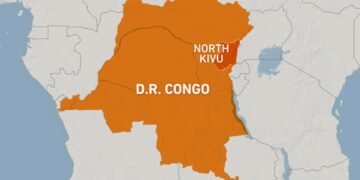






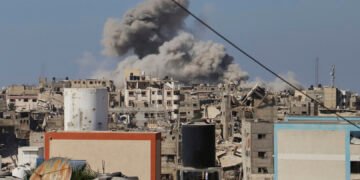




















The Islamic State group has claimed responsibility for a deadly assault on a Catholic church in northeastern Democratic Republic of Congo (DRC), according to a statement posted Monday on its official Telegram channel. The brutal attack, which occurred around midnight on Sunday in the town of Komanda, left at least 40 civilians dead and sent shock waves across the volatile Ituri province.
Local officials and humanitarian sources have confirmed that the perpetrators were rebels affiliated with the Allied Democratic Forces (ADF), an extremist militia with known ties to the Islamic State Central Africa Province (ISCAP). The ADF has been increasingly active in the eastern DRC, carrying out attacks on villages, schools, and places of worship in a growing campaign of terror.
The massacre at Komanda’s Catholic Church is one of the deadliest attacks in the region this year and has triggered mass displacement. More than half of the town’s residents have fled in fear, abandoning homes and livelihoods. Vulnerable neighbourhoods such as Base, Zunguluka, Umoja, and Ngombenyama are now nearly deserted.
Fleeing civilians are making their way toward the regional hubs of Bunia and Kisangani, travelling on foot, motorcycles, and overcrowded vehicles. Humanitarian groups warn that conditions along the escape routes are perilous, and many families are arriving in host communities with no food, shelter, or basic medical care.
Joint military patrols by the Congolese Armed Forces (FARDC) and the Ugandan People’s Defence Force (UPDF) have been stepped up in the area in response to the attack. However, fear and uncertainty still dominate daily life. Markets are closed, shops and pharmacies have shuttered, and subsistence farmers are unable to reach their fields. Religious services have also been suspended, compounding the trauma for many devout residents.
In Bunia, a fresh wave of displaced families has arrived in recent days, adding to an already dire humanitarian situation. Over 20,000 people had already fled violence in Djugu territory to the north, and are now living in temporary camps in and around the city. These camps, which were already stretched to capacity, are now on the verge of collapse.
“The situation is critical,” said Olivier Karba, communications officer for the Association of Displaced Persons and Victims of the Wars in Ituri. “We’re seeing people sleep in the bush or on the ground because shelters are full. Sanitation is poor, toilets are overflowing, and food and medicine are in short supply.”
Host families in Bunia, already struggling with limited resources, are now sheltering more than 2,400 displaced individuals, further increasing pressure on a region teetering on the edge of a humanitarian emergency. The risk of disease outbreaks is growing rapidly as clean water becomes scarce and medical access remains extremely limited.
Karba issued an urgent call for action, warning that delays in aid could lead to a spiralling crisis. “If the government and international organisations don’t respond quickly, the consequences will be catastrophic,” he said.
The DRC’s eastern provinces have long been a hotbed of violence, with dozens of armed groups operating in areas rich in minerals but impoverished in basic governance and security. The involvement of extremist groups like the Islamic State further complicates the conflict and poses new threats to regional stability.
As the death toll rises and communities are torn apart, calls are intensifying for the global community to step in with humanitarian assistance, protection for civilians, and long-term strategies to dismantle the network of violence gripping the region.