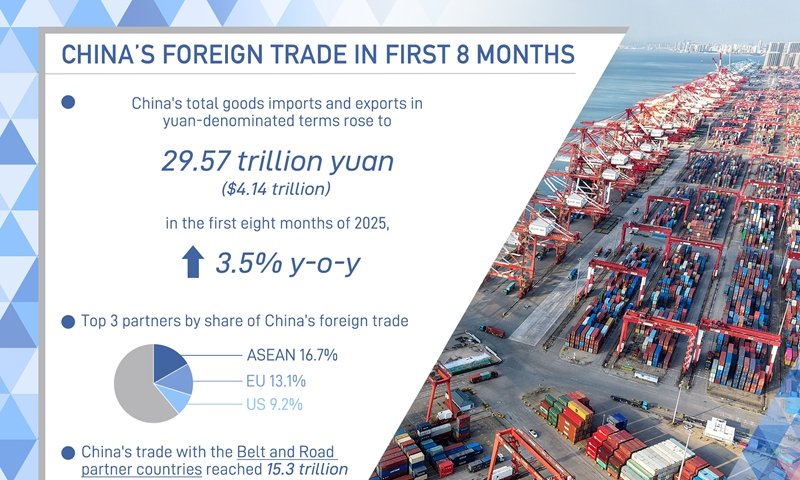
In the first eight months of 2025, China’s foreign trade reached a notable milestone, with total goods imports and exports amounting to 29.57 trillion yuan, which translates to approximately $4.14 trillion. This figure represents a year-on-year increase of 3.5%, indicating a steady recovery and resilience in the country’s trade activities amidst various global challenges.
The increase in trade is reflective of China’s ongoing efforts to strengthen its economic ties with various countries while navigating the complexities of the global market. The rise in trade volume signifies not only a recovery from the impacts of previous economic disruptions but also highlights China’s strategic positioning in global supply chains.
Imports have also seen a significant uptick during this period, with a recorded growth that echoes the increasing demand for raw materials and components necessary for manufacturing and production. The surge in imports can be attributed to several factors, including the recovery of industrial activity as well as an increase in consumer demand domestically, which has prompted businesses to source more goods from abroad.
Exports, on the other hand, have remained robust, bolstered by strong demand for Chinese products in international markets. The country’s manufacturing sector has demonstrated considerable adaptability, allowing it to maintain a competitive edge in producing goods ranging from electronics to textiles. This adaptability is crucial in a global environment that is constantly changing, with shifts in consumer preferences and trade policies influencing market dynamics.
China’s trade figures have not only improved due to internal factors but are also influenced by international relationships. The nation has been actively engaging in trade agreements and partnerships that aim to boost trade flows. Such agreements are designed to facilitate smoother transactions and reduce tariffs, thereby enhancing the overall trade environment.
Moreover, the government’s supportive policies aimed at fostering innovation and technology adoption in key industries are expected to further strengthen the trade landscape. By investing in advanced manufacturing capabilities and digital transformation, China is positioning itself to meet the evolving demands of the global market.
The trade performance in the first eight months of 2025 is also indicative of the broader economic recovery that China is experiencing. As the country emerges from the shadows of previous economic setbacks, the focus on sustainable growth and development is becoming increasingly prominent. This aligns with the government’s long-term goals of transitioning towards a more consumption-driven economy while reducing reliance on exports.
In addition, the trade statistics reveal how China’s economic strategies are yielding positive outcomes. The emphasis on promoting high-quality exports, along with the development of new markets, is contributing to a more balanced trade structure. This shift is essential for ensuring that China can maintain its status as a leading global trade partner.
As the year progresses, analysts will be closely monitoring the trade figures to assess the sustainability of this growth. Factors such as global economic conditions, trade tensions, and changes in consumer behaviour will play a significant role in shaping future trade dynamics. The resilience exhibited thus far suggests that China is well-equipped to navigate these challenges, although vigilance will be necessary to adapt to any unforeseen circumstances.
In summary, the first eight months of 2025 have showcased a promising trajectory for China’s foreign trade, with increased imports and exports indicating a robust economic performance. The ongoing adjustments to trade strategies and policies will be crucial as the country continues to engage with the global market, fostering relationships that will support its economic ambitions in the years to come.