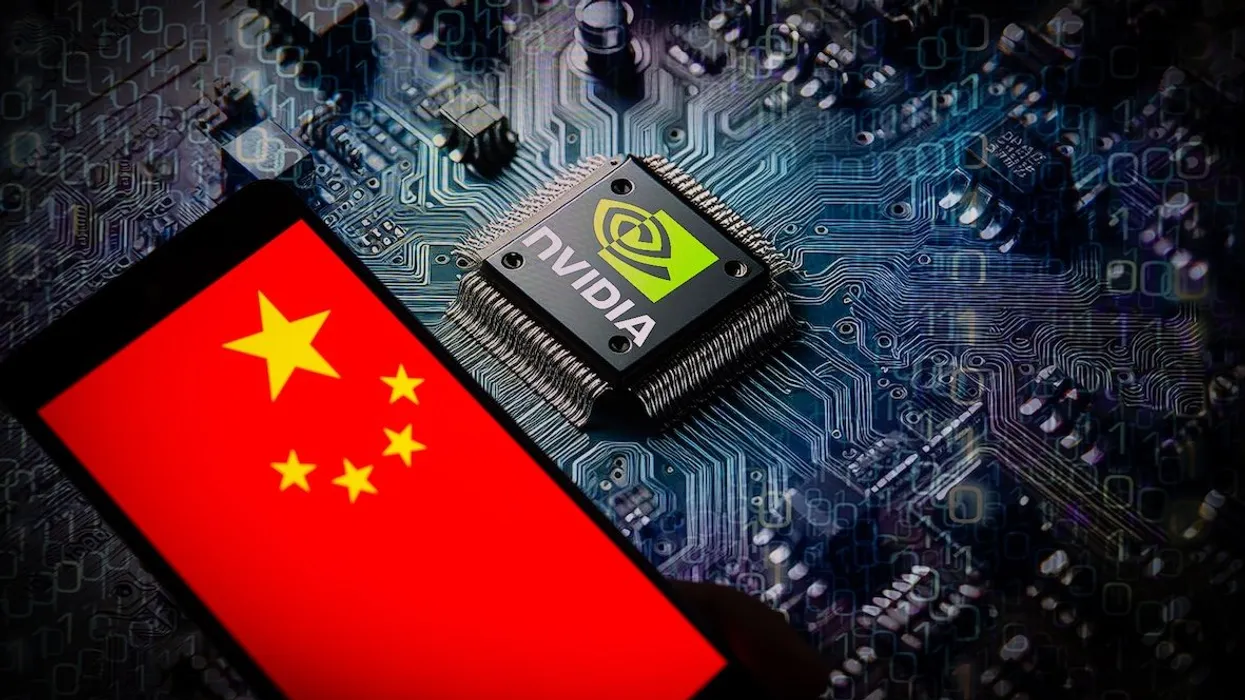





















































China has reiterated its call for the United States to dismantle what it describes as “unjustified” trade restrictions, following a recent U.S. decision to approve the sale of Nvidia’s H20 AI chips to Chinese buyers — a move signaling a potential thaw in the strained tech relations between the world’s two largest economies.
In a statement issued Friday, the Chinese Ministry of Commerce urged Washington to abandon “zero-sum thinking” and instead embrace fair, win-win cooperation, especially in the high-stakes semiconductor sector. The comments came after the U.S. government gave the green light to Nvidia’s export of the H20 chip to China, a significant development considering the increasing number of tech restrictions imposed in recent years.
The approval of Nvidia’s H20 chip sales follows a series of economic and trade discussions held in London, where both sides agreed on a broad framework for dialogue and cooperation. According to a spokesperson for the Chinese Commerce Ministry, the two countries have since maintained “close communication,” with efforts focused on solidifying and advancing the agreed framework.
As part of this progress, China has also approved export applications for certain controlled goods “in accordance with the law,” the spokesperson noted. In return, the U.S. reportedly eased some of its technology-related export controls on China earlier in July — a reciprocal step that may hint at a cautious but constructive approach to de-escalating tech-related tensions.
Despite these recent signs of progress, China remains sharply critical of previous U.S. moves to restrict its access to cutting-edge semiconductors. In May, Washington issued new export control rules targeting Huawei’s Ascend AI chips, citing national security concerns. Beijing, however, has denounced such measures as politically motivated and lacking legitimate justification.
“These actions unfairly interfere with free market competition and seriously undermine the legal rights of Chinese enterprises,” said the ministry spokesperson. “China has clearly expressed its strong opposition and firmly rejects these erroneous practices.”
The Chinese government has called on the U.S. to correct its course by engaging in “equal consultations” and helping create a stable, cooperative environment for both nations’ businesses. Officials argue that further restrictions risk damaging not only bilateral ties but also the stability of the global semiconductor supply chain — a system already under pressure due to geopolitical rivalry and post-pandemic disruptions.
In a symbolic move that further highlights the importance of ongoing dialogue, Chinese Commerce Minister Wang Wentao met with Nvidia CEO Jensen Huang in Beijing on Thursday. The meeting underscored Beijing’s desire to remain open to foreign investment, even as tensions over technology and national security persist.
Wang reassured Huang that China’s commitment to opening its markets to global enterprises “remains unchanged” and that the country’s policy of attracting foreign investment will “only open wider.” He highlighted China’s vast consumer base, diverse AI application scenarios, and robust innovation ecosystem as key reasons for companies like Nvidia to deepen engagement.
Huang, for his part, expressed enthusiasm about expanding Nvidia’s presence in China. He described the country’s tech landscape as “very attractive” and voiced a willingness to collaborate with Chinese partners in the field of artificial intelligence, an area where Nvidia holds global leadership.
The exchange between Chinese officials and Nvidia reflects a growing recognition that economic interdependence, particularly in advanced technologies, may serve as a stabilizing force in U.S.–China relations. The semiconductor industry, vital to everything from smartphones to supercomputers, has become a central arena in their geopolitical rivalry.
While the United States continues to restrict exports of its most advanced chips to China, citing national security concerns and fears of military applications, some analysts view the partial easing of restrictions — like those involving the H20 chip — as a strategic compromise to balance competition with economic pragmatism.
As both countries grapple with how to navigate a new era of technological competition, China is urging Washington to take further steps to restore balance. “Suppression and containment lead nowhere,” the ministry spokesperson warned, “but cooperation can pave the way for mutual benefit and global innovation.”