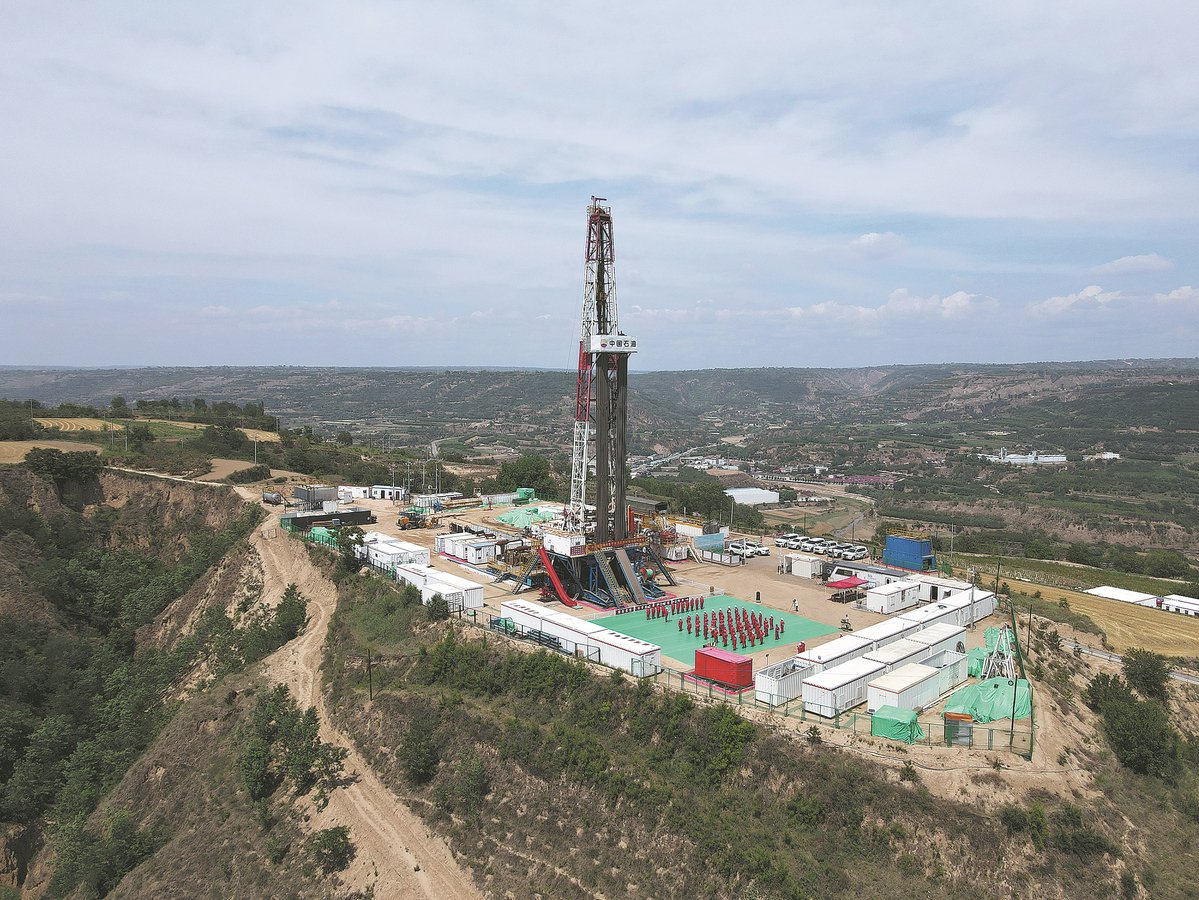


























































In a landmark scientific breakthrough, Chinese geologists have discovered the deepest-known sandstone-type industrial uranium mineralization in the world, located 1,820 meters beneath the surface in the Tarim Basin of northwest China’s Xinjiang Uygur Autonomous Region, according to a statement by the China Atomic Energy Authority (CAEA).
This discovery not only underscores China’s growing technological prowess in deep-earth mineral exploration but also opens new frontiers in the search for uranium—a critical fuel for nuclear power and an increasingly strategic resource in the global energy transition.
The uranium-bearing strata were found in red variegated sedimentary formations in the remote, desert-covered hinterland of the Tarim Basin. This marks the first major thick-bedded uranium mineralization found in this region, effectively filling a long-standing gap in uranium prospecting in China’s largest inland desert area.
The uranium identified in the discovery qualifies as industrial-grade mineralization, which refers to uranium deposits of sufficient concentration and thickness to be economically viable for extraction. Industrial mineralization serves as a crucial benchmark for estimating the development potential of a mining project, influencing both domestic energy strategy and international nuclear fuel supply chains.
According to the CAEA, the achievement represents a significant leap in overcoming both theoretical and technical barriers in sandstone-type uranium exploration. Sandstone-hosted uranium deposits are among the most important sources of uranium globally, known for their relatively straightforward extraction process and economic feasibility. However, discovering such deposits at extreme depths and in geologically complex areas like the Tarim Basin has long been a challenge.
Thanks to advanced modeling and drilling techniques, the Chinese research team was able to surmount these challenges. The breakthrough was spearheaded by the Beijing Research Institute of Uranium Geology, a subsidiary of the China National Nuclear Corporation (CNNC), in collaboration with the 216th Nuclear Geologic Service, another CNNC-affiliated agency.
Together, the teams developed an innovative “exfiltration-infiltration composite genetic regional prediction model,” which significantly improved the metallogenic theory of sandstone-type uranium—essentially refining the understanding of how uranium is deposited and where to look for it. This model integrates geological, hydrological, and geochemical data to accurately predict where industrial-scale uranium may occur.
In addition, the researchers engineered a new high-efficiency deep-drilling technology capable of penetrating complex and unstable geological formations. This drilling system proved essential in reaching the 1,820-meter depth where the uranium was found, especially given the challenging desert terrain and limited accessibility of the Tarim Basin’s uninhabited zones.
Experts say the discovery could have far-reaching implications for both China’s nuclear energy strategy and global uranium markets. As the world increasingly turns to nuclear power as a low-carbon energy source, secure and diversified uranium supplies are becoming strategically vital. China, already the world’s largest builder of nuclear power plants, continues to expand its civilian nuclear program to meet rising energy demands and climate goals.
This find positions China as a global leader in deep-earth uranium exploration, especially in sandstone-hosted deposits—an area previously dominated by countries like Kazakhstan, Canada, and Australia. Moreover, the successful deployment of a green and integrated exploration system tailored for desert environments may offer a new model for future international prospecting projects, particularly in underexplored and difficult terrains.
In recent years, the Chinese government has emphasized energy security and mineral independence, investing heavily in domestic exploration to reduce reliance on imported nuclear fuel. The latest discovery demonstrates that these efforts are bearing fruit, providing a critical boost to national reserves and scientific capabilities.
The CAEA noted that further assessment and development will follow to determine the full scale and commercial potential of the deposit. Ongoing research will also aim to refine the predictive model and apply it to other unexplored regions, both in China and abroad.
As the world confronts the dual challenges of climate change and energy demand, advancements in nuclear fuel resource development like this could play a pivotal role in shaping the future of clean, reliable, and secure energy infrastructure.