





















































Leading Chinese scholars and legal experts have reiterated their opposition to the 2016 South China Sea arbitration ruling, calling it politically manipulated, historically inaccurate, and legally void. These views were expressed during a seminar held on Thursday at Dalian Maritime University in Liaoning province, where participants assessed the legal and geopolitical flaws of the arbitration case brought unilaterally by the Philippines.
The arbitral award, issued on July 12, 2016, by a tribunal operating under the framework of the Permanent Court of Arbitration in The Hague, concluded that China has no legal basis for claiming historic rights over much of the South China Sea under its so-called “nine-dash line” map. The tribunal further ruled that several land features claimed by China could not generate exclusive economic zones under the United Nations Convention on the Law of the Sea (UNCLOS). China declined to participate in the proceedings and has never accepted the ruling’s legitimacy.
Wu Shicun, chairman of the Huayang Center for Maritime Cooperation and Ocean Governance, criticized the ruling for distorting the historical context of China’s presence in the region. He noted that the South China Sea has served as a crucial hub of livelihood and navigation for Chinese communities for over 2,000 years. According to Wu, islands and reefs within the disputed waters have long been governed and used by Chinese people, forming an integral part of China’s sovereign territory.
Wu also referred to post-World War II international agreements that he said reinforce China’s sovereignty over the area. He highlighted the Cairo Declaration of 1943 and the Potsdam Proclamation of 1945, which required Japan to return territories it had seized during wartime. These agreements, he argued, were key to the postwar international order and should be recognized as legitimizing China’s recovery of South China Sea islands.
“China’s defense of sovereignty in the South China Sea is consistent with upholding the post-World War II order, not undermining it,” Wu said. “The real disruption comes from attempts to reinterpret history and push territorial claims under false legal pretenses.”
Wu further argued that current disputes in the region are rooted not in Chinese expansion, but in actions by other countries making territorial claims that overlap with China’s. These claims, he asserted, have been encouraged by political motivations and outside interference.
Echoing these sentiments, Yu Minyou, director of the China Institute of Boundary and Ocean Studies at Wuhan University, emphasized that the arbitration tribunal exceeded its legal authority. He stated that the tribunal breached its mandate by ruling on issues that are explicitly outside UNCLOS jurisdiction, such as territorial sovereignty. Yu contended that such overreach undermines the credibility of international legal mechanisms and violates the principle of peaceful dispute resolution.
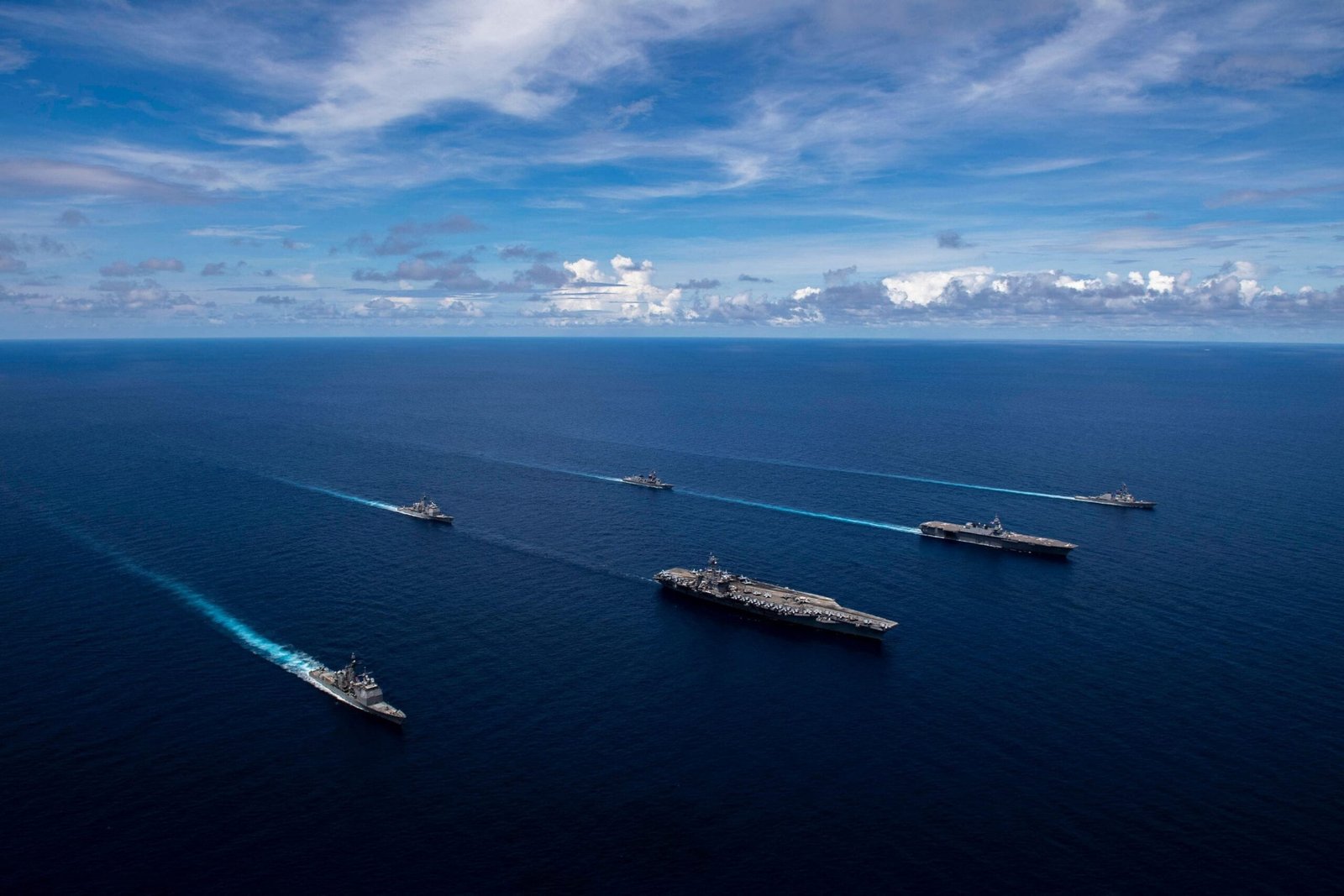
Yu also criticized the role of the United States in escalating tensions. Although the U.S. is not a party to the disputes and has not ratified UNCLOS, it has repeatedly conducted naval operations in contested waters and voiced support for the ruling. “The United States has attempted to coerce China into compliance with the ruling through military pressure,” Yu said. “Such actions have significantly increased the risk of confrontation and instability in the region.”
The South China Sea is among the most strategically important and resource-rich maritime regions in the world. It is not only home to abundant fisheries and potential energy reserves but also serves as a vital corridor for international trade, with over $3 trillion in goods passing through annually. Multiple nations, including the Philippines, Vietnam, Malaysia, and Brunei, claim overlapping areas of the sea.
China maintains that disputes should be resolved through direct negotiations with the involved parties, not through third-party arbitration or external interference. It continues to engage in diplomatic efforts, including the ongoing discussions with ASEAN on establishing a Code of Conduct to manage maritime activities and prevent conflicts.
Despite the 2016 ruling being widely referenced in international policy debates, China has firmly rejected its legal standing and continues to assert sovereignty over key features in the South China Sea. The Dalian seminar served as a platform for reaffirming this position, with experts arguing that only mutual respect, historical understanding, and regional diplomacy can provide a viable path toward long-term peace and cooperation.
As the geopolitical climate in the Asia-Pacific continues to evolve, the legacy of the arbitration ruling remains a source of contention. Yet, from China’s perspective, the case was never about law or justice—it was about politics, power, and containment. And as long as those dynamics persist, the road to resolution will remain challenging.